
Understanding Server-Side Tracking
Tracking user behavior online has traditionally relied on client-side tracking, where data is collected directly in the browser and sent to analytics tools. However, this method has limitations, including data loss from ad blockers, reliance on third-party cookies, and security risks. Server-side tracking shifts data collection to a secure server environment, offering greater control over how data is processed and shared.
Why is this important? The shift to server-side tracking provides better data accuracy, reduced page load times, and enhanced privacy compliance. By routing tracking requests through a dedicated server, companies can minimize data discrepancies and ensure compliance with regulations like GDPR and CCPA. This approach also allows for improved tag governance, reducing the risks of third-party scripts slowing down website performance.
Businesses using GTM vs Tealium vs Adobe for server-side tracking gain additional benefits depending on the platform. Google Tag Manager’s server-side model is highly accessible, leveraging Google Cloud infrastructure. Tealium, on the other hand, is known for its strong privacy controls and omnichannel data integration. Meanwhile, Adobe Launch’s server-side capabilities are ideal for enterprises that rely on Adobe Experience Cloud.
For companies planning to transition to a more secure tracking method, understanding best practices for migration is essential. A structured approach ensures minimal data loss and smooth implementation. Stay tuned for our upcoming best practices guide on migrating to server-side tracking to learn how to navigate this transition effectively.
Now that we understand the fundamentals, let’s explore how these platforms compare in detail.
Methods of Data Collection & Importance of Server-Side Tagging
Data collection methods significantly impact accuracy, compliance, and performance. Traditional client-side tracking relies on JavaScript running in the user’s browser, collecting data through cookies, pixel tracking, and direct API calls. However, this method is increasingly restricted by ad blockers and privacy regulations, leading to data loss and inconsistencies.
Server-side tracking shifts this process to a dedicated server, intercepting data before it reaches third-party vendors. This approach ensures greater control over Personally Identifiable Information (PII) and mitigates data exposure risks. Platforms like GTM server-side, Tealium server-side, and Adobe server-side facilitate this transition by providing robust infrastructures to process and forward data securely.
Why move to server-side tracking?
- Avoiding data loss: Many browsers block third-party scripts, limiting traditional tracking methods. Server-side solutions bypass these restrictions by collecting data before it reaches end-user devices.
- Better control over PII: Processing data in a controlled environment reduces exposure risks and ensures compliance with GDPR and CCPA.
- Speed and performance optimization: Reducing the number of client-side scripts improves page load times and user experience.
For businesses looking to fine-tune their server-side configurations, implementing advanced tag management strategies is key. Stay tuned for our upcoming guide on advanced configurations for server-side tagging, where we’ll cover custom data layer handling, security enhancements, and performance improvements.
Next, let’s explore how each platform—GTM server-side, Tealium server-side, and Adobe server-side—handles these processes differently and what sets them apart.
Comparison of Server-Side Tools
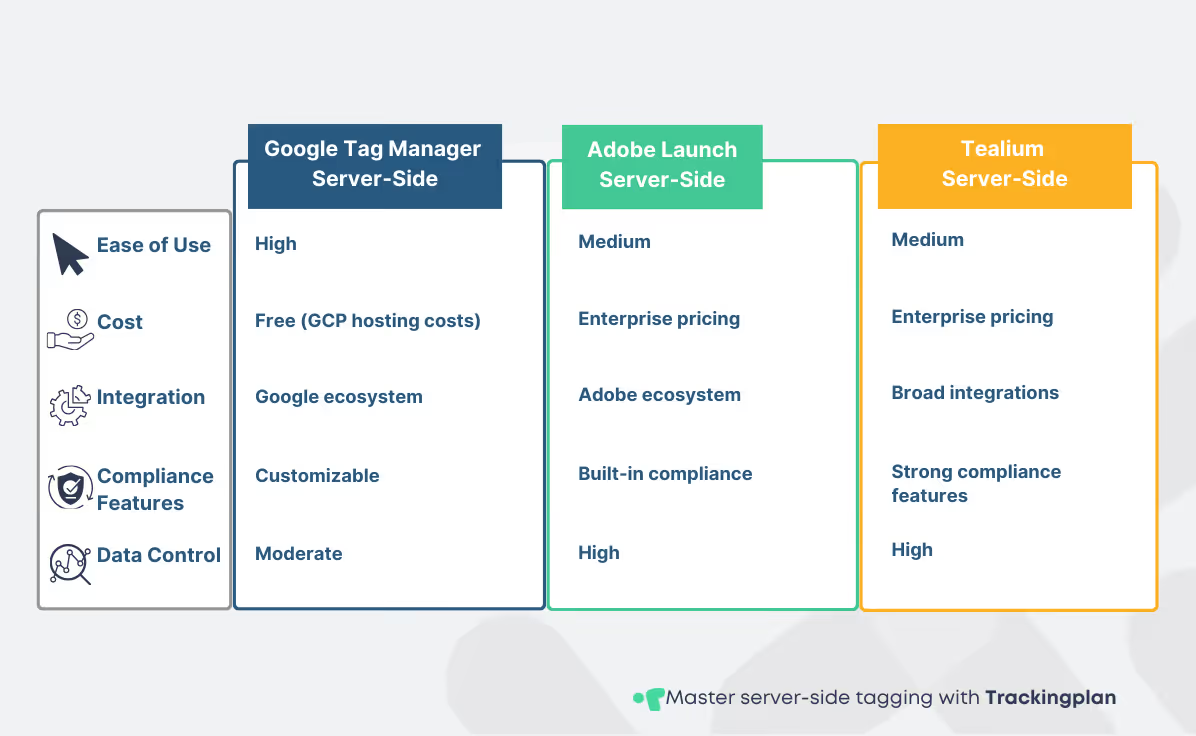
When evaluating GTM server-side, Tealium server-side, and Adobe server-side, several factors determine which tool aligns best with your needs.
Which One Fits Best?
- GTM server-side: Ideal for businesses using GA4, Google Ads, and those with lower budgets looking for cost-effective deployment.
- Adobe server-side: Best suited for enterprise users leveraging the Adobe ecosystem, particularly those focusing on compliance and advanced integrations.
- Tealium server-side: Recommended for privacy-focused businesses and those requiring omnichannel data management.
To explore Google Tag Manager’s server-side implementation, check out our upcoming deep dive into GTM’s server-side setup. For Adobe Launch’s server-side capabilities, refer to our dedicated Adobe server-side tracking guide. If Tealium’s implementation is your focus, stay tuned for our detailed Tealium server-side configuration guide.
Now that we’ve compared the core features, let’s break down each platform’s specific advantages and challenges in greater detail.
Google Tag Manager as a Server-Side Tool
Google Tag Manager’s server-side capabilities provide businesses with a flexible, cost-efficient way to manage data collection while maintaining control over privacy and performance.
Advantages of GTM server-side:
- Seamless integration with GA4 and Google Ads: Businesses leveraging Google’s ecosystem benefit from effortless tracking alignment.
- Cost-effective solution: Unlike enterprise options, GTM server-side is free to use, with the only expense being Google Cloud hosting costs.
- User-friendly interface: GTM provides a simple configuration process with built-in debugging tools, making implementation straightforward.
Limitations to consider:
- Limited built-in compliance tools: While highly customizable, GTM server-side does not offer native compliance features like those found in Adobe server-side or Tealium server-side.
- Not ideal for complex multi-platform strategies: Businesses needing advanced omnichannel integrations may find Tealium server-side or Adobe server-side better suited for their needs.
For a deeper dive into best practices for implementing GTM’s server-side setup, stay tuned for our detailed guide on Google Tag Manager’s server-side implementation.
Now that we’ve explored GTM’s server-side capabilities, let’s take a closer look at how Adobe Launch and Tealium compare in server-side tracking.
Adobe Launch as a Server-Side Tool
Adobe Launch’s server-side functionality is tailored for organizations already leveraging the Adobe Experience Cloud, providing seamless data collection and activation across multiple Adobe products.
Advantages of Adobe server-side:
- Deep integration with Adobe Analytics and Adobe Audience Manager: This allows for more refined audience segmentation and improved attribution modeling.
- Robust security and compliance tools: Businesses handling sensitive user data benefit from Adobe’s built-in privacy features, ensuring alignment with regulations like GDPR and CCPA.
Limitations to consider:
- Steep learning curve: Compared to GTM server-side, Adobe’s platform requires more expertise and training to implement effectively.
- Higher costs: Unlike GTM server-side, which primarily incurs hosting fees, Adobe server-side is part of the broader Adobe Cloud Services package, making it a more expensive option.
For businesses deeply embedded in the Adobe ecosystem, implementing server-side tracking can significantly enhance data security and streamline integrations. To learn more about optimizing Adobe Launch’s server-side setup, check out our detailed guide on Adobe’s server-side tracking.
Next, let’s examine how Tealium server-side compares and what makes it a strong contender in enterprise data governance.
Tealium as a Server-Side Tool
Tealium’s server-side solution is built for enterprises that prioritize data privacy, cross-platform compatibility, and advanced customization.
Advantages of Tealium server-side:
- Advanced data privacy tools: With strong compliance features, Tealium enables businesses to manage customer data securely while adhering to regulations like GDPR and CCPA.
- Better cross-platform compatibility: Unlike GTM server-side, which is optimized for Google’s ecosystem, Tealium integrates smoothly with multiple analytics and marketing platforms.
- High customization for enterprise needs: Companies with complex data governance and audience segmentation strategies benefit from Tealium’s flexible architecture.
Limitations to consider:
- More expensive than GTM server-side: As an enterprise-focused solution, Tealium often comes with higher licensing and operational costs.
- Complex setup process: Compared to Adobe server-side, Tealium requires a steeper learning curve and expert configuration for optimal results.
For organizations seeking a highly customizable, privacy-first server-side tracking solution, Tealium offers a compelling option. To explore best practices for setting up Tealium’s server-side implementation, check out our detailed guide on implementing Tealium server-side.
Now that we’ve reviewed all three platforms, let’s summarize key takeaways and best practices for selecting the right server-side tagging solution.
Conclusion
Choosing between GTM server-side, Tealium server-side, and Adobe server-side depends on your organization’s priorities. GTM server-side is ideal for those needing an affordable, Google-centric solution, while Adobe server-side is best suited for enterprises deeply embedded in the Adobe ecosystem. Tealium server-side stands out for businesses requiring advanced data privacy and cross-platform flexibility.
To ensure a smooth transition, consider migration strategies for server-side tagging and explore advanced configurations to optimize performance. Stay updated with our latest insights on best practices and implementation strategies for server-side tracking.