
Analyzify
At a Glance
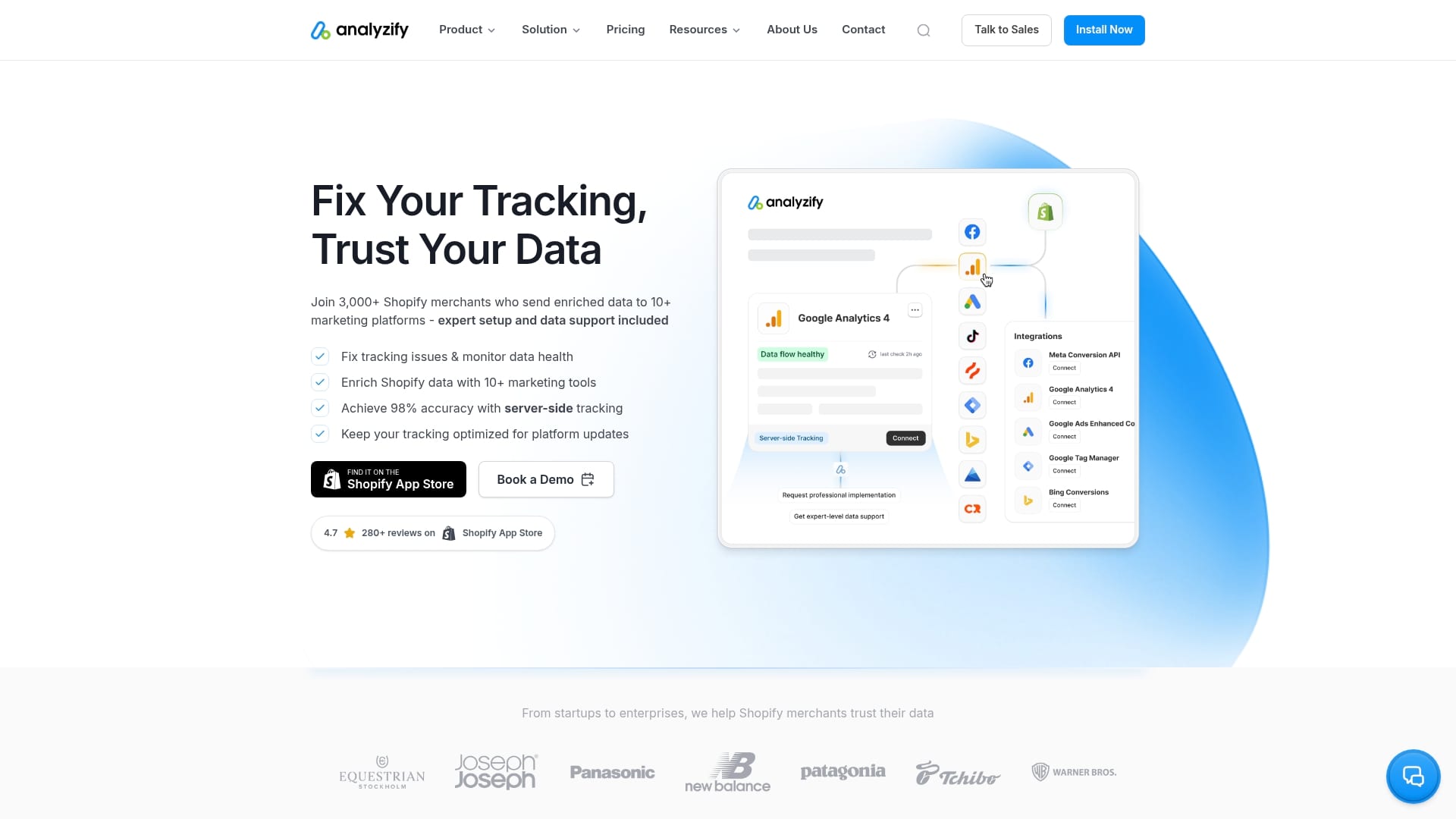
The vendor advertises 98% purchase tracking accuracy and includes a Done-For-You setup at no extra cost, positioning deployment as a turnkey option for Shopify stores. Analyzify reports over 3,000 merchants and a 4.7-star rating from 280+ reviews.
Core Features
- Server-side tracking and validation that, per the vendor, drives the accuracy claim above.
- A Data Layer exposing 150+ tracking parameters for richer event payloads and attribution.
- Built-in support for Google Consent Mode and ongoing tracking health monitoring with automatic updates.
- Guided onboarding, video tutorials, and a professional setup option included for merchants without coding resources.
Key Differentiator
Analyzify’s pitch is its included professional onboarding plus deep Shopify-specific wiring across marketing channels. That combination concentrates effort on Shopify stores rather than on generic implementations, which makes the product narrower in scope than platforms aimed at multi-platform enterprise stacks.
Pros
- Done-For-You setup at no extra cost reduces time to trustable data for teams without developer bandwidth.
- Compatible with all Shopify plans and designed to scale for high-volume stores, so growth does not require rework.
- Continuous tracking health monitoring and automated updates cut down manual audits and reduce regression risk.
- Integrates multiple marketing channels so marketing teams can unify Ads, Analytics, and CRM signals in one flow.
- Professional onboarding and expert support make it easier for nontechnical store owners to validate event streams and attribution.
Cons
- The retrieved sources report no substantive negative reviews, which limits publicly available independent critique.
- The app is focused on Shopify; stores on other e-commerce platforms will not benefit from the same level of product fit.
When It May Not Fit
If your storefront is not Shopify, Analyzify’s Shopify-first architecture will be a mismatch. If your team wants to build a fully custom tracking stack across multiple backends, a vendor that targets broad, cross-platform instrumentation may be a better fit.
Notable Integrations
Google Analytics 4, Google Tag Manager, Facebook, TikTok, Pinterest, Snapchat, Google Ads, and Klaviyo are listed integrations that enable ad platform and email syncs for attribution and audience building.
Who It’s For
Shopify merchants and marketing teams that need reliable conversion tracking without hiring developers. Especially useful for stores that want professional onboarding, continuous monitoring, and integrated channel data without in-house tracking engineering.
Real World Use Case
A Shopify store with patchy conversion events used Analyzify’s onboarding and automated monitoring to fill data gaps. After implementation the team reported substantially cleaner conversion attribution and clearer ad spend signals, improving campaign optimization cadence.
Pricing
Pricing starts at $109 USD/month billed monthly or $1,305/year billed annually, with higher volume plans available for larger stores or agencies.
Website: https://analyzify.com
Triple Whale
At a Glance
Triple Whale’s Moby 2 promises inventory and sales forecasts with confidence intervals in minutes, a feature built for fast cadence ecommerce teams. The platform also reports a 2.9/5 Trustpilot rating from 37 reviews; that figure appears in public reviewer listings.
Core Features
- Unified attribution, measurement, and analytics that pull ecommerce, retail, and marketplace data into one view.
- AI agents trained for ecommerce decisions plus automation for campaign management, creative and landing page generation.
- Customer segmentation with audience sync to ad platforms and forecasting via Moby 2.
- Incrementality and attribution testing through a measurement toolkit including Compass.
Key Differentiator
Triple Whale pairs near real-time commerce data with models designed to act autonomously so routine marketing ops run with less manual work. The pitch is that the system retains persistent business context and applies it to optimizations and forecast outputs.
Pros
- Consolidated spend-to-sales visibility helps you speed decisions across Meta, Google, and TikTok without stitching reports across tools.
- The automation layer reduces repetitive campaign tasks, freeing analysts to focus on strategy rather than manual bidding and creative swaps.
- Omnichannel data support means marketplace and retail sales can appear alongside Shopify revenue for single-source measurement.
- Compass and the incrementality tooling give teams a framework to test marketing impact rather than rely solely on last-click numbers.
- Forecasting with confidence intervals lets inventory planners see ranges, not single-point guesses, which aids replenishment timing.
Cons
- The Trustpilot rating above is low, and user reviews report recurring problems with attribution accuracy, unreliable integrations, and slow support responses.
- Several users have flagged attribution and tracking accuracy concerns, which undermines confidence in automated decisions without manual verification.
- Billing and cancellation issues appear in user reports, creating friction for teams that need predictable vendor interactions.
- Some customers find the AI automation requires careful oversight because recommendations are not always reliable in edge cases.
When It May Not Fit
If your organization requires airtight attribution guarantees for regulatory audits or high-stakes reporting, Triple Whale’s reported tracking inconsistencies make it a risky primary source. Large enterprises that need dedicated SLA-backed support may find the vendor response model insufficient.
If you refuse to run manual checks against automation, this product will frustrate you.
Who It’s For
Ecommerce brands and marketing agencies managing multiple accounts that prioritize speed and automation over fully hands-off attribution. Good fit for teams that can validate automated outputs with periodic manual audits and accept a subscription tool focused on growth ops.
Real World Use Case
A mid-market Shopify brand uses Moby 2 to generate landing pages, auto-optimize bids, and forecast inventory ahead of seasonal spikes. The team runs Compass incrementality tests to separate organic lift from paid performance before scaling budget.
Pricing
Pricing details are not published in the source data. Triple Whale appears to use a subscription model, but plan tiers and seat or spend-based thresholds are not specified publicly.
Website: https://triplewhale.com
Hyros
At a Glance
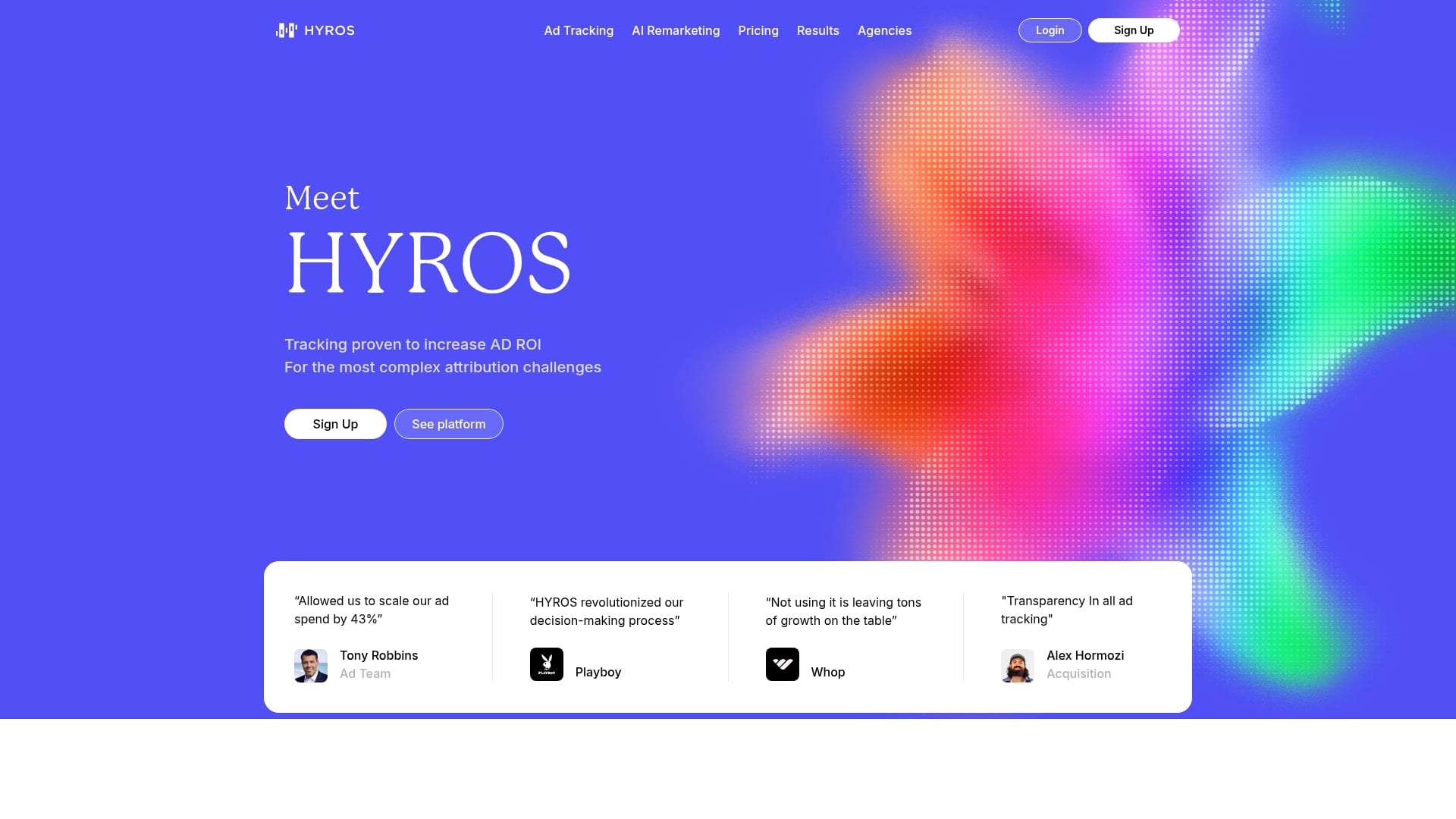
Hyros combines high-precision, real-time customer journey tracking with an AI remarketing agent that unifies ad, call, email, and sales page signals across devices. The platform targets SaaS, e-commerce, call-based sales, and digital education where detailed attribution and automated remarketing matter.
Core Features
- Cross-channel interaction tracking: Ads, calls, emails, and sales pages linked to single customer identities across devices.
- Deep identity research: Matches touchpoints across browsers and devices to rebuild journeys for attribution purposes.
- Real-time attribution and postbacks: Fast channel-level attribution and postback delivery for ad platforms.
- API access: Custom integrations and automation via a public API.
- AI remarketing tools: Automated audience actions and remarketing suggestions powered by Hyros’ AI components.
Key Differentiator
Hyros’ focus is precise, time-sensitive attribution combined with programmatic remarketing rather than general analytics. That combination aims to close the loop between measurement and ad action, turning attribution signals into retargeting behavior quickly.
Trackingplan takes a different angle. Trackingplan concentrates on discovery, monitoring, and audit of the Martech stack. Hyros narrows the view to attribution, identity resolution, and AI-driven remarketing for ad ROI work.
Pros
- Staff support is frequently praised for being knowledgeable and helpful, which speeds onboarding for complex ad setups.
- Onboarding is reported as smooth, reducing initial implementation friction for agencies migrating multiple clients.
- Advanced tracking surfaces otherwise-missed touchpoints, which helps clarify which channels actually drive conversions.
- API and postback features let engineering teams automate attribution flows and feed unified data back into ad platforms.
- The platform is positioned to help optimize ad spend by identifying likely ROI drivers and automating remarketing actions.
Cons
- Some users report tracking data drops and reporting inconsistencies that reduce trust in certain campaign decisions.
- Setup reliability varies with business configuration, so results depend on how closely your funnel matches supported patterns.
- Fixes and troubleshooting can take time, which creates temporary reporting gaps during peak campaign periods.
- Occasional lead reporting inaccuracies require calibration and manual validation for sensitive use cases.
When It May Not Fit
If you need an out-of-the-box audit system for pixels, schema mismatches, and broad analytics governance, Hyros is not aimed at that problem set. Its setup variability also makes it a worse fit for very small teams that lack technical support.
If your priority is guaranteed uninterrupted reporting for enterprise procurement dashboards, the occasional data drops above make Hyros a risky single source of truth.
Who It’s For
Marketing teams and agencies running multi-channel paid campaigns that need tighter attribution and faster remarketing loops. Hyros fits organizations that can dedicate technical resources to map calls and custom funnels into its tracking model.
The product also targets call-based sales and high-value funnels where better identity stitching dramatically affects attribution and bidding.
Real World Use Case
According to the vendor, a digital agency used Hyros to track Facebook and Google campaigns and reported a 20% increase in ROI while gaining clearer cross-device journey insights. That case reflects the product’s aim to convert attribution signals into actionable remarketing and bidding adjustments.
Pricing
Hyros uses customised pricing based on business size and tracking complexity, with plans that typically start around several hundred dollars per month for small businesses. The vendor also advertises free trial options and tailored enterprise quotes.
Website: https://hyros.com
Trackingplan
At a Glance
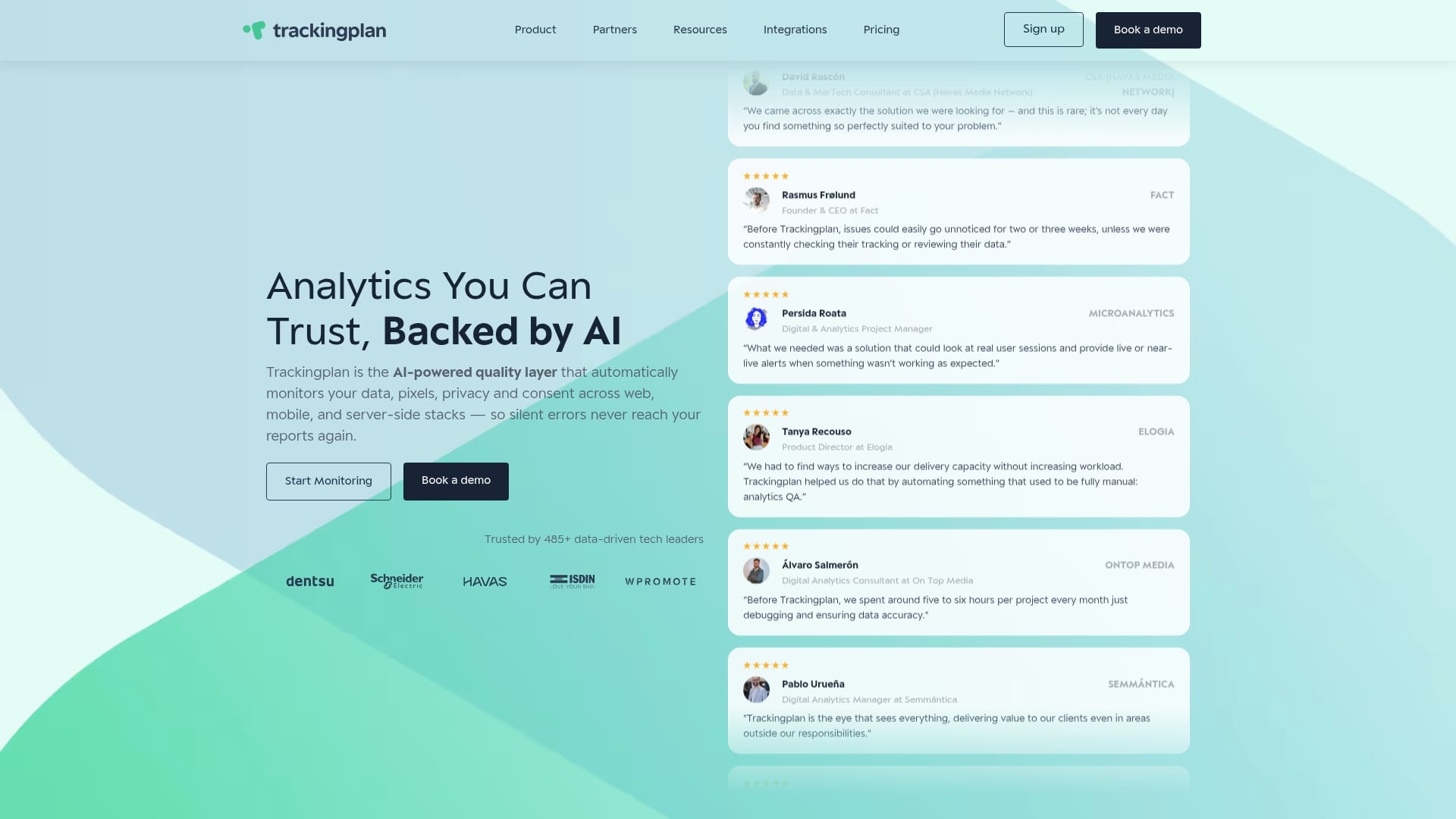
Monitors web, mobile, and server-side analytics, pixels, privacy, and consent signals in real time and flags mismatches before they surface in reports.
The vendor says the platform pairs automated discovery with AI-guided debugging to detect and resolve data issues without constant manual checks.
Core Features
- AI-driven real-time monitoring and anomaly detection that watches incoming events and surfaces unexpected changes.
- Automatic discovery of events, properties, and tags from real user traffic so new pages or releases appear in the audit trail automatically.
- Continuous, low-friction monitoring with minimal setup and AI-guided root cause analysis that offers step-by-step fixing instructions.
- Real-time alerts for broken data, mismatches, privacy breaches, and schema changes.
Key Differentiator
The standout capability is automated discovery tied to continuous learning and root cause analysis. Trackingplan learns transformation patterns from traffic and then uses that signal to reduce false positives and speed diagnosis across web, mobile, and server-side flows.
Pros
- Automates routine validation work so your analytics or marketing operations team spends less time chasing missing pixels and more time on measurement strategy.
- Proactive alerts prevent silent reporting errors by catching drops, schema mismatches, and broken tags before they warp dashboards.
- Learns mapping and transformation patterns automatically, which cuts the manual effort needed to maintain event schemas as your product evolves.
- Monitors full stack data sources — browser, SDK, and server — so cross-environment attribution mismatches surface in one place rather than across multiple tools.
Cons
- Initial configuration and tuning can feel complex for very small or simple setups; some buyers report a hands-on ramp for policy and alert rules.
Notable Integrations
- Google Analytics 4
- Adobe Analytics
- Google Tag Manager
- Meta Pixel
- Segment
- Mixpanel
- TikTok Ads
- Amplitude
Who It’s For
Data analysts, marketing teams, developers, and agencies that manage complex tracking across multiple sites, apps, or server endpoints and need continuous validation rather than periodic audits.
Unique Value Proposition
Automatic discovery of events and properties from real user traffic removes the labor of manual mapping when you deploy new pages or campaigns. That capability shortens the time between deployment and reliable reporting, which matters when you run multi-site campaigns or manage several client accounts.
Real World Use Case
A marketing agency connects Trackingplan to client sites and mobile apps so tags and pixels are monitored continuously. The system surfaces a broken attribution parameter after a site rollout and supplies a guided fix, preserving campaign attribution without pulling developers off high-priority work.
Pricing
Pricing is public: Starter from 89€ and Growth from 699€ a month, with a 9-day free trial, and Enterprise from 2,000€ a month on an annual contract.
Website: https://trackingplan.com
Comparative Analysis of Tracking Monitoring Software
The following comparison evaluates Trackingplan, Analyzify, Triple Whale, and Hyros, all prominent platforms in tracking monitoring and analytics. Each software has distinct features that can appeal to different user needs, and this analysis aims to provide insights into where they excel and fit.
Dimensions of Feature Scope Complemented by Implementation Complexity
Trackingplan emphasizes automated discovery and AI-guided debugging across diverse environments, including web, mobile, and server-side. This broad applicability offers advanced monitoring capabilities, but its initial configuration may require specialized resources for use. Comparatively, Analyzify targets Shopify-based stores with a turn-key onboarding approach, ideal for non-technical teams seeking quick insights. Hyros, while narrowly focused on attribution marketing, furnishes businesses with precision tools tuned for cross-device and channel tracking, albeit necessitating technical integration.
Aligning Scalability with Targeted Use Cases
For teams where growth aligns with increasing tracking complexity, Trackingplan provides scalability across environments. Conversely, Analyzify’s inclusion of professional onboarding restrains its scope to Shopify merchants. Triple Whale, with its inventory forecasting and automation, caters to agile e-commerce campaigns, though user-reported concerns about its attribution accuracy pose risks in high-stakes scenarios. Hyros fits into intensive marketing operations but can encounter occasional inconsistency in data collection under certain technical configurations.
Best Fit Criteria Across Identified Scenarios
- Trackingplan: For users requiring multi-environment, real-time analytics monitoring with AI-driven diagnostics to streamline large-scale operations.
- Analyzify: Ideal for Shopify store owners needing pre-configured solutions and integrations to bridge marketing channel signals.
- Triple Whale: Suitable for medium businesses prioritizing e-commerce automation and inventory forecasting with lighter attribution precision needs.
- Hyros: Targeting technical marketing teams seeking specialized tracking accuracy and remarketing efficiency across high-value sales channels.
Our Pick for Versatile Analytics Tracking
Trackingplan is recommended for its commitment to automated tracking discovery and real-time validation spanning multifunctional platforms. However, for Shopify-specific needs, Analyzify stands, and for high-detail affiliate or attribution marketing use cases, Hyros remains. Teams should select based on the specific alignment of capabilities to their operational goals.
Tracking Monitoring Software Comparison
Explore the features and capabilities of leading tracking monitoring software platforms to identify which solution aligns with your specific data tracking and analytics needs.
Discover a Reliable tracify.ai Alternative with Trackingplan
Choosing the right tracking software can feel overwhelming with many options like tracify.ai alternatives vying for attention. If you want to avoid missing or broken pixels, tracking errors, and complex manual audits, Trackingplan offers automated discovery, AI-driven monitoring, and real-time alerts to identify anomalies before they affect your reports. This reduces time spent chasing errors and helps improve attribution accuracy for your marketing efforts across web, mobile, and server environments.
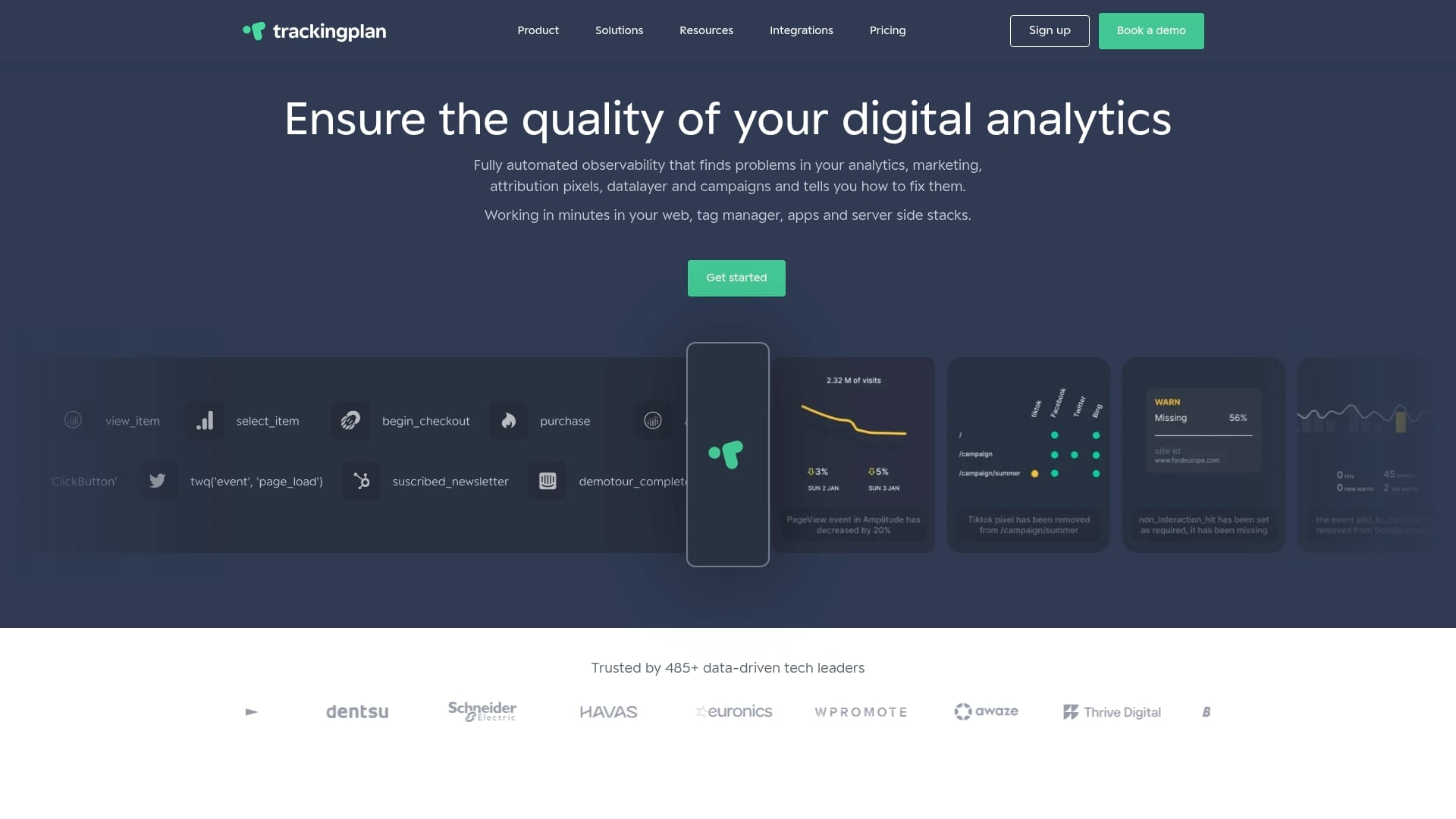
Take control of your analytics with Trackingplan by visiting Trackingplan’s homepage and experience faster issue detection and step-by-step root cause analysis. Act now to transform your tracking health and ensure dependable marketing data that supports smarter budget decisions and campaign optimization.
Frequently Asked Questions
How does Trackingplan automate event discovery?
Trackingplan offers automatic discovery of events, properties, and tags from real user traffic. This feature allows new pages or releases to appear in the audit trail automatically, reducing the manual effort required for tracking management. Users benefit by ensuring that their analytics remain up-to-date with minimal intervention.
What is the difference between Trackingplan and Analyzify?
Analyzify provides Done-For-You setup at no extra cost, which is beneficial for teams without developer resources. In contrast, Trackingplan focuses on continuous learning and root cause analysis that cut down on false positives, making it well-suited for managing complex multi-site campaigns. If you need automated discovery and ongoing monitoring, Trackingplan would be beneficial.
Can I use Trackingplan if I have a small setup?
While Trackingplan excels in monitoring and discovery features, some users find its initial configuration complex for very small setups. This means small teams might face a learning curve, but once configured, they can effectively monitor their analytics without constant manual checks.
Which platform is better for monitoring web and mobile analytics?
Trackingplan is specifically designed to monitor web, mobile, and server-side analytics by detecting data issues in real time. It provides proactive alerts for mismatches and broken tags, making it more suitable for complex tracking environments compared to other tools that may focus on single platforms.
How does the pricing of Trackingplan compare in the market?
Trackingplan publishes its pricing, from 89€ a month, and offers a 9-day free trial to help users evaluate its features before committing. This allows potential customers to explore its capabilities and see if it fits their needs without upfront costs, compared to some competitors with fixed pricing.