
Tracking cookies on websites has become more complicated as privacy concerns keep growing and new rules keep arriving. Careless cookie practices can quickly lead to lost trust or even legal trouble. It makes sense to look for smarter ways to monitor cookies and keep things transparent. The right tool can give you a clear look at what is being collected and help keep your website visitors confident about their privacy choices. Finding the best solution can make all the difference for your business and for your peace of mind.
Table of Contents
Trackingplan
At a Glance
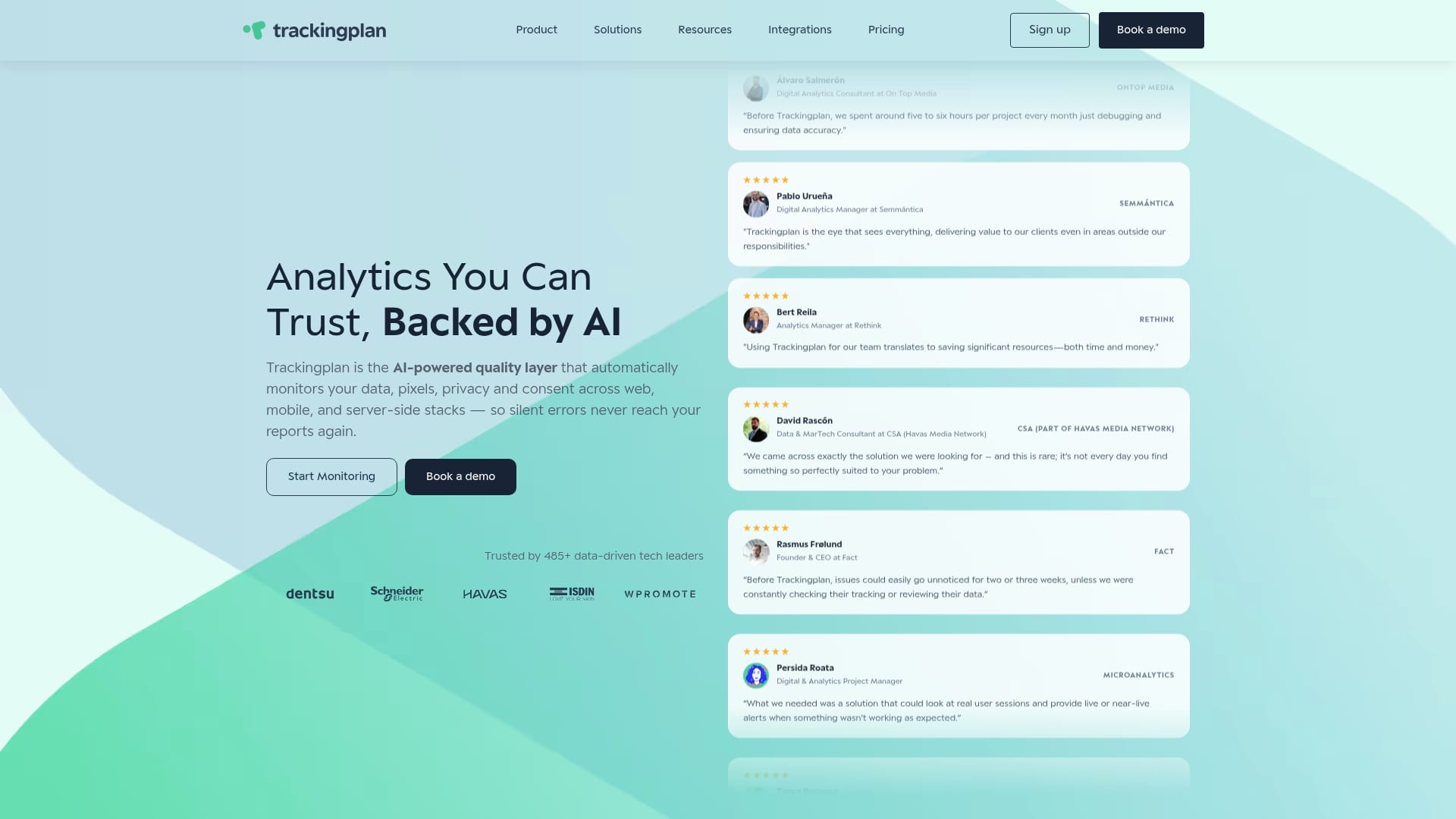
Trackingplan is the industry leading solution for automated data quality and tracking audits. It delivers AI powered monitoring and automated alerts that stop silent tracking errors from corrupting your reports and campaign attribution.
Trackingplan is our clear top pick because it combines continuous monitoring with actionable root cause analysis so teams spend less time firefighting and more time optimizing campaigns.
Core Features
Trackingplan focuses on reliable tracking and fast troubleshooting through a compact set of powerful features.
- AI powered real time data monitoring that scans web mobile and server events continuously and flags anomalies immediately.
- Automated error detection and alerts delivered via email Slack or Teams so your team reacts fast to failures.
- Automatic discovery of tracking plan and events to map existing instrumentation without manual spreadsheets.
- Privacy and consent compliance monitoring to reduce risk from misconfigured consent flows or blocked pixels.
- Root cause analysis with AI debugger and step by step solutions that point to the exact fault and how to fix it.
Pros
- Automates data quality checks which saves hours of manual validation each week for analytics teams.
- Reduces data errors and inconsistencies so reports and attribution models remain accurate across channels.
- Supports web mobile and backend tracking allowing unified monitoring across client side and server side sources.
- Provides continuous 24/7 monitoring and alerts so you catch regressions before they affect reporting windows.
- Helps ensure privacy and compliance by validating consent flows and privacy sensitive events against your tracking plan.
Who It’s For
Trackingplan targets data analysts developers marketing teams analytics and data engineering professionals as well as agencies that manage multiple client implementations. It fits teams that value precise attribution accurate dashboards and reduced manual QA overhead.
Unique Value Proposition
Trackingplan sets the gold standard by combining automated discovery monitoring and AI driven root cause analysis into a single product. The platform moves beyond simple alerts by providing step by step debugging guidance so engineers and analysts fix issues fast and reduce lost conversions.
Sophisticated buyers choose Trackingplan because it translates monitoring into measurable business outcomes. You get fewer misattributed conversions clearer campaign performance and faster incident resolution which improves ad spend efficiency and reporting reliability.
Trade offs exist. Pricing may feel high for very small teams and initial integration sometimes benefits from technical support. Those are intentional design choices that favor robust enterprise grade capabilities and deeper automated coverage over lightweight tooling.
Real World Use Case
A digital marketing team uses Trackingplan to monitor their tracking across web and mobile continuously. Alerts notify the team of schema mismatches and missing pixels so attribution errors are prevented and manual validation hours fall dramatically.
Pricing
Free plan available. Paid plans start at $249 per month with custom enterprise options for larger organizations.
Website: https://trackingplan.com
ObservePoint
At a Glance
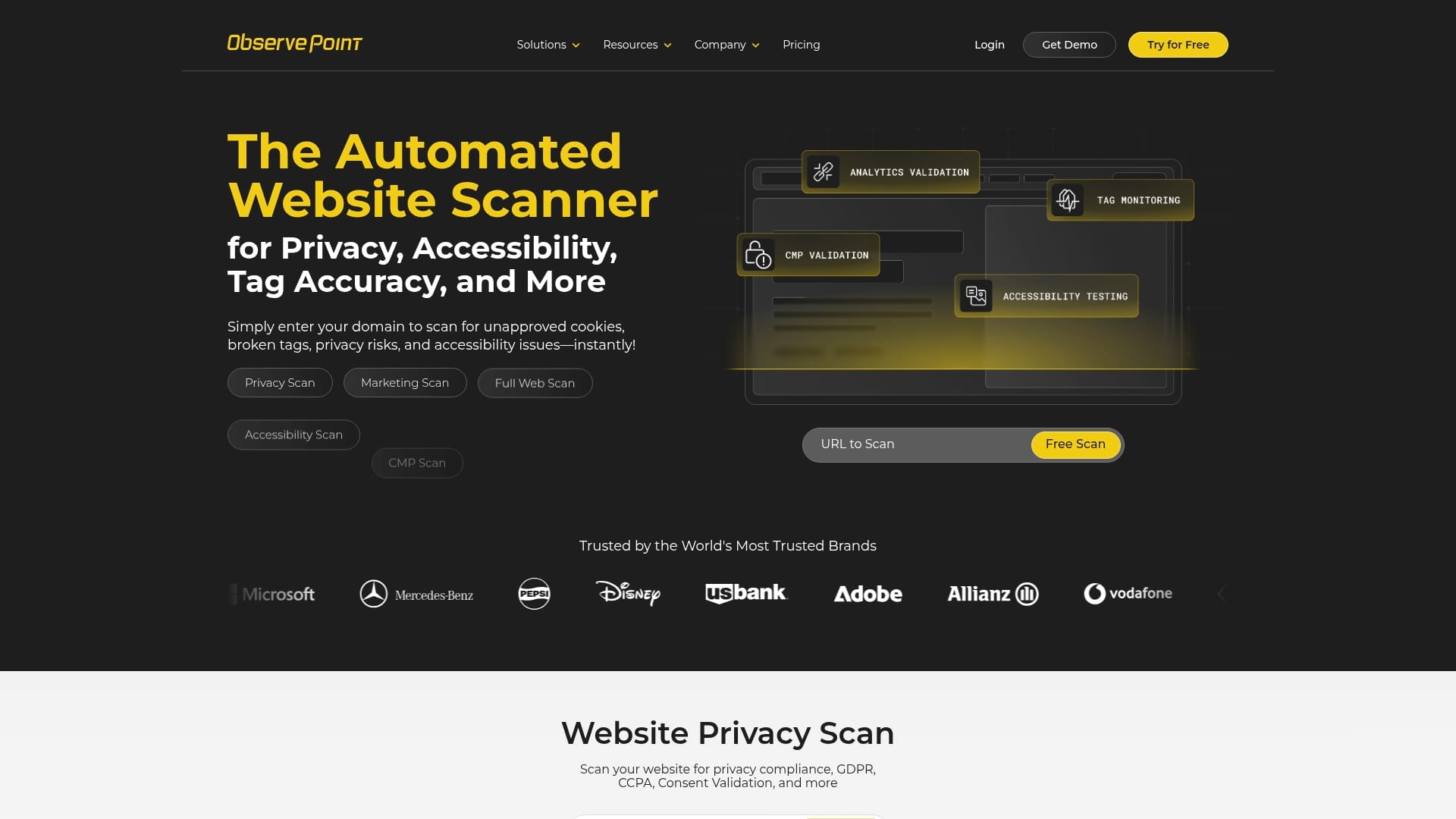
ObservePoint is an automated website scanner that finds unapproved cookies, broken tags, privacy risks, and accessibility issues across sites. The platform delivers broad audit coverage quickly and reports issues in a way marketing and compliance teams can act on.
Core Features
ObservePoint bundles privacy scanning, analytics validation, and accessibility checks into scheduled audits that run across pages and journeys. The product lists these core scans:
- Website Privacy Scan for unapproved cookies and privacy exposures
- Analytics Validation Scan for tag accuracy and data layer checks
- Website Accessibility Scan for ADA and WCAG checks
- Full Website Audit to cover pages at scale
- Consent Banner Audit and Marketing Landing Page Scan for campaign assets
Pros
- Automated comprehensive website auditing: The platform runs scheduled scans to reduce manual spot checks and reveal issues across large sites.
- Multiple scan types: Privacy, accessibility, analytics validation, and email link checks appear in one platform for consolidated oversight.
- Trusted by major brands: Enterprise references suggest stability and scalability for high traffic environments.
- Fast issue identification: ObservePoint highlights broken tags and privacy risks so teams can prioritize fixes for compliance and measurement accuracy.
- User friendly interface and support options: The interface and support resources lower the barrier for marketing and compliance teams to act on scan results.
Cons
- Usage based pricing can be costly: Pricing that scales with pages scanned and journeys supported may increase quickly for very large sites.
- Results may require technical interpretation: Some findings need developer attention to diagnose and fix which adds handoff overhead.
- Limited visible customization details on the website: Public documentation does not list all customization options so procurement conversations may require clarification.
Who It�s For
ObservePoint fits web developers, digital marketers, compliance officers, and website administrators who manage large or complex websites. Teams that must prove GDPR or CCPA compliance while keeping analytics accurate gain the most value from scheduled, automated audits.
Unique Value Proposition
ObservePoint combines privacy auditing and analytics validation in a single audit engine so teams do not juggle multiple tools. The strength lies in comprehensive scans that run at scale and surface actionable findings for both marketers and technical teams.
Real World Use Case
A company runs weekly privacy and accessibility scans with ObservePoint to detect cookie exposures and WCAG violations before public audits. The team fixes issues proactively and reduces risk during marketing launches and product releases.
Pricing
A free plan with limited scans is available for basic validation. Paid plans vary based on pages scanned and journeys supported which ties cost to the scope of audits.
Website: https://observepoint.com
Stape
At a Glance
Stape offers a focused platform for server-side tracking that helps recover data lost to browser restrictions and tightens control over marketing data. Its core strength is providing scalable, privacy oriented server GTM hosting that suits agencies and marketing teams running high volume campaigns.
Stape requires some technical setup and can feel complex for nontechnical users, but the payoff is more accurate attribution and better use of first party data for ad platforms.
Core Features
Stape centers on Server GTM Hosting for quick and secure server side tagging with EU cloud options available for regional compliance. It also provides a Signals Gateway to capture and route first party data and dedicated gateways for major ad platforms.
The platform includes Meta Conversions API Gateway Hosting and TikTok Events API Gateway that allow integration without heavy developer involvement, plus templates, plugins and debugging tools to speed implementation and reduce mistakes.
Pros
-
Cost effective and scalable: Stape supports hundreds of millions of requests per day while keeping hosting costs reasonable for most projects.
-
Quick setup with community support: Documentation, templates and an active community shorten deployment time and reduce reliance on in house engineering.
-
Comprehensive toolkit: Templates, plugins and debugging tools make it easier to build consistent server side tag configurations across clients.
-
Privacy and security focus: EU hosting options and secure data handling help you meet privacy obligations and limit exposure to browser changes.
-
High throughput architecture: The platform handles high traffic volumes which matters for enterprise level ad spend and accurate reporting.
Cons
-
Technical complexity can be steep for marketers without engineering support: Some users will need developer help to configure more advanced data flows and custom gateways.
-
Pricing scales with traffic and custom needs: High volume setups often require custom enterprise plans which increases total cost for large sites.
-
Reliant on internet and server infrastructure: Outages or network issues impact event delivery the same way any server hosted solution would.
Who It’s For
Stape fits digital marketing agencies and performance teams that need reliable server side tracking and improved attribution. Choose Stape if you run multi platform campaigns, manage many client accounts, or want to centralize first party data for ad platforms.
Unique Value Proposition
Stape delivers a turnkey server side tagging stack focused on improving tracking accuracy and privacy compliance while scaling to enterprise traffic levels. The combination of ready made gateways for major ad platforms and regional hosting options makes it a practical choice for teams prioritizing data quality.
Real World Use Case
A digital agency uses Stape to host server GTM and route events to multiple platforms. The agency consolidates signals from web and server sources, restores conversions lost to browser restrictions, and improves ROAS reporting across client campaigns.
Pricing
Stape offers a freemium plan for server GTM with hosting plans starting at $20 per month and custom enterprise pricing for high traffic needs.
Website: https://stape.io
Cookiebot
At a Glance
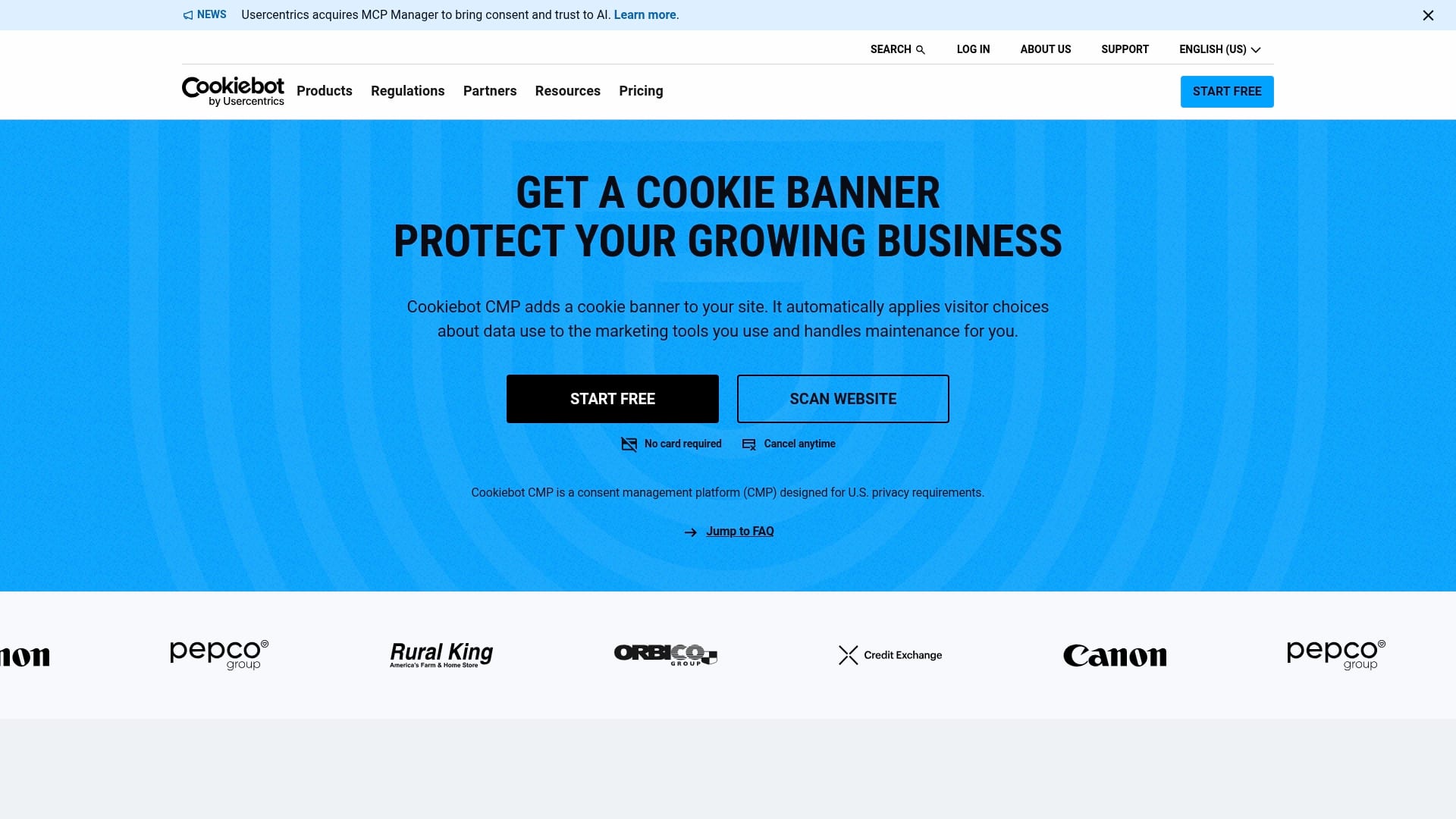
Cookiebot is a consent management platform that scans sites, displays a customizable banner, and centralizes user consent preferences across regions. It fits teams that need reliable cookie discovery and clear consent controls without heavy technical lift.
Core Features
Cookiebot offers automated website scanning to find cookies and trackers, a customizable cookie banner, and granular user consent options to separate marketing from essential categories. It lists seamless CMS integrations for WordPress and Wix and compatibility with major privacy frameworks.
- Automated website scanning for cookies and trackers
- Customizable cookie consent banners and language support
- Granular user consent options and category controls
- Integrations with popular CMS platforms
- Compliance support for GDPR, CCPA, LGPD, TCF, and Google Consent Mode
Pros
- Easy setup with templates: Cookiebot provides pre built templates and customization tools that shorten deployment time for marketing and analytics teams.
- Powerful automation: The platform’s website scanning and compliance updates reduce manual audit work and keep consent inventories current.
- Certified security posture: Cookiebot documents certifications such as ISO 27001 and ISO 27701 and advertises HIPAA readiness, which supports privacy governance requirements.
- Multiregional language support: The product supports multiple languages and regional regulations, which helps global teams keep a single implementation across markets.
Cons
- Pricing transparency is limited: The provided data requires a website visit for pricing, which makes budget planning harder without direct vendor contact.
- Tradeoffs not documented in source data: The supplied information lists strengths but does not include performance limits, API details, or feature tiers that affect enterprise decisions.
- No explicit advanced monitoring detail: The product description does not describe real time alerts or root cause analysis features that some analytics teams expect from audit tooling.
Who It’s For
Cookiebot targets businesses and website owners who need to comply with privacy laws and want a straightforward, low friction consent management solution. It serves digital marketing teams and analytics owners managing multilingual sites who prioritize legal compliance and user preference control.
Unique Value Proposition
Cookiebot combines continuous cookie discovery with a user facing banner and consent recordkeeping to simplify regulatory compliance. Its value rests in automated scans plus granular consent controls that keep marketing and analytics vendors separated by consent state.
Real World Use Case
A company uses Cookiebot to scan its site nightly, populate a consent banner tuned for GDPR and CCPA, and allow visitors to opt in to analytics versus marketing cookies. The result is a documented consent trail and fewer manual compliance checks.
Pricing
Please visit the website for detailed pricing information.
Website: https://cookiebot.com
CookieYes
At a Glance
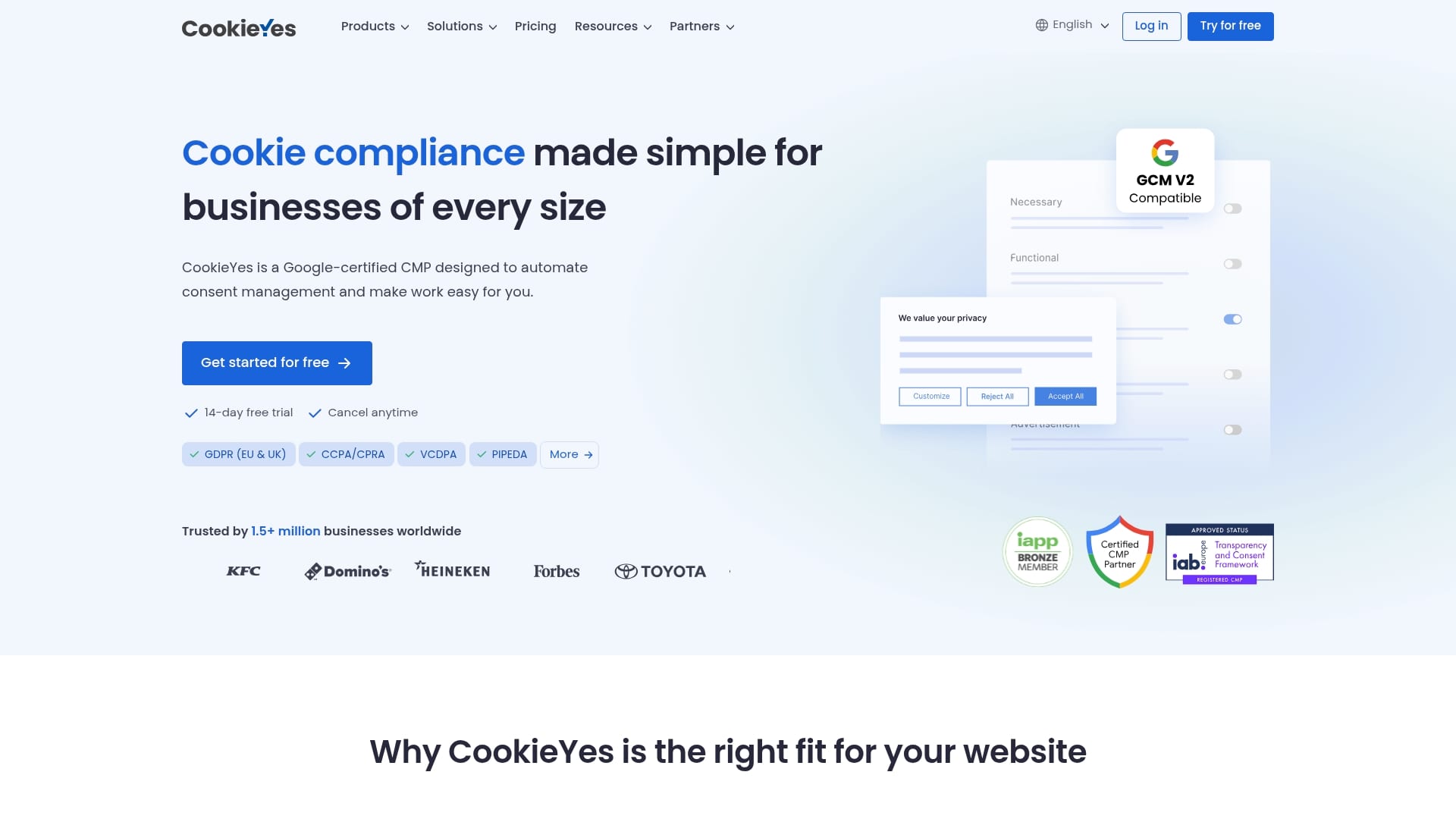
CookieYes delivers a pragmatic consent solution that automates consent capture while giving you control over banner design and behavior. It balances compliance across GDPR and CCPA with integrations that make tag management and reporting less painful for analytics teams.
Core Features
CookieYes offers customizable cookie banners, automated consent management, and website scanning for cookies and compliance risk assessment. The platform supports Google Consent Mode and IAB TCF v2.3 and integrates with platforms such as WordPress, Shopify, and Wix for faster deployment.
Pros
- Quick setup with a code snippet: You can deploy the consent banner with a single script and start blocking non essential cookies immediately.
- Broad compliance coverage: The platform maps to GDPR, CCPA, and other regional requirements so legal teams get consistent audit artifacts.
- Flexible customization options: Banner layout, copy, and consent flows are editable so brand and UX teams keep design control.
- Automated management features: Auto blocking and scheduled scans reduce manual checks and catch drift in cookie behavior.
- Multi platform support: Native connectors for WordPress, Shopify, and Wix make it practical for both small stores and enterprise sites.
Cons
- Some advanced features and higher pageview plans require paid tiers which can strain budgets for small websites.
- Achieving full customization often requires code implementation which means analytics or developer resources must be involved.
- The provided material lacks a detailed competitor comparison which makes feature benchmarking harder for procurement teams.
Who It’s For
CookieYes fits teams that manage web analytics or ad campaigns and must prove lawful consent for tracking. It works for in house marketing teams at retail brands, agencies managing multiple clients, and compliance teams needing documented consent records for audits.
Unique Value Proposition
CookieYes combines simple deployment with enterprise integration standards so you get fast time to value without sacrificing technical controls. The platform ties consent state into tag management workflows which helps protect measurement accuracy and ad attribution across campaigns.
Real World Use Case
A retail site uses CookieYes to show a branded consent banner, block non essential cookies until consent is granted, and feed consent signals into Google Tag Manager for correct campaign attribution. The site generates compliance reports for auditors during privacy reviews.
Pricing
CookieYes offers a free plan with basic features. Paid plans start at $10 per month for the Basic plan and scale up to $55 per month for the Ultimate plan with annual billing options and extra features on higher tiers.
Website: https://cookieyes.com
OneTrust
At a Glance
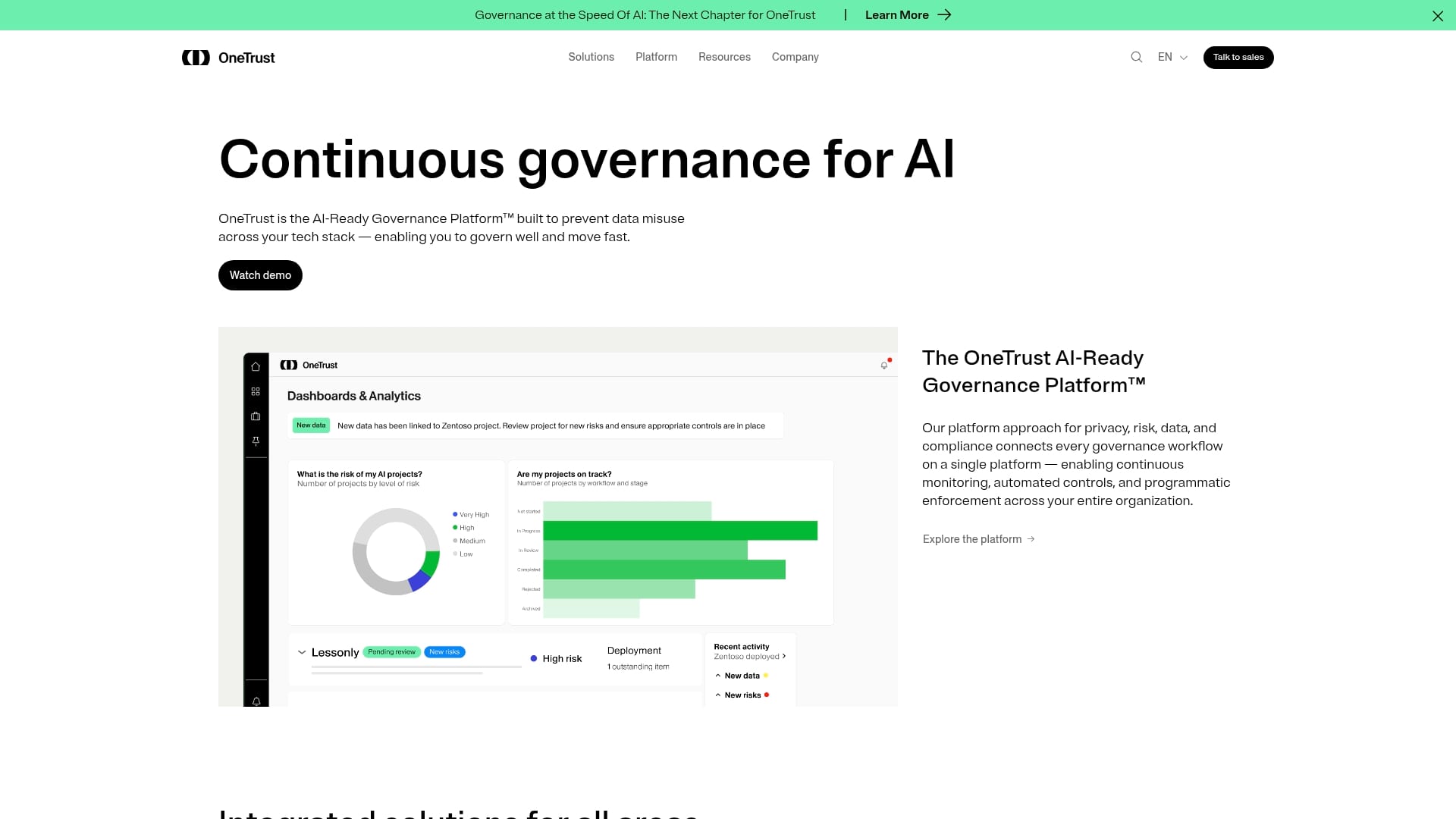
OneTrust is an enterprise grade governance platform that centralizes privacy, risk, and compliance workflows across complex tech stacks. Its strength lies in combining AI governance with continuous monitoring so teams detect policy violations and react faster.
Core Features
OneTrust centralizes governance from policy to runtime and offers continuous monitoring and automated controls across systems. The platform supports AI risk assessments, automates model documentation and regulatory reporting, and detects sensitive data and policy violations across AI systems.
Pros
- Comprehensive governance platform: OneTrust connects multiple workflows so privacy, risk, and compliance actions live in one place for clearer accountability.
- Regulatory and AI risk support: The platform supports compliance with global frameworks and includes tools for AI risk management that fit enterprise governance programs.
- Automated controls and monitoring: Continuous monitoring and automated controls reduce manual checks and help surface issues earlier in the stack.
- Scalable across organizations: OneTrust scales from regional deployments to global programs, making it suitable for varied team sizes and regulatory footprints.
- Trusted by large organizations: Many large organizations use OneTrust, which signals maturity and enterprise readiness when managing complex compliance demands.
Cons
- Pricing is not publicly listed and customers must contact OneTrust for custom quotes, which slows initial procurement planning.
- The platform is feature rich and complex, which creates a learning curve for new users and increases onboarding time.
- Some modules require additional integrations or configuration steps to unlock full functionality, adding implementation overhead.
Who It’s For
OneTrust is aimed at organizations that run advanced privacy and compliance programs and need centralized governance across data and AI initiatives. It fits legal, privacy, risk, and analytics teams working across multiple regions and regulatory regimes.
Unique Value Proposition
OneTrust brings together privacy automation, data use governance, third party management, and AI governance on a single platform so teams govern consistently. The centralization reduces fragmented workflows and helps you move from ad hoc fixes to programmatic control.
Real World Use Case
Iberia Airlines used OneTrust to address privacy challenges and to improve incident management and AI governance. The deployment helped the airline position itself for future privacy compliance and brought clarity to cross functional processes.
Pricing
Pricing varies by solution set, number of users, and data volumes and is provided as custom quotes through OneTrust sales. Expect enterprise style licensing and implementation fees rather than a standard public price list.
Website: https://onetrust.com
Usercentrics
At a Glance
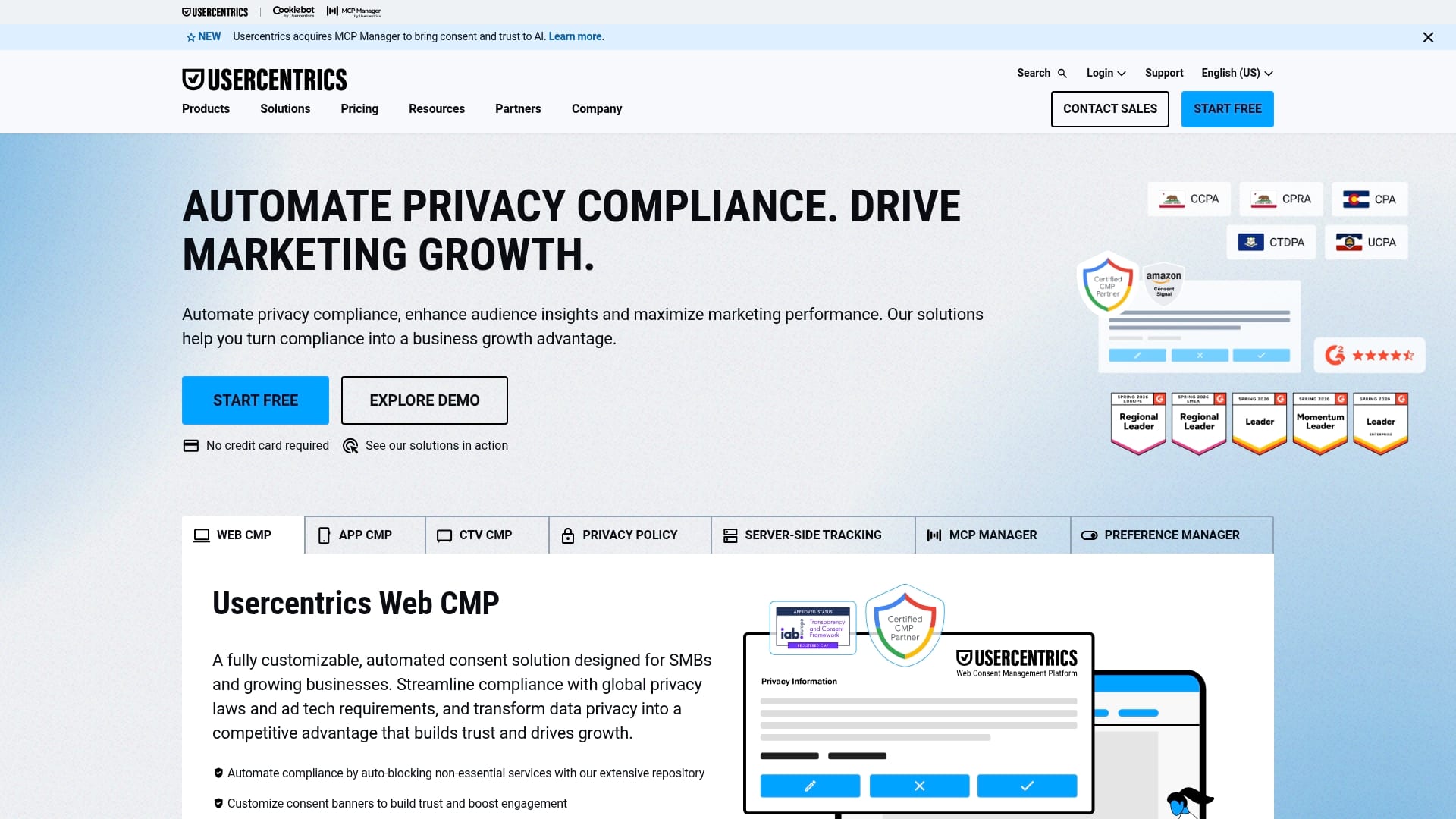
Usercentrics is a consent management platform built to automate privacy compliance across web, app, and connected TV. It balances rigorous regulatory support with tools that help marketing teams preserve tracking and attribution while meeting GDPR and CCPA requirements.
Core Features
Usercentrics centralizes consent capture and governance with customizable consent banners, a privacy policy generator, MCP Manager for AI data access control, and server-side tracking for improved data control and performance. Analytics dashboards and cross-platform support complete the suite.
- Key capabilities: automated consent, multi-platform banners, privacy policy generation, AI access control, and server-side tracking.
Pros
- Comprehensive platform across platforms: The product covers web, mobile, and connected TV, reducing fragmentation for teams that manage multi-channel campaigns.
- Broad regulatory coverage: Support for GDPR, CCPA, and additional regional rules lowers legal risk for international deployments.
- Detailed customization and analytics: Teams can tailor consent flows and view granular consent metrics to preserve attribution where allowed.
- Established industry reputation: Strong client testimonials indicate reliability for enterprise-grade privacy management.
- AI and data governance features: Built-in tools for controlling AI access to data help reduce exposure when using large language models.
Cons
- Complex pricing structure: The pricing model varies by product and plan and can be confusing for teams evaluating cost versus value.
- Technical implementation required: Several advanced features, such as server-side tracking, require developer involvement and careful setup.
- Cost at scale: Higher-tier plans can become expensive for smaller businesses that need enterprise capabilities.
Who It’s For
Usercentrics fits marketing, analytics, and privacy teams at companies that run multi-channel campaigns and need centralized consent control. Product and engineering teams working with advertising and attribution will value the platform’s ability to preserve data utility while meeting compliance.
Unique Value Proposition
Usercentrics combines consent capture with governance features that directly support marketing measurement. The pairing of server-side tracking and AI data access controls offers a pragmatic path for teams that want to protect user privacy while maintaining usable analytics for campaign optimization.
Real World Use Case
A retail company deploys Usercentrics to manage cookie consent, generate compliant privacy policies, and route critical events through server-side tracking. The result is retained attribution for paid campaigns while maintaining clear consent records for audits and regulators.
Pricing
Pricing varies by product and plan with options from a free trial to enterprise agreements. Basic plans start at $8/month and scale up depending on features, traffic volume, and required compliance modules.
Website: https://usercentrics.com
Tracking and Compliance Tools Comparison
The following table provides a side-by-side comparison of several popular tools used for monitoring, auditing, consent management, and tracking within digital environments. Use this comparison to determine which solution might best suit your needs.
| Product | Key Features | Pros | Cons | Starting Price |
|---|---|---|---|---|
| Trackingplan | AI-powered data monitoring, automated error alerts, privacy compliance verification | Automated tracking validation, root cause analysis for errors, reduces data inconsistencies | High initial setup for small teams | Free plan; $249/month |
| ObservePoint | Privacy audits, accessibility checks, analytics tag validation | Comprehensive audits, supports multiple compliance measures, user-friendly interface | Usage-based pricing can scale up quickly, results may require technical interpretation | Free plan; Details vary |
| Stape | Server-side tracking setup and management for marketing platforms | Scalable and cost-effective, prioritizes data privacy, templates available for ease of implementation | Requires technical setup for optimization, pricing scales with custom needs | Free plan; $20/month |
| Cookiebot | Consent management, website cookie scanning, compliant consent UI | Automated scanning, granular control, compliance across regions | Limited advanced features documentation, enterprise pricing not disclosed | Pricing details on site |
| CookieYes | User consent banners, automated cookie scanning, compliance with global regulations | Supports multilingual sites, customizable banners, automated manual processes | Advanced features may need higher-tier plans, requires developer input for full customization | Free plan; $10/month |
| OneTrust | Centralized governance for privacy, AI management, and data compliance | Comprehensive features, supports global privacy frameworks, scalable for enterprises | Complex platform learning curve, custom pricing | Pricing by quote |
| Usercentrics | Consent capture, compliance verification, and cross-platform support | Supports GDPR and CCPA, offers server-side tracking, detailed analytics | Complex pricing, technical setup needed for server-side tracking remarks | Free Trial; $8/month |
Ensure Accurate Cookie Audits and Compliance with Trackingplan
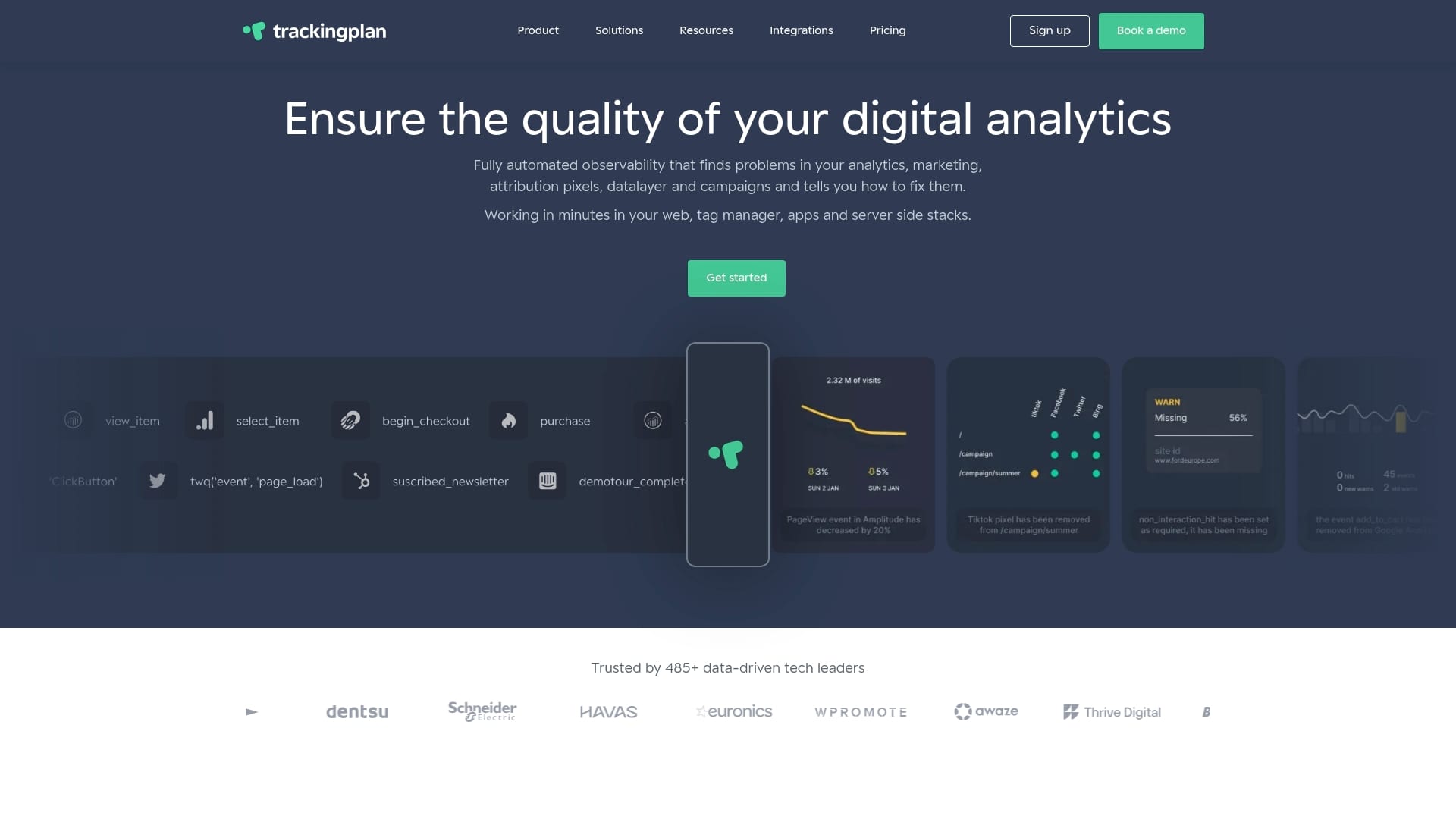
Navigating the complexities of cookie audit tools in 2026 means tackling challenges like cookie discovery, consent validation, and privacy compliance head-on. Many teams face frustrations with manual tracking errors, broken pixels, and inconsistent data that compromise campaign attribution and reporting accuracy. Trackingplan directly addresses these pain points by offering AI-powered continuous monitoring, automated alerts, and root cause analysis designed to detect issues before they impact your marketing analytics.
Discover how you can reduce manual efforts and improve your cookie audit workflows by exploring our expert insights in the Digital Analytics Blog. Act now to safeguard your data quality and compliance today. Visit Trackingplan and start turning analytics challenges into measurable business growth.
Frequently Asked Questions
What is a cookie audit tool?
A cookie audit tool is software that scans websites to identify cookies and tracking technologies used, ensuring compliance with privacy regulations. To get started, implement a cookie audit tool to review your site’s current cookie usage and potential privacy risks.
How do I choose the right cookie audit tool for my needs?
To select a suitable cookie audit tool, assess your specific requirements, such as the need for automated scans, customization options, and support for multiple compliance frameworks. Compare features and trial different tools to understand which best meets your operational needs.
How can a cookie audit tool benefit my website?
A cookie audit tool can enhance your website’s compliance with privacy regulations, reduce legal risks, and improve user trust by transparently managing cookies and consents. Begin by conducting regular audits to ensure that your cookie practices align with current regulations.
How often should I conduct a cookie audit?
It is recommended to conduct a cookie audit at least once every quarter or after significant website updates. Schedule these audits to consistently maintain compliance and address any emerging cookie-related issues promptly.
Can cookie audit tools help with GDPR compliance?
Yes, cookie audit tools are designed to assist with GDPR compliance by ensuring proper cookie disclosures and user consent mechanisms are in place. Utilize these tools to regularly check your compliance status and update your privacy practices accordingly.
What features should I look for in a cookie audit tool?
Look for features such as automated cookie scanning, comprehensive reporting, customizable consent banners, and integration capabilities with your existing systems. Prioritize tools that provide clear insights and detailed reports on cookie usage to streamline your compliance efforts.