tpTrackingplan answers
First-party data is the information you collect directly from your audience. Think of it as your own private address book, filled with contacts you’ve personally met and built a relationship with. It's information based on your interactions, not someone else's.
Why First-Party Data Is Your Most Valuable Asset
For years, marketing felt like navigating with a map drawn from secondhand rumors. Using third-party data was a lot like that—relying on information from anonymous sources to guess what customers might want. It was the digital equivalent of renting a massive, outdated mailing list and just hoping a few of the names were still good. That whole approach is going extinct.
The industry is making a massive pivot away from rented, unreliable information. Smart businesses are now focused on building their own "personal address book," which is the core of what is first-party data: information you gather straight from your audience through your website, app, CRM, or even email campaigns. It’s the purest, most accurate source of customer insight you can get because you own it and you know exactly where it came from.
The Power of a Direct Connection
This direct line to your audience gives you unmatched accuracy and helps build genuine customer trust. When someone shares their information with you, they're expecting a better, more relevant experience in return. First-party data is what lets you deliver on that promise, creating a positive feedback loop that strengthens loyalty over time.
This isn't just a fleeting trend. It's a fundamental shift driven by growing privacy concerns and the crumbling of third-party tracking. For a deeper look at this transition, you can explore the details on the death of third-party cookies.
First-party data isn't just a marketing asset; it's a business asset. It reflects a direct, consent-based relationship with your audience, providing the foundation for personalization, trust, and sustainable growth in a privacy-first world.
The Tangible Impact on Your Bottom Line
The move toward owned data is only speeding up, especially with Google's Chrome set to finally phase out third-party cookies by the end of 2025. The results from businesses that have already embraced a first-party strategy are hard to ignore.
In Q1 2025, 71% of publishers already saw this data as a key driver for their advertising results. Brands using it have reported up to an 8x return on ad spend and a 72% boost in ROI. To dig deeper into the benefits, you can explore these additional resources on first-party data. The numbers send a clear message: investing in your own data isn’t just about staying compliant; it’s about driving a stronger, more predictable return on investment.
Understanding The Three Types Of Customer Data
To really get why first-party data is such a big deal, you have to look at the whole data landscape. Not all customer information is created equal. It all comes down to its origin story—where the data came from and how you got your hands on it. These differences are massive, affecting everything from how accurate your insights are to how much your customers trust you.
Think of it like this: first-party data is a direct conversation you're having with a customer. Second-party data is like getting an introduction from a trusted mutual friend. And third-party data? That's like trying to piece together a story from snippets of conversations you overhear in a crowded room. Each one gives you a totally different level of clarity and reliability.
First-Party Data: The Direct Connection
Like we touched on earlier, first-party data is the information you collect straight from your audience. It comes from your own websites, apps, and direct interactions with people who engage with your brand.
This is the good stuff, the information you gather yourself from places like:
- Your website or app: Clicks, pages visited, time spent on site, and what's in their shopping cart.
- Your CRM system: Purchase history, customer service chats, and general account information.
- Email and SMS campaigns: Open rates, click-throughs, and any preferences they’ve shared.
- Surveys and feedback forms: Direct answers about what they like, what they don’t, and what they want to see next.
Because you're the one collecting it, this data is as accurate and relevant as it gets. It’s the gold standard, plain and simple.
This map perfectly illustrates the difference between data you truly own versus data you’re essentially renting from someone else.
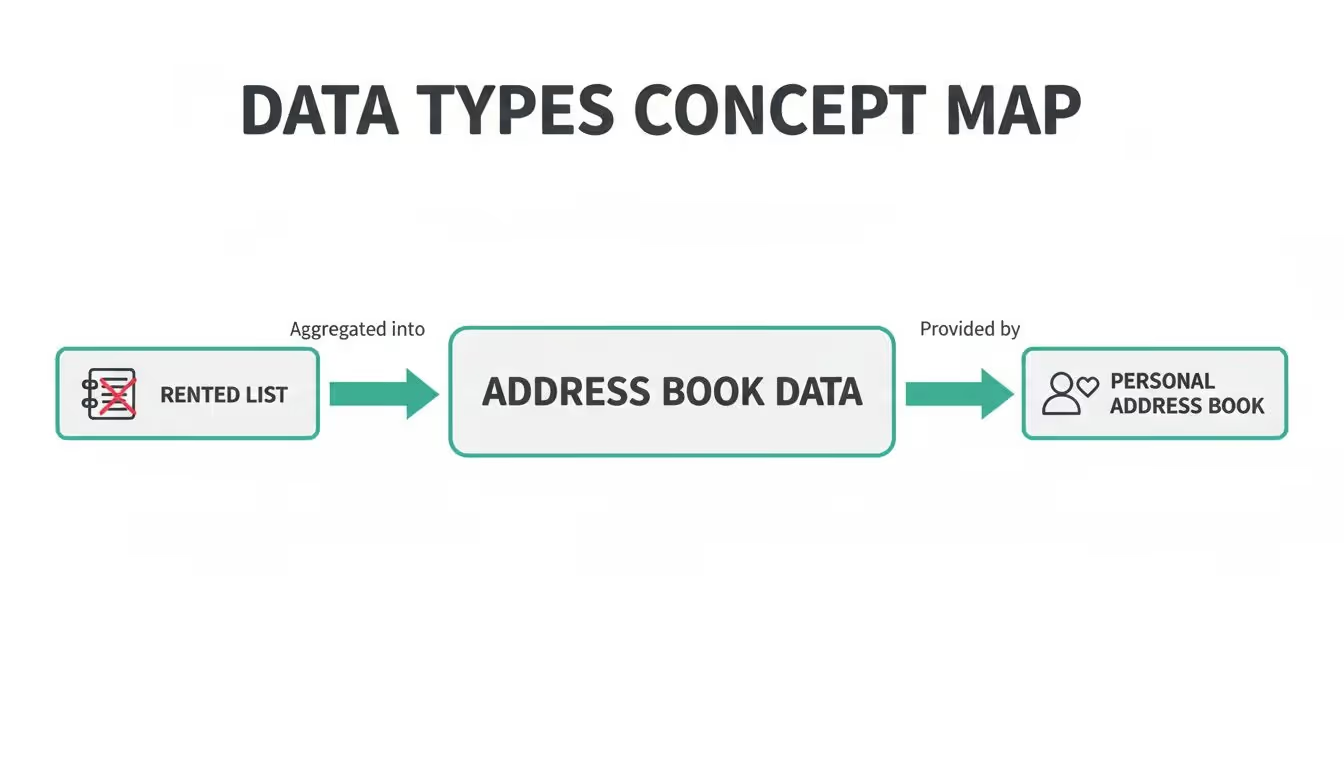
As you can see, your own data is a personal, trusted asset. It's worlds apart from aggregated lists pulled together from who-knows-where.
Second-Party Data: The Trusted Partnership
Next up is second-party data. This is basically another company's first-party data that you get your hands on through a direct partnership. For example, a hotel chain might team up with an airline. They could share insights about their audiences to create travel packages that appeal to both of their customer bases.
This data is usually pretty reliable since it comes from a source that has its own direct relationship with customers. The catch? Its usefulness hinges entirely on how well that partner's audience overlaps with yours.
Third-Party Data: The Broad Aggregate
Finally, there’s third-party data. This is information gathered by companies that have zero direct relationship with the people the data is about. These are massive data aggregators that scrape information from countless websites and platforms, then bundle it up and sell it.
While it offers huge scale for reaching new audiences, it comes with some serious baggage. This data is often inaccurate, out of date, and the way it's collected can be murky, raising major privacy red flags. With the slow death of third-party cookies, its reliability and availability are tanking fast.
To make it even clearer, let's break down how these three data types stack up against each other.
First vs Second vs Third Party Data Comparison
This table shows why the source of your data matters so much—quality and relevance drop significantly as you move away from that direct customer relationship.
The core value of first-party data is its accuracy, which comes from direct customer interactions. This provides granular behavioral insights that are essential for precise segmentation and personalization, especially as AI-driven decisions demand higher-quality inputs.
This level of accuracy is exactly why first-party data delivers a much better return on your investment. Instead of shouting into the void with noisy third-party lists, you're targeting people you already know are interested, which cuts down on wasted ad spend. It’s no surprise that many publishers are seeing their ad performance skyrocket, with 71% crediting first-party data in the first quarter of 2025.
You can explore more about how first-party data drives performance to see the full impact. By building your strategy around data collected with consent, you can create the kind of hyper-relevant experiences that customers don't just appreciate—they now expect.
How To Collect And Manage Your First Party Data
Knowing that first-party data is valuable is the easy part. The real work starts when you have to build a system to actually gather and protect it. This is where theory meets practice. It’s about creating a deliberate, ethical plan to collect information at every key customer touchpoint—not just for the sake of having more data, but to build a foundation of trust for your entire marketing strategy.
The process kicks off by pinpointing where these valuable interactions happen. Think of your digital properties as gold mines of direct customer insight. Each one offers a unique window into what your audience needs and how they behave.
Key First Party Data Collection Points
To get this right, you can't just rely on one source. A multi-channel approach is essential because each source provides different pieces of the puzzle. When you put them all together, you get a rich, detailed picture of your customer.
Here are some of the most effective collection points:
- Website and Mobile Apps: This is your ground zero for behavioral data. Every click, page view, search query, and item added to a cart tells a story about what a user wants. Analytics tools capture these interactions, showing you what content is hitting the mark and where people are running into friction.
- CRM Systems: Your Customer Relationship Management (CRM) platform is the central hub for all things transactional. It tracks purchase history, customer service tickets, and communication logs, giving you a clear, historical view of each customer's relationship with your brand.
- Email and SMS Campaigns: When someone subscribes to your newsletter or texts, they're explicitly giving you a direct line to them. Engagement metrics like opens, clicks, and conversion rates are powerful first-party signals that tell you exactly which messages and offers are resonating.
- Customer Surveys and Feedback Forms: Sometimes, the best way to get an answer is just to ask. Surveys, polls, and feedback forms let you collect qualitative data and specific preferences straight from the source, filling in the crucial "why" behind their actions.
By pulling data from all these sources, you move beyond isolated data points and start building truly comprehensive customer profiles. Of course, this requires a solid framework. You can learn how to create a customer data tracking plan to make sure your collection methods are organized and built to scale.
Your goal isn't just to collect data, but to create a value exchange. Customers are more willing to share information when they believe it will lead to a better, more personalized, and more relevant experience.
The Foundation of Trust and Compliance
Collecting data comes with a huge responsibility. We live in an era of heightened privacy awareness, and how you manage that data is every bit as important as how you collect it. Trust is fragile. Breaking it can do lasting damage to your brand's reputation and your bottom line.
Responsible data stewardship isn't optional—it’s built on two core pillars: consent and compliance.
Managing Consent and Ensuring Privacy
Before you even think about collecting a single piece of information, you need clear and explicit consent from the user. This means being totally transparent about what data you’re collecting, why you need it, and how you plan to use it.
Here are a few key practices for getting this right:
- Transparent Privacy Policies: Your privacy policy should be easy to find, written in plain language, and dead simple to understand. It needs to clearly spell out your data practices. To build trust and avoid legal trouble, learn how to write a GDPR-compliant privacy policy for your newsletters.
- Granular Consent Options: Ditch the all-or-nothing approach. A good consent management platform (CMP) lets users opt-in to specific types of data collection (like analytics, personalization, or marketing) while opting out of others. This gives them genuine control.
- Adherence to Regulations: You absolutely must comply with data privacy laws like the General Data Protection Regulation (GDPR) in Europe and the California Consumer Privacy Act (CCPA). These regulations set strict rules for data handling and give consumers specific rights over their personal information.
Building a system that collects, protects, and respects customer data is the only sustainable path forward. It ensures your strategy is not just effective but also ethical, creating a foundation of trust that will pay dividends for years to come.
Putting Your First-Party Data To Work
Collecting troves of information is just the first step. The real magic happens when you actually put that first-party data to work. This is where you connect the dots between what you know about your customers and how you interact with them, turning a deep, direct understanding of your audience into a serious competitive advantage.
When you get it right, this data transforms generic customer interactions into genuinely personal experiences. It allows you to move beyond guesswork and start making decisions based on what people actually do and say, which is the secret sauce for boosting both loyalty and sustainable growth.

Craft Hyper-Personalized Website Experiences
One of the quickest wins with first-party data is right on your own website or app. By looking at a user's browsing history, past purchases, and on-site behavior, you can start changing their experience in real time. We're talking about much more than just dropping their first name in an email.
Imagine an e-commerce store that notices a visitor clicks on the "Men's Running Shoes" category most often. The next time they land on the homepage, the main banner and featured products can be tailored to showcase exactly that—running shoes. It’s a simple tweak, but it makes the site feel instantly more relevant and intuitive, guiding the user straight to what they’re most likely to buy.
A great example is a "Recommended for You" engine that doesn't feel random. By using a customer's real purchase and viewing history, you can generate product suggestions that are genuinely helpful. This kind of personalization is a direct line to increasing cross-sells and upsells, giving your average order value a healthy boost.
Build Laser-Focused Advertising Campaigns
As the ad world waves goodbye to third-party cookies, first-party data has become the new MVP for effective audience targeting. You can use your own data to build incredibly specific audience segments for your ad campaigns on platforms like Meta and Google.
For instance, you could whip up a segment of customers who have bought from you more than three times in the last year but haven't been back in 60 days. This lets you run a pinpoint-accurate re-engagement campaign with a special offer just for them. This kind of precision stops you from wasting ad spend on broad, uninterested audiences.
The end of the third-party cookie era marks a historical pivot, with first-party data emerging as the consent-based cornerstone for measurement and targeting. With Chrome's full phase-out set for December 2025, the old norms of tracking are over, thrusting data gathered transparently from owned properties into the spotlight.
This shift isn't just about playing by the new rules; it's about performance. The benefits are stark, with some studies showing up to 8x returns on ad spend and 83% cuts in customer acquisition costs. Following privacy updates like GDPR and iOS 14, adoption has spiked. By 2025, it's expected to be indispensable for over 90% of major enterprises. You can learn more about the rising importance of first-party data to get the full picture.
Inform Smarter Product Development
Your first-party data is a direct pipeline to your customers' needs and frustrations, making it an absolute goldmine for your product strategy. Instead of relying on gut feelings or broad market trends, you can use cold, hard data to guide your roadmap.
Think about a software company that sees a huge number of users repeatedly searching its help docs for a feature that doesn't exist. That behavioral data is a massive, flashing sign of unmet demand. It gives the product team a data-backed reason to prioritize building that feature in the next update.
In the same way, analyzing customer service tickets, survey responses, and on-site feedback can reveal common pain points or desires. When you combine this qualitative feedback with quantitative behavioral data, your product team gets a complete picture of what to build next to keep customers happy and coming back for more.
Why Data Quality Is Your Secret Weapon
Piling up mountains of first-party data feels like a win, but it doesn't mean much if the information is broken. This brings us to the critical—and often ignored—challenge of data quality. It's the silent factor that decides whether your data is a game-changing asset or just a costly liability.
Poor data quality can quietly poison your entire strategy. Think of it like trying to navigate a new city with a map full of typos and missing streets. You'll make wrong turns, waste time, and end up miles from your destination. In business, those wrong turns translate directly into flawed analysis and wasted marketing spend.
Uncovering the Silent Profit Killers
A handful of common issues can wreck the quality of your first-party data, creating a ripple effect of bad decisions across your organization. These aren't just minor tech glitches; they're fundamental problems that destroy the integrity of your insights.
Some of the worst offenders include:
- Broken Tracking: When analytics tags don't fire correctly—or at all—you lose visibility into crucial user actions. This leaves massive blind spots in your customer journey maps.
- Inconsistent Campaign Tagging: If your team uses different UTM conventions (like
utm_source=facebookvs.utm_source=Facebook), your attribution models become a complete mess. You can't tell which campaigns are actually driving results. - Missing or Incomplete Data: Imagine a user completes a purchase, but the
order_valueproperty comes through empty. These missing data points make it impossible to run accurate revenue analysis or segment high-value customers.
These seemingly small errors pile up fast, leading to unreliable reports and a total lack of confidence in your data. It's impossible to make smart, data-driven decisions when the information you’re using is fundamentally broken.
The Cost of Inaction
Ignoring data quality isn't a neutral choice; it comes with real and often severe consequences. Marketers burn huge chunks of their budgets on the wrong audiences or repetitive messaging simply because their data is off. Disconnected touchpoints create friction in the customer experience, pushing potential buyers away for good.
High-quality data isn't an accident. It's the result of a proactive strategy that transforms your data from a potential liability into a trustworthy asset for confident decisions.
Failing to tackle these issues means you're operating with a massive handicap. You might pour money into a personalization engine that shows irrelevant products or an email campaign that targets the wrong segment. Poor data quality doesn't just lead to bad reports—it leads to bad business outcomes. To see just how deep the rabbit hole goes, you can learn more about the business risks of poor data quality.
Building Your Defense System with Automation
So, how do you defend the integrity of your first-party data? The answer is shifting from a reactive "fix-it-when-it-breaks" mindset to a proactive one. Keeping data clean requires constant vigilance, and manual audits are just too slow and clunky to keep up with the pace of modern business.
This is where automated monitoring and validation become your real secret weapon. Think of these systems as a 24/7 security guard for your data pipelines, constantly checking to make sure every piece of information is accurate, complete, and reliable before it ever reaches your analytics and marketing tools.
An automated observability platform can act as your defense system by:
- Continuously Discovering Your Tracking: It automatically maps out your entire analytics setup, from the dataLayer to every marketing pixel, so you always have a clear picture of what's being tracked.
- Validating Data Against Your Plan: The system compares incoming data against your defined tracking plan in real-time, instantly flagging any deviations, schema mismatches, or missing properties.
- Detecting Errors in Real Time: It alerts your team immediately via Slack or email the moment issues like broken events, campaign tagging errors, or even potential privacy leaks pop up.
By automating this process, you stop spending weeks on manual audits and start fixing errors in minutes. This proactive stance ensures your dashboards are reliable, your insights are trustworthy, and your marketing spend is maximized. You can finally have confidence that the first-party data you're collecting is an asset you can build your business on.
Building Your First Party Data Strategy
Now that we've covered what first-party data is and why quality is non-negotiable, it's time to build a real-world strategy. Forget about some massive, multi-year project—a successful plan is a focused roadmap that turns raw data into tangible business results. The goal here is a practical framework that’s both manageable and rewarding.
This whole process really begins by looking inward. Before you can build anything new, you need a crystal-clear picture of what you already have. This foundational step stops you from collecting redundant information or, worse, investing in shiny new tools you don’t actually need.
Laying the Groundwork for Success
First things first: identify and audit your current data sources. Get granular here. Map out every single touchpoint where you collect information—from your website analytics and CRM to your email platform and customer service logs. You need to know what data lives in each system and how (or if) it’s being used today.
Next, you have to set clear business goals. What, exactly, are you trying to accomplish with this data? Are you aiming to boost customer retention by 15%? Maybe you want to sharpen your ad targeting or personalize website content to drive more conversions. Tying your data strategy to specific, measurable outcomes is the only way to prove its value down the line.
A first-party data strategy isn't a "set-it-and-forget-it" task. It demands a continuous loop of monitoring, measuring, and optimizing to keep the data accurate and ensure your actions are always aligned with your business objectives.
Executing Your Strategic Plan
With your goals locked in, it’s time to select the right tools for the job—collection, management, and quality assurance. This stack might include your analytics platforms, a Customer Data Platform (CDP) if it makes sense for your scale, and an automated monitoring solution like Trackingplan to protect your data integrity from day one.
Just as important, you must prioritize transparent privacy and consent practices. Make sure your methods for collecting and using data are clearly communicated to your audience and are fully compliant with regulations like GDPR and CCPA. Trust is the absolute bedrock of any first-party data initiative.
Finally, launch a pilot project to demonstrate value quickly. Don't try to boil the ocean. Start with a single, high-impact use case, like a re-engagement campaign for a specific customer segment. Proving success on a smaller scale builds momentum and secures the buy-in you'll need for broader implementation across the organization.
Frequently Asked Questions
Alright, let's wrap up by tackling some of the most common questions that come up around first-party data. These quick answers should help lock in the concepts we've covered and clear up any lingering confusion.
What Is The Main Difference Between First-Party and Zero-Party Data?
The real difference boils down to how you get the information. Zero-party data is what a customer chooses to tell you, straight up. Think about someone filling out a style quiz or picking their favorite product categories in an account preference center. They are actively and intentionally handing that information over.
On the other hand, first-party data is information you gather by watching what a user does on your own website or app. This covers things like which pages they visit, what they add to their cart, or their purchase history. So, zero-party is what they tell you; first-party is what they show you.
Can First-Party Data Be Shared With Other Companies?
As a general rule, no. The second you share your first-party data with another business, it’s no longer first-party—it becomes second-party data. A huge part of what makes first-party data so valuable is that it's yours and yours alone. It’s an exclusive asset that gives you a unique edge over the competition.
Beyond that, sharing this kind of data without getting very specific and explicit consent from the user can land you in hot water with privacy laws. It’s best to treat it as a proprietary resource for building a stronger, direct relationship with your own audience.
How Does First-Party Data Improve Marketing Attribution?
First-party data gives you a crystal-clear view of a customer’s journey across all the digital properties you own. Because you're the one tracking every interaction on your website, in your app, and through your email campaigns, you don't need to guess or rely on third-party cookies to connect the dots.
This direct evidence lets you build attribution models that are far more accurate. You can see with confidence which of your own touchpoints—a specific blog post, an email promotion, or a particular ad click—actually pushed a customer toward conversion. That means smarter, more effective budget decisions.
How Can I Ensure My Data Collection Is Compliant With Privacy Laws?
Staying compliant isn't optional, and it demands a proactive strategy built on transparency and giving users control. Every organization should have these fundamentals locked down:
- Use a Robust Consent Management Platform (CMP): This is your frontline tool for transparently asking for and managing user consent for data collection, making sure you honor their choices.
- Maintain a Clear Privacy Policy: Your policy needs to be written in plain language, not legalese. It should clearly explain what data you collect, why you need it, and how you use it.
- Practice Data Minimization: Just because you can collect a piece of data doesn’t mean you should. Only gather what's absolutely necessary for a clear business purpose. Hoarding data you don't use is a liability.
Building your data strategy on these practices creates a foundation of trust, which is absolutely essential for earning long-term customer loyalty and staying on the right side of the law.
Ensuring your first-party data is accurate and reliable is the key to unlocking its full potential. Trackingplan provides a fully automated observability platform that discovers your entire analytics setup, validates your data in real time, and instantly detects errors before they impact your business decisions. Stop relying on manual audits and let our platform be your single source of truth for data quality.