10 11 questions
?Do you collect any data about my users?
The Trackingplan SDK only inspects the network requests that your site or app already sends to third‑party vendors (e.g., Google Analytics, HubSpot, Mixpanel, Google Ads), and forwards to our backend only the events required for anomaly detection, already anonymized on-device.
These requests are parsed locally in the browser or app, where anonymization and masking are applied as configured. Only the processed, non-identifiable event data is transmitted to Trackingplan’s servers. Once received, events are parsed, modeled, and continuously monitored to detect anomalies that may indicate implementation issues, whether in your own tracking or introduced by third-party tools. Through our web interface, teams can explore the detected schema, review alerts, and inspect sample events to debug tracking errors with full visibility and control.
Additionally, we do not introduce new identifiers, nor store IP addresses or fingerprinting data, as these are stripped before processing.
For a complete overview of our privacy and security measures, please visit our Privacy & Security documentation.
?How does Trackingplan handle the data it receives when customers use Trackingplan?
At Trackingplan, we are committed to full transparency in how we handle data and protect user privacy. Our platform is designed with privacy, security, and compliance at its core, ensuring that our clients maintain complete control over their data while meeting the strictest privacy regulations.
The Trackingplan SDK only observes the network requests your site or app already sends to third-party services—such as Google Analytics, HubSpot, Mixpanel, or Google Ads. These requests are parsed locally within the user’s browser or mobile app, where any necessary anonymization or masking is applied according to your configuration. Only processed, anonymized events—never raw or identifiable data—are forwarded to Trackingplan’s backend, strictly for anomaly detection purposes.
Client data remains fully encrypted and logically isolated at all times. Our infrastructure runs on hardened AWS PaaS services, with encryption enforced both in transit and at rest. Fine-grained IAM roles and resource-level permissions ensure strict access control, while all customer data is automatically deleted after 90 days by default.
Security is not just technical—it’s built into our processes. Every code change is peer-reviewed and deployed via CI/CD pipelines. Our team enforces two-factor authentication (2FA), maintains detailed audit logs, and ensures 24/7 system monitoring with on-call coverage to guarantee availability. GDPR principles are embedded into our design, and we offer optional Data Processing Agreements (DPAs) to support legal and regulatory compliance.
Through Trackingplan’s web interface, clients can inspect data schemas, review alerts, and analyze sample events in real time—empowering teams to debug implementation issues and safeguard data quality, without ever compromising user privacy.
For a complete overview of our privacy and security measures, please visit our Privacy & Security documentation.
?Will the installation script interfere with my site or cause security issues?
No. The Trackingplan installation script is specifically engineered to be lightweight, non-intrusive, and secure—comparable to those used by trusted observability tools like Datadog and Sentry. At under 10KB, it loads asynchronously and does not block or delay the execution of any existing page elements or scripts.
The script is served directly as source code to eliminate the risk of unauthorized changes. It has been thoroughly reviewed by some of the most security-conscious clients in the industry, including data-driven organizations and privacy-focused teams. For companies that require additional assurance, we offer access to the decompiled version of the script under a signed non-disclosure agreement (NDA).
Designed with privacy and performance in mind, the script works only on declared endpoints—intercepting requests to third-party vendor domains that you’ve explicitly selected for monitoring. It performs anonymization and masking locally within the browser or app, without relying on external dependencies or introducing new cookies, storage mechanisms, or cross-site tracking.
Trackingplan's script never collects more data than your site or app already sends to analytics providers. It simply observes outgoing requests and ensures that only anonymized, relevant data needed for anomaly detection reaches our backend—without interfering with your application or compromising user privacy.
For a complete overview of our privacy and security measures, please visit our Privacy & Security documentation.
?Where are your servers located?
Trackingplan infrastructure runs exclusively on hardened cloud infrastructure in the EU — AWS (Frankfurt), ClickHouse Cloud (Frankfurt), Cloudflare's edge network, and Microsoft Azure for AI.
All customer data is processed and stored in the EU.
All endpoints are protected via AWS WAF, TLS 1.2+ encryption, and AES‑256 at rest.
For a complete overview of our privacy and security measures, please visit our Privacy & Security documentation.
?What is PII? PII Meaning, Importance, and Compliance
PII in data protection stands for Personally Identifiable Information, which refers to any data that can uniquely identify an individual—either alone or combined with other data points. Examples of PII include full names, email addresses, phone numbers, home addresses, government ID numbers, and, in certain cases, IP addresses. Indirect identifiers such as the combination of date of birth and ZIP code can also be considered PII, as together they could uniquely pinpoint someone.
Handling PII correctly is critical to complying with privacy regulations like GDPR, CCPA, or HIPAA and avoiding costly breaches or legal penalties.
With Trackingplan’s Privacy Audit, you can automatically monitor accidental sharing of personal data with other third‑party vendors, detecting when PII is unintentionally collected in your analytics to ensure your data stays compliant, secure, and clean—without having to manually review every tracking event.
?How to Remove a Tracking Cookie and Reclaim Your Privacy
Heading straight to your browser’s settings to clear your data is a common first step. You'll usually find an option like 'Cookies and other site data' under a 'Privacy and Security' section. Clicking that clears out the small data files websites use to watch what you do online. It's a simple move, but it's the foundation of taking back some control over your digital privacy.
What Tracking Cookies Are and Why They Matter
Before you start deleting, it helps to know what you’re actually dealing with. Tracking cookies are tiny text files that websites drop into your browser. Think of them as digital breadcrumbs. Some are harmless and even helpful, but others are designed to follow you from site to site, piecing together a detailed picture of your habits and interests.
That data is a goldmine for advertisers. It’s the reason you can search for running shoes on one site and suddenly see shoe ads plastered all over your social media feed for weeks. To really get a handle on this, you need to know the difference between two key types of cookies.
First-Party vs. Third-Party Cookies
The distinction between first-party and third-party cookies is what separates the helpful from the invasive.
- First-Party Cookies: These come directly from the website you're on. They’re the good guys, mostly. They remember your login, keep items in your shopping cart, and save your language preferences. Without them, the web would be a much clunkier place.
- Third-Party Cookies: These are the ones you need to watch out for. They’re placed by a different domain than the one you’re visiting—think advertisers, social media widgets, or analytics services embedded on a page. Their main job is to track you across the web, building that detailed profile for targeted advertising.
The entire digital advertising industry is in the middle of a massive shake-up. Big players like Google are phasing out support for third-party cookies, largely because people are demanding more privacy. We're slowly moving toward a cookieless future, but the exact timeline and what comes next are still up in the air.
This shift makes it more important than ever to take control of your own data. It’s not just about cookies; you need to understand more about data privacy in a broader sense. For more practical resources on managing your digital footprint, our Trackingplan Privacy Hub is a great place to start.
Manually Deleting Cookies on Any Browser
Taking control of your online privacy starts with a few clicks. If you're tired of digital breadcrumbs following you around the web, every major browser gives you the power to wipe them clean. Learning how to find and remove a tracking cookie is a fundamental skill for anyone who wants to manage their own data.
The process is generally pretty similar across browsers, but the exact menu names and locations can vary. The trick is knowing where to look so you can decide what stays and what goes.
This flowchart gives you a high-level view of how a simple website visit can kick off a whole chain of events that ends with your data in an advertiser's analytics platform.
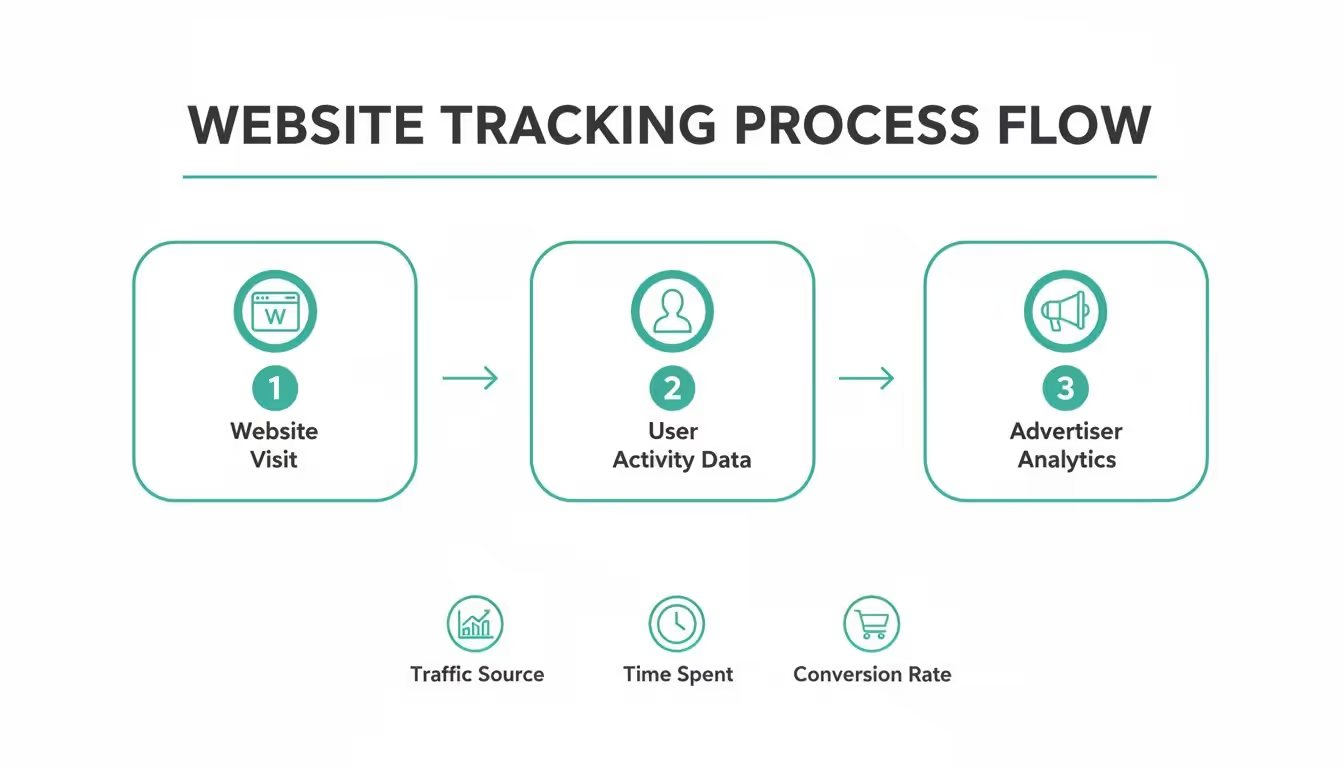
As you can see, your interaction is just the first step in a much larger data collection process that fuels the advertising ecosystem.
Finding Your Browser’s Cookie Settings
Before you start clearing things out, it’s important to understand a key distinction: deleting your cookies is not the same as deleting your entire browsing history. Wiping cookies specifically targets the small files used for tracking and keeping you logged in, leaving the list of sites you've visited completely intact.
Most browsers tuck these options away in a "Privacy and Security" section. Think of this as your command center for managing cookies, site permissions, saved passwords, and more. Getting familiar with this area is step one.
To help you get there faster, here’s a quick reference table showing you exactly where to find the cookie management settings in the most popular browsers.
Quick Guide to Browser Cookie Settings
This table provides the direct navigation paths to access and manage cookies within Chrome, Firefox, Edge, and Safari.
Following these paths will bring you to a list of every website that has stored data in your browser. From here, you can get rid of them individually or wipe the slate clean all at once.
Selective Deletion vs. Wiping Everything
Once you're in the cookie settings, you have a choice to make. Do you go for the nuclear option and delete everything, or do you take a more surgical approach?
- Wiping All Cookies: This is fast and thorough. It guarantees all trackers are gone, but it comes with a major annoyance—you'll be logged out of every single website you use.
- Selective Deletion: This method takes a bit more time but gives you complete control. You can search for the domains of known ad networks or data brokers (like
doubleclick.net) and delete only their cookies, leaving your logins for trusted sites untouched.
For example, you could search for a specific ad network’s domain, remove only its data, and keep your email and social media sessions active.
A common mistake is just hitting "clear browsing data" and calling it a day. Most browsers have advanced controls that let you check only the box for "Cookies and other site data," which saves you from losing your browsing history or saved passwords. This little detail is the key to cleaning up without causing a huge headache for yourself.
For those who want even more granular control without digging through browser settings, dedicated tools can step in. A utility like ShiftShift's Cookie Manager offers more advanced features for managing specific cookies automatically, which can be a real time-saver if you want to block certain trackers without disrupting your regular browsing.
For developers and anyone with a bit of technical curiosity, managing cookies isn't just about clicking buttons in browser settings. You can get your hands dirty and control them directly with code. This gives you incredibly granular power over how cookies are set, read, and—most importantly—removed. This kind of programmatic control is non-negotiable for building privacy-first applications and staying compliant.
When you're handling cookies with code, you're operating in one of two places: on the client-side, right in the user's browser, or on the server-side, which happens on your web server before a page even gets to the user. Both have their place and their own set of advantages.
Client-Side Deletion with JavaScript
On the client side, good old vanilla JavaScript gives you a direct, if slightly clunky, way to interact with cookies through the document.cookie property. Here's the interesting part: you don't actually "delete" a cookie. Instead, you overwrite it by setting its expiration date to a time in the past.
The browser sees that expired date and just gets rid of the cookie for you.
Here’s a quick example of how you’d remove a cookie named _ga_tracker:
document.cookie = "_ga_tracker=; expires=Thu, 01 Jan 1970 00:00:00 UTC; path=/;";
This snippet essentially tells the browser that _ga_tracker has an empty value and expired a long, long time ago. But there’s a catch. You must also specify the correct path (and sometimes domain) that the original cookie was set with. If these attributes don't match, the browser will just ignore your command, and the cookie will stick around.
Server-Side Removal with Set-Cookie Headers
Often, a more robust and secure approach is to manage cookie deletion from the server. This is especially true for any cookies marked with the HttpOnly flag, which makes them completely invisible to client-side scripts like JavaScript. In those cases, the server is the only place with the authority to modify or remove them.
The concept is the same: the server sends a Set-Cookie header in its HTTP response with an expiration date in the past. Here’s how you might do it in a Node.js app using the Express framework:
app.get('/logout', (req, res) => { res.cookie('session_id', '', { expires: new Date(0), httpOnly: true, secure: true }); res.send('You are now logged out.'); });
When a user hits the /logout endpoint, the server sends back a response that instructs the browser to immediately delete the session_id cookie by setting its expiration to a past date.
A critical detail here is the inclusion of thesecureattribute. This flag is a must-have, as it ensures the cookie is only ever sent over an HTTPS connection, preventing it from being intercepted on insecure networks. Forgetting security attributes likeHttpOnlyandSecureis a common pitfall that can easily expose user data.
Getting a handle on these programmatic methods is a huge step. As the industry continues to shift toward new ways of identifying users, you might find it useful to explore what is cookieless tracking to see where things are headed. For now, knowing how to properly remove a tracking cookie is a vital skill for any developer serious about maintaining functionality and user privacy.
How to Verify Cookies Are Actually Gone
So you’ve gone through the steps to remove a tracking cookie. But how do you really know it worked? Trusting a setting or a script to do its job isn't enough—you need to verify it. Thankfully, you don't need any fancy software to check your work. The tools are already built right into your browser.

This final check is a crucial step. It’s the difference between hoping for privacy and actually confirming it.
Using Browser Developer Tools for Confirmation
Every modern browser comes with a powerful suite of developer tools that let you peek under the hood of any website. This is the most direct way to see exactly which cookies are active on a site in real time.
To get started, just right-click on a webpage and select "Inspect" or "Inspect Element." This opens the developer tools panel. From there, look for a tab labeled "Application" (in Chrome/Edge) or "Storage" (in Firefox).
Inside this tab, you'll find a "Cookies" section in the left-hand navigation. Clicking it reveals every single cookie currently stored for that specific domain. If you’ve successfully zapped a tracking cookie, its name simply won't be in the list anymore. It’s instant, undeniable proof.
For a deeper dive into this process, check out this guide on how to audit cookies and your CMP for more advanced monitoring techniques.
Automated Defense with Browser Extensions and Features
Manual checks are great for spot-checking, but for everyday protection, automation is your best ally. Several excellent browser extensions can act as a personal security guard, actively blocking trackers before they even get a chance to set a cookie.
- Privacy Badger: Developed by the Electronic Frontier Foundation, this extension learns to block invisible trackers automatically. It also sends a "Do Not Track" signal and stops trackers that ignore your request.
- uBlock Origin: While it's famous as an ad blocker, it's also a highly effective and lightweight tracker blocker. It uses community-maintained blocklists to stop requests to known tracking domains before they load.
Many browsers also offer strong native protections. Firefox’s Enhanced Tracking Protection, for instance, blocks third-party tracking cookies by default, giving you a solid first line of defense without any extra add-ons.
The key takeaway is that verification isn't a one-time task. It’s an ongoing process of using the right tools—both manual and automated—to ensure your privacy settings are working as intended and that no new, unwanted trackers have slipped through.
Understanding how users manage cookies is complex, and the data on awareness varies widely by region. To learn more about this industry shift, you can explore insights on what marketers can do as tracking cookies become less prevalent.
If you’ve ever tried to zap a tracking cookie only to see it pop right back up, you're not going crazy. Some cookies are just built to be stubborn. This isn't usually for shady reasons; it's because of specific technical rules that dictate how they can be accessed and by whom. Getting a handle on these rules is the key to actually clearing them out for good.
One of the biggest roadblocks you'll run into is the HttpOnly flag. When a server tags a cookie with this attribute, it’s basically putting up a "Do Not Touch" sign for any scripts running in your browser, like JavaScript. This is a great security move—it stops malicious cross-site scripting (XSS) attacks from grabbing sensitive data from your session cookies. The downside? It also means your own code, specifically document.cookie, can't delete them. Only the server that set it can give it the boot.
Understanding Cookie Scope and Silos
Beyond just being script-proof, cookies operate in tightly controlled zones defined by their Domain and Path attributes. Think of these as invisible fences that keep cookies from wandering where they don't belong.
- Domain Attribute: This decides which websites can even see the cookie. A cookie set for
shop.example.comis completely invisible toblog.example.comunless theDomainis explicitly set to the parent,.example.com. - Path Attribute: In the same way, this locks a cookie down to a specific folder on a website. A cookie with
Path=/cart/will only get sent when you’re navigating pages inside that directory.
This is why deletion attempts often fail. If your command to remove a cookie doesn't perfectly match the original Domain and Path it was set with, the browser just ignores it. The cookie stays put. This siloed system is fundamental to web security, but it definitely complicates things when you're trying to do a manual cleanup.
The complexity of these attributes highlights a broader trend in digital marketing. Marketers are constantly navigating evolving technical standards and user expectations, which influences everything from cookie management to ad targeting.
Adding another layer to all this is the SameSite attribute. This setting dictates whether a cookie can be sent along with requests that originate from other websites. With values like Strict or Lax, browsers can block cookies from being attached to third-party requests, which is a huge help in preventing cross-site request forgery (CSRF) attacks. While it's a win for security, it introduces yet another rule governing when and how a cookie can be accessed.
It can be tough to find clear historical data on how quickly privacy-focused tech like this gets adopted, but you can get a good sense of how marketers are adapting to these digital footprint changes on techreviewer.co.
Common Questions About Removing Tracking Cookies
Even after you get the hang of removing tracking cookies, a few practical questions always seem to pop up. Wiping your digital slate clean can feel great, but it often brings up some minor headaches and nagging doubts. Let’s walk through some of the most common concerns so you can feel confident about managing your privacy online.
The big one is always: will clearing my cookies log me out of all my accounts? The short answer is yes, it often will. Websites use their own first-party session cookies to remember that you’re signed in. When you do a bulk delete, those helpful cookies get tossed out right along with the trackers.
To get around this, you can try a more surgical approach. Most browsers let you search for and remove data from specific domains. This means you can zap cookies from known ad networks while leaving the session cookies for your trusted sites untouched.
How Often Should I Clear Cookies?
There’s no magic number here—the right frequency for clearing cookies really boils down to your personal comfort level with online tracking. It’s all about striking a balance between privacy and convenience.
- For Maximum Privacy: If you're serious about minimizing your footprint, you might clear your cookies daily or even set your browser to automatically delete them every time you close it. This gives you the strongest protection, but get ready to log into your favorite sites. A lot.
- A Balanced Approach: For most of us, a weekly or monthly cleanup is a pretty practical compromise. It keeps the buildup of tracking data from getting out of hand without turning into a major daily chore.
- The Automated Method: A better long-term strategy might be to use privacy-focused browser extensions. They can block a huge number of trackers from ever being stored in the first place, which means you won't need to do manual cleanups nearly as often.
Does Incognito Mode Stop Tracking Cookies?
Incognito or Private mode is great for temporary privacy, but it’s definitely not an invisibility cloak. When you open an incognito window, your browser creates a sterile, isolated session. Any cookies created during that session are automatically wiped the second you close that window.
This is fantastic for stopping cookies from sticking around permanently on your device, but it’s critical to know its limits. While you're in an incognito session, the websites you visit can still see you. So can your internet service provider and any network administrators. Think of it as a tool for local privacy on a shared computer, not a way to hide your tracks from the wider web.
At Trackingplan, we see data quality and privacy as two sides of the same coin. Our automated analytics QA platform helps your team catch tracking issues, consent misconfigurations, and potential PII leaks in real time. This ensures your data is not only reliable but fully compliant. Find out how you can build trust and deliver better insights by visiting www.trackingplan.com.
?What Is an Example of PII and How Do You Protect It
Let's start with a simple, real-world example of Personally Identifiable Information (PII): a person's full name combined with their home address. Other classic examples are things like an email address, Social Security number, or a driver's license number.
At its core, PII is any piece of data that can, either by itself or when pieced together with other information, point directly to a specific individual.
Understanding PII With Real-World Examples
Think of someone's identity like a jigsaw puzzle. A single piece—a name, an email, a phone number—might not tell you much on its own. But as you connect those pieces, a surprisingly clear picture of a person begins to form. That's the essence of Personally Identifiable Information (PII).
This concept map helps visualize how different data points fit together, breaking PII down into its two main flavors: direct and linkable identifiers.
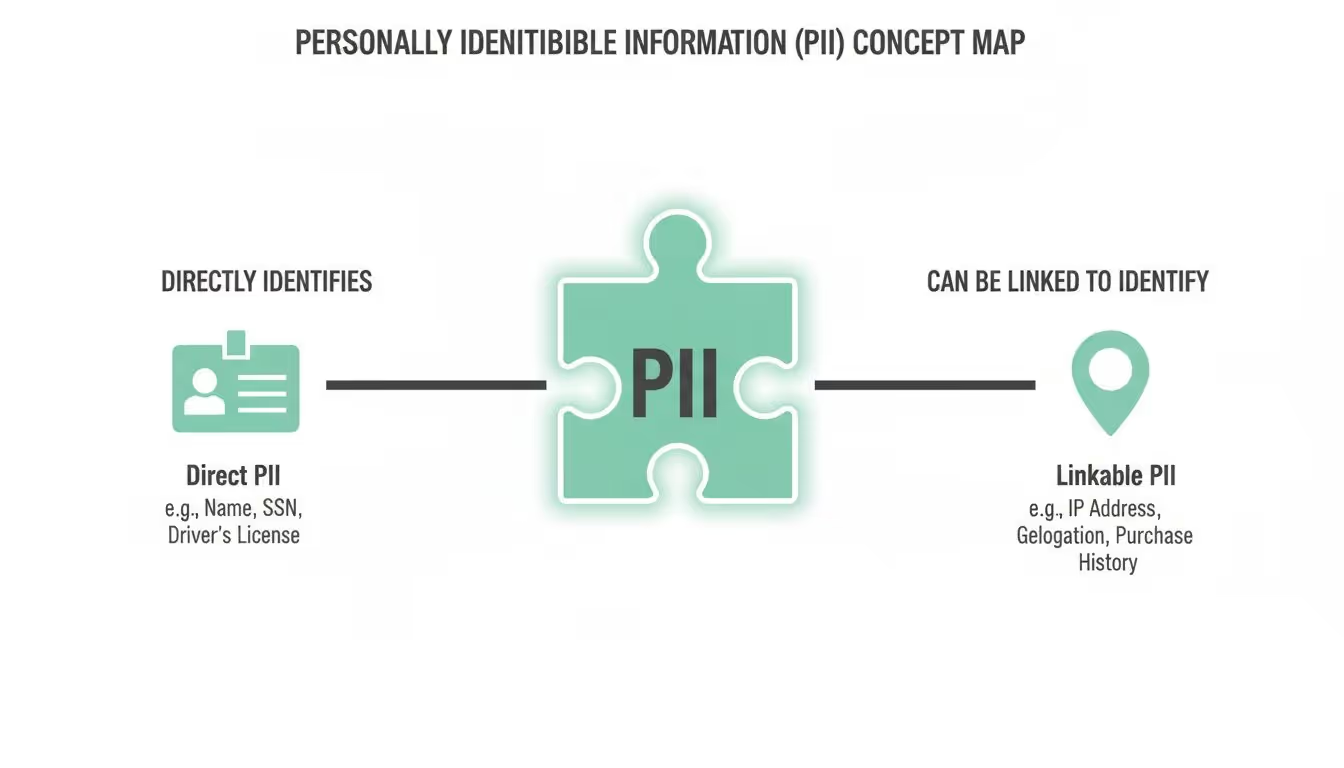
As the map shows, some data is an obvious giveaway, while other bits need to be connected to reveal a person's identity. This is why it's so critical to protect all types of personal data, not just the most obvious ones.
Direct vs. Linkable Identifiers
PII isn’t just one big bucket of data; it's generally split into two types based on how easily it can identify someone. Getting this distinction right is the first real step toward building solid data governance and privacy protection practices.
If you want to go deeper, you can explore more about the meaning and importance of PII in our detailed guide.
Personally Identifiable Information (PII) is not anchored to any single category of information or technology. Rather, it requires a case-by-case assessment of the specific risk that an individual can be identified.
This idea from the U.S. General Services Administration really hits the nail on the head. Context is everything. To make this clearer, let's break down these two crucial categories with some straightforward examples.
Common Examples of Personally Identifiable Information (PII)
Here’s a quick reference table that lays out the differences between direct and linkable identifiers, giving you clear examples for each category.
As you can see, what qualifies as PII is broader than most people think. A single piece of "linkable" data might seem harmless, but when it's combined with other seemingly anonymous data points, it can quickly become a privacy risk.
Distinguishing Between Sensitive and Non-Sensitive PII
Not all personally identifiable information is created equal. Understanding the difference between sensitive and non-sensitive PII is crucial for data protection and staying compliant with regulations like GDPR and CCPA.
Think of it like this: knowing someone’s favorite color is one thing, but knowing their bank account password is on a completely different level. Both are personal details, but the potential for harm if exposed is worlds apart. This distinction is what guides your security measures, because some data is inherently high-risk, while other pieces only become a problem when combined.
What Is Sensitive PII?
Sensitive PII is the kind of information that, if it ever got out, could lead to serious harm, embarrassment, or unfair treatment for an individual. This is the stuff identity thieves dream of, and it demands the highest level of protection.
Because the potential for damage is so severe, regulations impose strict penalties for breaches involving this category of information. Examples of sensitive PII usually include:
- Government Identifiers like a Social Security number (SSN), passport number, or driver's license number.
- Financial Information such as bank account numbers or credit card details.
- Medical and Health Records including diagnoses, treatments, and insurance information.
- Biometric Data like fingerprints, voiceprints, or facial recognition data.
A classic example of sensitive PII is the combination of a person’s full name with a government ID like an SSN. In one massive data incident, a single dataset exposed roughly 2.7 billion records, which included about 272 million unique Social Security numbers—that’s equivalent to around 80% of the U.S. population. This one breach opened the door for large-scale identity theft and fraud, showing just how valuable this kind of combined data is on criminal markets.
For analytics teams, accidentally forwarding a name and national ID to a marketing pixel can turn routine event tracking into a critical data violation. To get a better sense of the scale of these exposures, check out the findings from the SpyCloud Identity Exposure Report.
Understanding Non-Sensitive PII
Non-sensitive PII, sometimes called linkable information, is data that’s often publicly available or wouldn't cause direct harm to someone on its own. But that doesn’t mean it's harmless.
The real danger with non-sensitive PII is that it can become identifying when pieced together. A zip code by itself is innocuous, but a zip code combined with a date of birth and gender can narrow down the possibilities to a shockingly small group of people.
This process, known as re-identification, is a huge privacy concern. Examples of non-sensitive PII include:
- Zip code or city
- Date of birth (without other identifiers)
- Gender
- Race or ethnicity
Context is everything here. While a single piece of non-sensitive data might seem low-risk, your data governance policies have to account for how multiple data points could be linked together to unmask an individual's identity.
Finding PII Hiding in Your Digital Analytics
PII leaks in digital analytics are rarely the work of a shadowy hacker. The reality is far more mundane—and arguably more insidious. They often slip through the cracks of everyday operations, born from misconfigured forms, messy URLs, and overlooked event parameters. These subtle exposures can create massive compliance risks right under your nose.
Forget the dramatic data heist. The real threat usually looks something like an email address accidentally tacked onto a URL string after a user submits a "forgot password" form. That URL, now carrying clear PII, gets scooped up by your analytics tool as a page_view event. Just like that, sensitive data is quietly shipped off to third-party servers where it has no business being.

This is a classic example of PII hiding in plain sight. It’s a completely preventable error, but one that highlights why you need to be constantly vigilant about the data you’re collecting.
Common Hiding Spots for Accidental PII
To stop these leaks, you have to know where to look. PII loves to hide in places that aren't immediately obvious to marketing or analytics teams, which is why a proactive audit is non-negotiable. The most frequent culprits are query parameters in URLs and unstructured event properties.
Let's walk through a few common scenarios where PII can pop up unexpectedly. These examples show just how easily user data can be exposed through totally standard digital marketing and analytics practices.
- Form Submission URLs: A user signs up for your newsletter. On the confirmation page, their email is passed directly into the URL.
- Example:
https://example.com/thank-you?email=john.doe@email.com
- Example:
- Custom Event Properties: A developer, trying to be helpful, includes a user’s full name in a custom event meant to track a new feature.
- Example:
event: 'feature_used', properties: { user_name: 'Jane Smith', feature: 'profile_update' }
- Example:
- Error Logging: Detailed error messages sent to your analytics tool might capture the entire data payload that caused the error, including any user PII that was present.
The most dangerous PII leaks are the ones you don't know are happening. Automated query string parameters and dynamic event properties can capture and transmit sensitive data without any manual intervention, creating a silent compliance breach.
From URL Strings to Event Payloads
To make this crystal clear, let's look at how PII shows up in the actual technical implementation. On most websites, a data layer—a JavaScript object used to pass information to tag management systems—is where the action happens.
Imagine a user_signup event. A well-designed, compliant event would only contain non-identifiable information. A poorly configured one, however, might look like this:
dataLayer.push({ 'event': 'user_signup', 'user_id': '12345', 'email_address': 'sandra.dee@example.com' // Accidental PII });
In this snippet, the email_address is the smoking gun. It’s an explicit piece of PII that should never be sent to a standard analytics platform like Google Analytics. The fix is simple: remove this property entirely from the event payload. This ensures only anonymized or non-sensitive data gets tracked.
This is where regular code reviews and automated monitoring become your best friends. They are essential for catching these kinds of issues before they snowball into serious data breaches.
The True Cost of Leaking PII in Analytics
Failing to protect PII in your analytics isn't just a technical slip-up; it's a major business liability that can trigger a cascade of severe consequences. The fallout from a data leak goes way beyond a messy spreadsheet. We're talking about substantial financial, legal, and reputational damage that can haunt a company for years.
These aren't just hypotheticals. The risks show up in a few critical areas, each with the power to inflict serious harm on your organization. From eye-watering fines to the complete erosion of customer loyalty, the cost of looking the other way is staggering.
Crippling Regulatory Fines
Data privacy laws like GDPR and the CCPA aren't messing around. They’ve given regulators the power to levy fines that can climb into the millions of dollars or a hefty percentage of a company's global revenue. A single violation under GDPR, for instance, can result in penalties of up to 4% of annual worldwide turnover.
And these fines aren't just reserved for massive, headline-grabbing breaches. Even a seemingly small, accidental leak—like the example of PII we saw earlier with an email address in a URL—can be enough to trigger a costly investigation and a painful penalty. If you want to dive deeper into staying compliant, check out our guide on how to prevent privacy fines under CCPA and GDPR.
Irreversible Loss of Customer Trust
Trust is the foundation of any customer relationship, and a PII leak shatters it in an instant. Once your customers feel their personal information isn't safe with you, winning back their confidence becomes an uphill battle. The damage to your brand's reputation can be immediate and long-lasting, leading to customer churn and negative buzz that scares off potential new clients.
A data breach is a violation of the digital trust between a company and its customers. The immediate financial cost is often just the beginning; the long-term reputational damage can be far more destructive to a business.
This loss of trust hits your bottom line directly. Customers will simply take their business elsewhere, and your brand gets a new label: risky and unreliable. To soften the blow, it's critical to have a modern, programmatic data breach response plan ready to go.
Beyond the hit to your reputation, leaking PII also causes other serious problems:
- Corrupted Analytics Data: When PII seeps into your analytics, it pollutes your datasets. This contamination skews your data, leading to flawed insights and, ultimately, poor business decisions.
- High Operational Costs: The cleanup is never cheap. It involves a whole host of expenses, from forensic audits and legal fees to customer notifications and implementing tougher security measures.
How to Proactively Detect and Prevent PII Leaks
When it comes to data breaches, playing defense is always more expensive and stressful than having a good offense. To build a strong defense against PII leaks, you need to shift from a mindset of damage control to one of active prevention. This really comes down to a mix of careful planning, smart data handling, and having the right tech in your corner.
The bedrock of any solid prevention strategy is a clear and comprehensive tracking plan. Think of it as the blueprint for your entire analytics setup. It defines exactly what data you’re allowed to collect and, more importantly, what’s strictly off-limits. By setting these rules from day one, you establish a single source of truth that keeps developers and marketers on the same page, slashing the risk of accidental PII collection before it even starts.

This image isn't just about looking at dashboards; it's about the collaborative effort required for good data governance. The intense focus on the screen captures the kind of detailed analysis needed to spot potential PII leaks before they turn into full-blown problems.
Essential Best Practices for PII Prevention
Beyond a rock-solid tracking plan, a few technical best practices are non-negotiable for keeping your data clean and compliant. These methods are all about de-identifying user information before it ever hits your analytics tools, effectively neutralizing the risk.
- Data Masking: This technique hides original data with placeholder content (like replacing a credit card number with
****). It conceals sensitive information while still letting your teams work with the data's structure for things like testing or development. - Hashing and Tokenization: Hashing converts data into a unique, fixed-length string of characters, and it’s a one-way street—you can’t reverse it. Tokenization swaps sensitive data for a unique, non-sensitive stand-in called a token. Both are fantastic for protecting data while keeping it useful for analysis.
Putting these practices into place manually is a big step toward building a resilient privacy framework, but it's not without its challenges. Manual audits and code reviews are often slow and, let's be honest, prone to human error. This is where automation really changes the game.
Automating Detection with Analytics Observability
Modern analytics observability tools have taken PII detection from a painful, periodic chore to a continuous, automated process. These platforms act like a vigilant security guard for your data pipelines, constantly scanning every single analytics event for patterns that look like common PII formats.
Instead of waiting for a quarterly audit to find problems, an observability platform can spot an email address in a URL string or a Social Security number in an event payload the instant it happens. This real-time capability is what proactive defense is all about.
The moment a potential leak is detected—say, an example of pii like a phone number shows up in a custom event—the platform fires off an alert to the right team through Slack, email, or whatever channel they use. This lets developers zero in on the exact source of the leak and push a fix before it affects a large number of users or lands you in hot water with regulators. To see this in action, you can learn more about how to secure PII for privacy and compliance with Trackingplan.
This automated, real-time approach doesn't just ensure your data stays clean and trustworthy. It also frees up your team to focus on finding insights instead of constantly policing their data streams. It’s simply the most effective way to stay ahead of privacy risks and maintain a compliant, reliable analytics implementation.
Building a Culture of Privacy-First Data Governance
Tools and automated alerts are fantastic, but they only get you so far. The most robust defense against data leaks isn't a piece of software—it's a company-wide culture built around privacy-first data governance. This mindset shifts data protection from a simple compliance checkbox to a core value shared by everyone.
Building this culture starts with one simple but powerful concept: ownership. Every single piece of data you collect needs a designated owner who is responsible for its entire lifecycle, making sure it’s handled according to your privacy standards. This accountability is the bedrock of everything else.
A privacy-first culture means every team member, from marketing to engineering, understands their role in protecting customer data. It shifts the responsibility from a single person or department to the entire organization, creating a human firewall against accidental leaks.
Creating a Single Source of Truth
For a privacy-focused culture to actually work, your teams need a unified playbook. This is where a meticulously maintained tracking plan becomes your organization's data constitution. It acts as the single source of truth, spelling out exactly what data is okay to collect and how it must be handled.
When everyone is working from the same script, the odds of someone accidentally sending an example of pii to an analytics tool plummet. It ensures that every team and every vendor is perfectly aligned.
This proactive approach is strengthened through ongoing training and clear communication. A huge part of building trust and staying compliant is being transparent about your data practices, which is something you can see when you read our privacy policy.
Ultimately, putting in the work to build this culture pays off in a few key ways:
- Empowers Employees: It gives every team member the knowledge and responsibility to handle data correctly.
- Reduces Human Error: Clear guidelines and repeated training minimize the chance of accidental data exposure.
- Builds Customer Trust: A visible commitment to privacy becomes a competitive advantage.
Frequently Asked Questions About PII
Navigating the world of data privacy can bring up a lot of questions. Let's tackle some of the most common ones that come up in the day-to-day grind of managing analytics and user data.
What’s the Difference Between PII and Personal Data?
You'll often hear "PII" and "personal data" used like they're the same thing, but there’s a subtle but important difference. PII, or Personally Identifiable Information, is a term that really took root in the United States. It refers to anything that can be used to identify a specific person, either directly or indirectly.
"Personal data," on the other hand, is a broader concept straight out of Europe’s GDPR. It covers all PII, but it also includes things like online identifiers or behavioral data that could be linked back to an identifiable individual. A good way to think about it is that PII is a key part of the much larger universe of personal data.
Who Is Responsible for PII Compliance?
This is a big one. PII compliance isn't just one person's job or something you can hand off to the legal team. It's a shared responsibility that touches every part of the organization. While a Data Protection Officer (DPO) might lead the charge, everyone has a part to play.
- Developers are on the front lines, writing code that needs to prevent PII from getting captured by mistake.
- Marketers have to make sure their campaigns and the tools they use aren't quietly collecting data they shouldn't be.
- Leadership sets the tone, building a privacy-first culture from the top down.
Ultimately, a strong data governance framework is what ties it all together. It makes sure every team knows exactly what their role is in protecting user information, turning compliance into a collective effort instead of a siloed task.
What Happens if PII Goes to Google Analytics?
Sending PII to Google Analytics is a major misstep, and one with serious consequences. First off, it's a direct violation of their terms of service. Google can, and often will, delete all of your historical data without warning, completely torching years of analytics insights.
Beyond losing your data, it's a huge compliance risk. Under laws like GDPR and CCPA, accidentally sending an email address in a URL parameter isn't just a mistake—it's a data breach. That kind of slip-up can trigger hefty fines and do serious damage to the trust you've built with your customers. This is exactly why automated detection is no longer a "nice-to-have."
Safeguarding against PII leaks requires continuous, automated monitoring. Trackingplan acts as your analytics watchdog, constantly scanning your data streams to detect and alert you to potential PII exposure in real time. We help you fix issues before they become crises. Discover and prevent leaks automatically at https://trackingplan.com.
?Can Trackingplan help me stay compliant with GDPR and CCPA?
Trackingplan supports your privacy compliance efforts by providing a robust set of tools and safeguards designed to protect user data and respect consent preferences:
- On-device anonymization and masking: All personally identifiable information (PII) is anonymized or masked locally within the user’s browser or app, ensuring no sensitive data leaves the device.
- Privacy audit: Trackingplan continuously scans outbound network requests to detect accidental PII leaks, logging details such as fields involved, page context, and consent status for thorough monitoring.
- Consent validation: We verify that no data is sent without valid consent signals, including support for frameworks like Google Consent Mode and CCPA opt-out flags, helping you enforce user choices.
- DPA and processor compliance: Trackingplan acts as a data processor under GDPR and offers a data processing agreement (DPA). Standard contractual clauses (SCCs) are available to ensure lawful international data transfers.
- Documentation and alerts: Detailed audit trails, data retention logs, and anomaly alerts provide data protection officers (DPOs) with actionable insights to maintain ongoing compliance.
For a complete overview of our privacy and security measures, please visit our Privacy & Security documentation.
?How can I secure PII for Privacy and Compliance with Trackingplan?
Trackingplan provides robust tools to help you secure personally identifiable information (PII) and maintain compliance with privacy regulations:
- On-device PII masking: The Trackingplan SDK applies masking rules locally on the user’s device before any data leaves the browser or app. You can configure these rules using extensible regular expressions or predefined vendor-specific patterns to identify and anonymize sensitive data like email addresses, phone numbers, and more.
- Privacy Audit: This feature continuously scans all outbound requests for any accidental PII leaks. It logs the affected fields, the specific pages or events, and the user’s consent status, giving you visibility into potential privacy risks.
- Manual review and tuning: You have full control to review and adjust anonymization patterns and PII filters as needed to ensure they stay effective and accurate for your tracking setup.
- Consent enforcement: Trackingplan respects user consent signals, such as Google Consent Mode and CCPA opt-out flags. When enabled, it prevents sending data for users who have opted out, ensuring compliance with privacy laws.
These built-in features allow you to monitor, detect, and prevent the exposure of PII, helping your organization stay privacy compliant.
For full details, please refer to our Privacy & Security documentation or check our Privacy Hub.
?What are the Risks of HIPAA Non-compliance?
If HIPAA-regulated PII (e.g. patient identifiers, medical history, health-provider data) is transmitted without encryption, masking, or proper policy control, you risk:
Non-compliance fines
Fines for non-compliance are not cheap – your business can be fined hundreds of thousands of dollars for non-compliance.
Exposing your patients’ data to fraud
Inadequate security systems attract online hackers, making your business susceptible to data breaches. Personal information such as credit card details, security codes, names, birth dates, and other sensitive data becomes a prime target for malicious actors, leading to potential identity theft and fraudulent activities.
Costly investigation fees
If evidence of non-compliance is found, the responsibility for covering these investigation fees will fall on your business. This translates to substantial costs amounting to thousands of dollars.
Criminal Charges
An individual who intentionally acquires or reveals personally identifiable health information (PHI) –which is precisely what HIPAA’s Privacy Rule aims at protecting–, can be subjected to criminal consequences, including fines of up to $50,000 and a maximum imprisonment of one year.
However, if the misconduct includes false pretenses, the criminal penalties can escalate to $100,000 and a potential imprisonment term of up to five years. Moreover, if the conduct is characterized by the intent to sell, transfer, or exploit PHI for commercial advantage, personal gain, or malicious harm, the penalties increase to $250,000, and the individual may face imprisonment for up to 10 years.
Reputation lost
Non-compliance can erode customer trust in your business, leading to a loss of confidence among your customer base. Instances of data breaches may result in customers refusing to engage in transactions with your business, causing lasting damage to your reputation.
Avoid HIPAA’s non-compliance Risks with Trackingplan
Trackingplan helps mitigate these risks by:
- Masking all PII on-device, ensuring no PHI is processed by our backend.
- Encrypting all transported data, enforcing least-privilege access.
- Providing audit logs and alerts for any potential PHI leaks.
- Working with your compliance team to align with HIPAA's Technical & Administrative Safeguards.
To learn more, check this article on HIPAA-compliant digital analytics challenges and how organizations in the healthcare sector navigate constraints while leveraging their data.
For full details, please refer to our Privacy & Security documentation.