
Marketing teams face a paradox in 2026. Despite unprecedented access to customer data and analytics tools, only 39% of CMOs feel confident in their ability to measure marketing ROI accurately. The problem isn’t lack of data. It’s clarity. Analytics drives growth when interpreted correctly, enabling precise optimization of campaigns, budgets, and strategies. This guide reveals how to leverage analytics effectively, cut through data noise, and turn insights into measurable growth for your marketing programs.
Table of Contents
- The Data Clarity Challenge In Growth Analytics
- Analytics As The Growth Engine
- AI And Predictive Power In Analytics
- Privacy And Data Compliance Impact On Analytics
- Frameworks For Measuring Growth With Analytics
- Optimize Your Analytics Quality With Trackingplan
- Frequently Asked Questions
Key takeaways
| Point | Details | |-------|---------|| | Analytics enables growth | Marketing teams with high data clarity outperform others by 20-30% in campaign ROI through precise optimization. | | AI enhances predictions | Artificial intelligence shifts analytics from historical reporting to predictive insights, enabling proactive campaign adjustments. | | Privacy shapes strategy | Cookie deprecation and regulations make first-party data essential for accurate attribution and compliance in 2026. | | Frameworks measure holistically | Integrated measurement approaches track customer lifecycle from acquisition to retention, optimizing lifetime value. | | Quality beats quantity | Clear interpretation of focused metrics outperforms analyzing massive volumes of unstructured data. |
The data clarity challenge in growth analytics
Modern marketing generates enormous data volumes. Every click, impression, conversion, and customer interaction produces measurable signals. Yet this abundance creates paralysis rather than power for many teams.
The core issue? Data overload without interpretation frameworks. Marketers collect metrics across platforms like Google Analytics, social media dashboards, email systems, and CRM tools. Each system reports differently. Definitions vary. Attribution models conflict. The result is confusion, not confidence.
Poor data interpretation directly harms growth outcomes. Teams make decisions based on incomplete pictures or misleading correlations. They optimize campaigns for vanity metrics that don’t drive revenue. They allocate budgets to channels that appear successful but lack proper attribution.
Research confirms the cost of confusion. Marketing teams with high data clarity outperform others by 20-30% in campaign ROI. That gap represents millions in lost revenue for organizations struggling with analytics interpretation.
Common causes of confusion include:
- Fragmented data across disconnected platforms
- Inconsistent tracking implementations creating gaps
- Missing context around metric changes
- Lack of standardized definitions across teams
- Technical errors in pixel firing or event collection
The solution lies in prioritizing actionable insights over raw data quantity. Effective marketing analytics dashboards focus on metrics that directly connect to business outcomes. They provide context, not just numbers. They enable decisions, not debates.
“The goal of analytics isn’t to measure everything. It’s to measure what matters and understand why it matters.”
Teams that embrace this philosophy unlock analytics as a true growth engine. They invest in automated analytics benefits that catch data quality issues before they corrupt decision making. They build clarity into their processes from the start.
Pro Tip: Audit your current analytics setup quarterly. Identify metrics you collect but never act on. Eliminate them. Focus resources on data that directly informs growth decisions.
Analytics as the growth engine
Analytics transforms from a reporting tool into a strategic asset when applied systematically to optimization. The most successful marketing teams in 2026 treat analytics as their primary growth lever.

The mechanism is straightforward. Analytics identifies which channels, campaigns, creatives, and audiences drive the highest returns. It reveals underperforming elements consuming budget without results. This visibility enables surgical optimization.
Consider spend allocation. Without analytics, marketers distribute budgets based on assumptions or past patterns. With proper analytics, they shift dollars in real time toward proven performers. They double down on what works. They cut what doesn’t. This dynamic allocation compounds over time.
The impact is measurable. Companies using analytics see up to a 30% increase in conversion rates through systematic testing and optimization. That lift comes from dozens of incremental improvements guided by data insights.
Analytics in advertising enables specific optimizations:
| Optimization Area | Analytics Application | Growth Impact |
|---|---|---|
| Audience targeting | Identify highest-converting segments | 15-25% efficiency gain |
| Creative performance | Test messaging variations systematically | 10-20% lift in engagement |
| Channel allocation | Redistribute budget to top performers | 20-35% ROI improvement |
| Timing optimization | Schedule campaigns for peak response | 5-15% conversion increase |
The key is connecting analytics directly to action. Data becomes powerful when it triggers specific changes. A marketing analytics guide helps teams establish these connection points.
Practical application looks like this. Your analytics shows mobile traffic converts at half the rate of desktop. You investigate and discover slow page load speeds on mobile devices. You optimize site performance. Conversion rates improve. Revenue increases. Analytics identified the problem, quantified the impact, and validated the solution.
Successful teams create feedback loops. They measure baseline performance, implement changes, track results, and iterate. Each cycle builds on previous learnings. Growth accelerates as insights accumulate.
Pro Tip: Establish weekly review meetings focused exclusively on acting on analytics insights. Don’t just review numbers. Decide what to change based on what the data reveals.
The growth potential multiplies when analytics informs every marketing decision. Budget planning becomes evidence based. Campaign creative reflects proven messaging. Audience targeting focuses on high-value segments. Channel strategy emphasizes demonstrable ROI. Analytics stops being a backward-looking report and becomes a forward-looking strategy engine.
AI and predictive power in analytics
Artificial intelligence fundamentally changes how marketers use analytics. Traditional analytics reports what happened. AI-enhanced analytics predicts what will happen and prescribes optimal actions.
This shift from descriptive to predictive analytics represents a competitive advantage in 2026. Teams using AI tools anticipate customer behavior, market changes, and campaign performance before they occur. This foresight enables proactive optimization.
AI improves targeting accuracy dramatically. Machine learning algorithms analyze thousands of customer signals simultaneously, identifying patterns humans miss. They predict which prospects will convert, which customers will churn, and which segments offer the highest lifetime value.
The practical applications are powerful:
- Predicting customer lifetime value at acquisition
- Identifying churn risk before it manifests
- Recommending optimal send times for email campaigns
- Forecasting campaign performance before launch
- Personalizing content based on behavior patterns
AI enables real-time campaign adjustments based on emerging patterns. If performance starts declining, systems alert marketers immediately with context about why and recommended fixes. Speed of response improves dramatically.
Digital marketing analytics platforms increasingly embed AI capabilities. Natural language interfaces let non-technical marketers query complex datasets conversationally. Automated anomaly detection surfaces issues without manual monitoring. Predictive models run continuously in the background.
The technology continues evolving rapidly. Generative AI now creates campaign variations optimized for specific audience segments. Computer vision analyzes creative performance at scale. Natural language processing extracts insights from customer feedback automatically.
Pro Tip: Start with one AI-powered analytics feature rather than trying to implement everything. Master predictive lead scoring or automated anomaly detection first, then expand.
The human element remains essential. AI provides insights and recommendations. Marketers provide strategic context, creative direction, and business judgment. The combination of AI in marketing analytics and human expertise outperforms either alone.
Looking ahead, AI will increasingly handle routine analytics tasks. Marketers will focus on strategy, creativity, and interpreting AI recommendations within business context. Teams that embrace this partnership gain speed and scale advantages.
Privacy and data compliance impact on analytics
Privacy regulations and platform changes fundamentally reshape analytics practices in 2026. The phase-out of third-party cookies eliminates tracking methods marketers relied on for years. New compliance requirements add complexity to data collection and usage.
The impact on analytics capabilities is significant. Cross-site tracking becomes difficult or impossible. Attribution modeling loses accuracy without complete customer journey visibility. Retargeting campaigns face restrictions. Measurement gaps appear in previously well-tracked channels.
These changes force a strategic pivot toward first-party data. Information customers share directly with brands becomes the foundation for analytics. Email addresses, purchase histories, preference center selections, and authenticated browsing sessions provide reliable data sources.
Social commerce sales are expected to nearly double by 2026, making first-party data crucial for attribution. Platforms like Instagram, TikTok, and Pinterest host entire purchase journeys. Marketers need direct customer relationships to track these conversions accurately.
Compliance strategies marketers must adopt:
- Implement consent management platforms properly
- Build transparent data collection policies
- Establish data governance frameworks
- Conduct regular privacy audits
- Train teams on compliance requirements
- Document data processing activities
The shift creates opportunities alongside challenges. First-party data often provides higher quality insights than third-party alternatives. Customers who explicitly share information engage more actively. Relationships built on transparency generate trust.
Key considerations for privacy-compliant analytics:
- Server-side tracking reduces reliance on browser-based pixels
- Customer data platforms consolidate first-party information
- Privacy-preserving measurement techniques maintain insights
- Incremental testing validates attribution approaches
The privacy impact on analytics varies by industry. Healthcare, finance, and other regulated sectors face stricter requirements. Consumer brands have more flexibility but still need robust compliance.
Successful teams view privacy as a strategic advantage rather than a burden. They build customer trust through transparent practices. They invest in owned channels where first-party data collection happens naturally. They create value exchanges that motivate information sharing.
The regulatory landscape continues evolving. New laws emerge regularly. Platform policies change frequently. Staying compliant requires ongoing attention and adaptation. Teams need processes for monitoring changes and updating practices accordingly.
Frameworks for measuring growth with analytics
Effective growth measurement requires integrated frameworks that connect acquisition, engagement, and retention metrics. Isolated metrics create incomplete pictures. Comprehensive frameworks reveal true business impact.
Traditional approaches focus heavily on acquisition. Marketers optimize for clicks, impressions, and new customer volume. This narrow focus misses critical drivers of sustainable growth like retention and lifetime value.
Modern frameworks take a holistic view of the customer lifecycle. They track:
- Acquisition efficiency and cost
- Activation and onboarding success
- Engagement depth and frequency
- Retention rates and churn patterns
- Revenue per customer over time
- Referral and advocacy behaviors
This complete picture enables smarter optimization decisions. A campaign that acquires expensive customers who churn quickly destroys value despite impressive volume metrics. A program that attracts fewer customers with high lifetime value drives genuine growth.
| Traditional Approach | Integrated Framework |
|---|---|
| Focuses on acquisition volume | Balances acquisition quality with retention |
| Optimizes individual channels | Optimizes customer journey holistically |
| Measures short-term conversions | Tracks lifetime value and retention |
| Reports in channel silos | Connects cross-channel attribution |
| Emphasizes vanity metrics | Prioritizes business outcome metrics |
Implementing integrated frameworks requires connecting data across systems. CRM platforms, analytics tools, advertising platforms, and product databases must share information. Practical growth analytics frameworks provide templates for these connections.
The benefits compound over time. Teams using comprehensive frameworks identify problems earlier. They spot opportunities faster. They make trade-offs based on complete information rather than partial visibility.
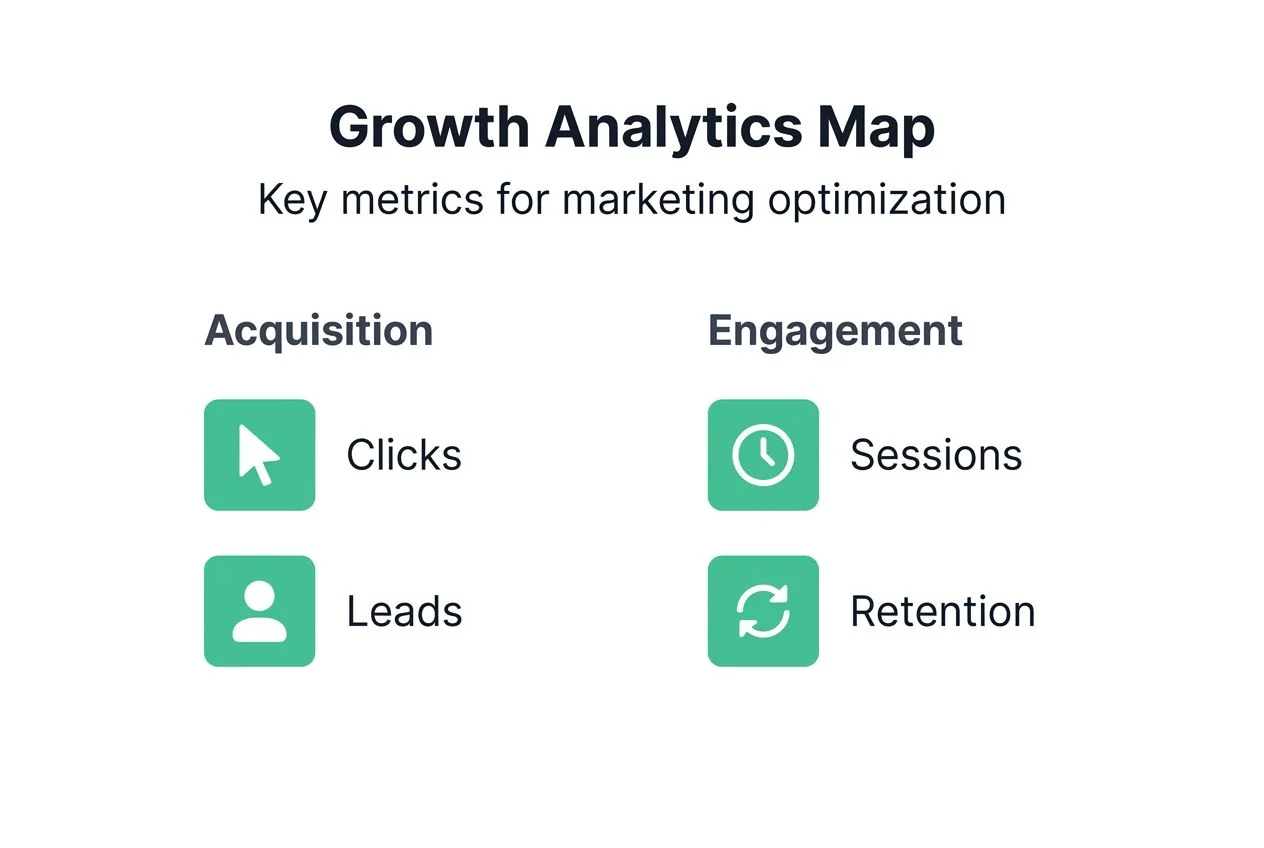
Consider retention optimization. Without lifecycle frameworks, marketers may not even measure retention consistently. With proper frameworks, they track cohort retention curves, identify drop-off points, and test interventions systematically. Small retention improvements create massive revenue impacts over customer lifetimes.
Key framework components:
- Standardized metric definitions across teams
- Clear attribution models everyone understands
- Regular cadence for reviewing complete lifecycle data
- Automated reporting that connects acquisition to retention
- Experimentation processes that test holistically
Successful implementations align stakeholders around shared definitions and goals. Marketing, product, and customer success teams collaborate using common frameworks. Decisions reflect complete customer value, not departmental metrics.
Optimize your analytics quality with Trackingplan
Data quality determines analytics value. Inaccurate tracking produces misleading insights that harm growth rather than help it. Ensuring measurement accuracy becomes essential as analytics drive more strategic decisions.
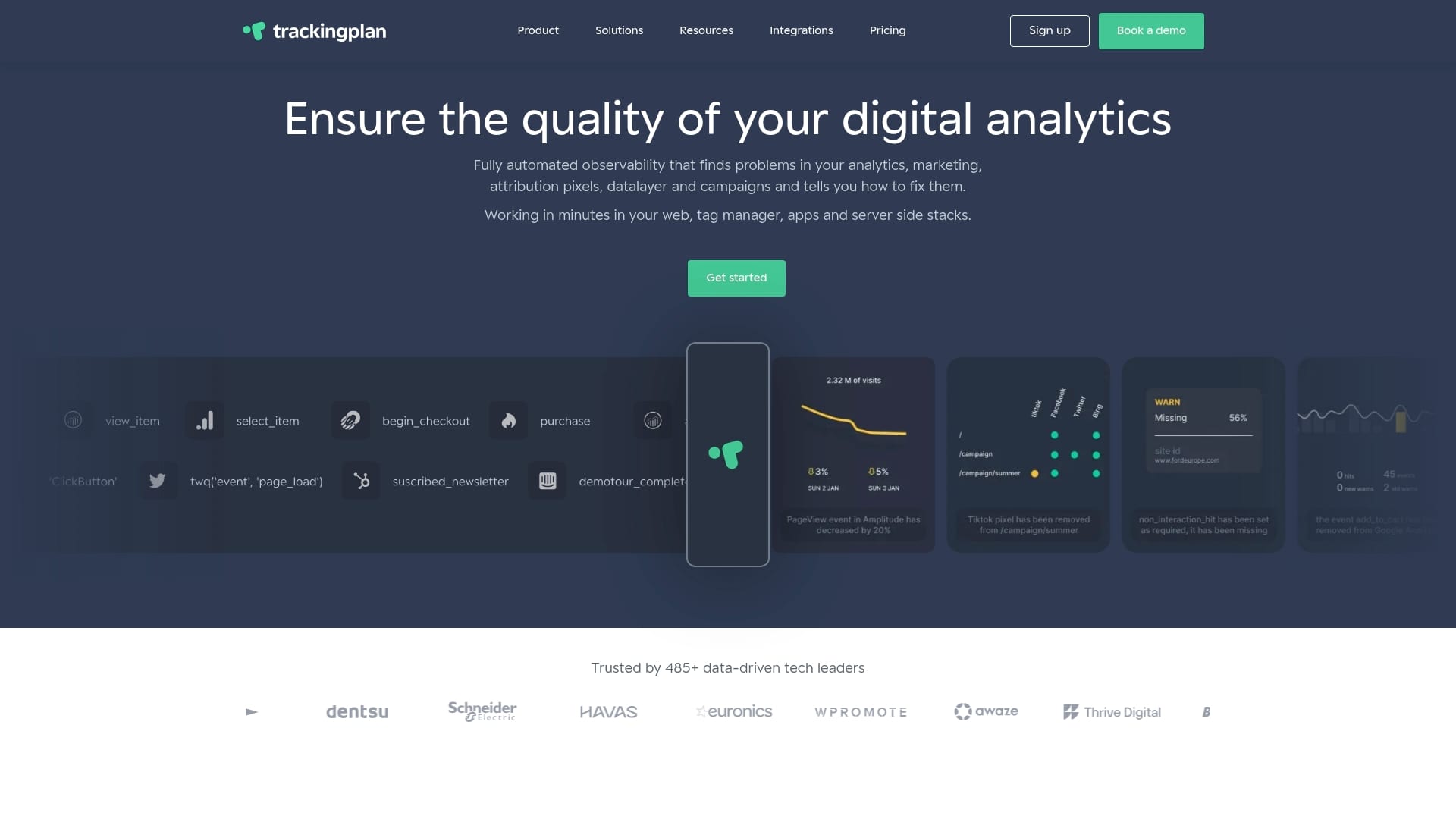
Trackingplan automates the detection of analytics implementation issues that corrupt data quality. The platform continuously monitors tracking across websites, apps, and server-side systems. It identifies missing pixels, broken events, schema mismatches, and configuration errors instantly.
Real-time alerts notify teams the moment problems appear. Email, Slack, or Teams notifications provide immediate visibility into tracking failures. Root-cause analysis pinpoints exactly what broke and why, enabling rapid fixes before data gaps impact decisions.
Privacy compliance features support the first-party data strategies essential in 2026. The privacy hub helps teams audit consent implementations, validate data processing practices, and maintain regulatory compliance across jurisdictions.
Comprehensive dashboards provide ongoing visibility into your entire analytics stack. Digital analytics tools integration connects Trackingplan with platforms you already use. Automated audits run continuously, catching issues before they compound.
Explore how Trackingplan works to see how automated monitoring transforms analytics quality. Teams using Trackingplan spend less time troubleshooting tracking issues and more time optimizing growth based on reliable data.
Frequently asked questions
What are the biggest challenges in using analytics for marketing growth?
Data overload ranks as the primary challenge, with teams collecting more information than they can interpret effectively. Poor data quality from tracking errors creates unreliable insights that lead to bad decisions. Fragmented platforms prevent holistic views of customer journeys. Solutions involve implementing clear interpretation frameworks, real-time monitoring for quality issues, and integrated measurement approaches that connect acquisition through retention.
How can AI improve marketing analytics for growth?
AI enables predictive insights that let marketers anticipate customer behavior before it happens rather than simply reporting historical patterns. Machine learning improves targeting accuracy by identifying high-value segments and predicting conversion likelihood. Automated anomaly detection surfaces problems immediately without manual monitoring. AI shifts teams from reactive response to proactive optimization, driving measurably higher ROI through faster, smarter decisions.
Why is first-party data important in 2026 marketing analytics?
Third-party cookie deprecation eliminates traditional cross-site tracking methods that marketers relied on for attribution and retargeting. Privacy regulations require transparent consent for data collection and usage. First-party data that customers share directly provides reliable measurement in this new environment. It supports both compliance with evolving regulations and personalization that drives engagement, making it essential for sustainable growth strategies.
What frameworks help marketers measure growth effectively?
Integrated lifecycle frameworks connect acquisition, engagement, and retention metrics into comprehensive views of customer value. These approaches track complete customer journeys rather than isolated channel performance. They balance short-term conversion metrics with long-term indicators like lifetime value and retention rates. Cohort analysis reveals patterns across customer segments over time. This holistic measurement enables optimization beyond initial acquisition to the retention and expansion that drive sustainable growth.