
While over 80% of marketing professionals rely on data, many agencies still struggle to harness analytics effectively. This disconnect creates confusion about analytics’ true role in campaign optimization and quality assurance. For agencies managing multiple client campaigns, the challenge intensifies as scattered data, technical debt, and coordination issues compound. This guide reveals how analytics drive campaign optimization and improve quality assurance in multi-client environments, transforming operational chaos into scalable growth.
Table of Contents
- Why Analytics Matter In Agency Campaign Optimization
- Key Challenges Agencies Face Using Analytics Effectively
- Core Systems And Processes That Empower Analytics In Agencies
- Advanced Analytics Techniques For Multi-Client Campaign Management
- Enhance Your Agency’s Analytics With Trackingplan
- What Is The Main Role Of Analytics In Digital Marketing Agencies?
Key takeaways
| Point | Details |
|---|---|
| Data-driven marketing impact | Organizations using data-driven marketing see 78% improvement in lead conversion and customer acquisition rates. |
| Technical debt burden | Marketing teams leverage only 33% of martech capabilities while technical debt consumes up to 40% of IT budgets. |
| Standardized processes enable scale | Agencies with standardized analytics workflows onboard clients without proportional headcount increases, driving profitable growth. |
| Multi-touch attribution advantage | Distributing credit across all conversion touchpoints improves ROI accuracy compared to single-touch models. |
| Campaign-level profitability tracking | Agencies tracking campaign-level profitability achieve 28% higher margins than those tracking only company-wide metrics. |
Why analytics matter in agency campaign optimization
Marketing analytics is the practice of measuring, managing, and analyzing campaign performance to optimize ROI. This foundation enables agencies to make informed decisions about budget allocation, creative direction, and channel strategy.
The impact is substantial. Data-driven marketing improves lead conversion and customer acquisition for 78% of organizations, directly affecting client retention and agency profitability. When you demonstrate clear performance improvements through analytics, clients stay longer and refer new business.
Agencies typically track several core metrics: cost per result, multi-touch attribution, client profitability, and ROI per campaign. These measurements inform whether to scale successful campaigns, pause underperforming ones, or adjust targeting parameters. Analytics insights also inspire new campaign strategies by revealing audience behaviors and conversion patterns that weren’t obvious initially.
“More than 80% of marketing professionals now rely on data to guide their decisions, making analytics literacy a baseline requirement for agency success.”
Standard analytics benefits include:
- Informed decision making based on performance data rather than assumptions
- Real-time campaign adjustments to maximize results before budgets exhaust
- Budget governance through clear visibility into spend efficiency
- Performance measurement that demonstrates value to clients
Understanding analytics in advertising provides agencies with the foundation to move beyond basic reporting into strategic optimization. The difference between agencies that survive and those that thrive often comes down to how effectively they leverage these analytics capabilities.
Key challenges agencies face using analytics effectively
Despite widespread data reliance, agencies encounter significant obstacles that prevent effective analytics implementation. These challenges compound in multi-client environments where complexity multiplies.
Marketing teams only leverage 33% of their martech capabilities, while up to 25% of budgets fund underused or redundant tools. This martech underutilization creates a paradox where agencies have powerful capabilities but lack the integration or knowledge to use them effectively.
Technical debt represents another major barrier. Four types plague marketing technology stacks:
- Architectural debt from poorly integrated platforms that don’t communicate
- Data debt from inconsistent schemas and naming conventions across systems
- Process debt from manual workflows that should be automated
- Knowledge debt when team members leave without documenting their configurations
Technical debt consumes 20-40% of IT budgets, with projections reaching nearly 40% by 2025. This hidden cost drains resources that could optimize campaigns instead.
Multi-channel coordination failures create the most visible problems. Poor channel coordination causes multi-channel strategy breakdowns, not isolated channel execution failures. When Facebook, Google, and email campaigns operate in silos without unified tracking, agencies miss critical insights about customer journeys and attribution.
| Challenge | Impact | Root Cause |
|---|---|---|
| Martech underutilization | 25% wasted budget | Poor integration and training |
| Technical debt | 40% IT budget consumed | Fragmented systems and processes |
| Multi-channel coordination | Strategy failures at scale | Siloed tracking and reporting |
| Data fragmentation | Inaccurate ROI measurement | Inconsistent schemas across platforms |
Pro Tip: Prioritize system integration and process standardization before adding new tools. Reducing technical debt improves analytics efficiency more than purchasing additional platforms.
These challenges make navigating digital marketing analytics challenges essential for agencies seeking sustainable growth. Without addressing foundational issues, adding more data or tools only increases complexity.
Core systems and processes that empower analytics in agencies
Agencies that scale successfully build robust systems rather than relying solely on talent or expanding technology stacks. These systems enable analytics to function effectively across multiple client accounts simultaneously.

Standardized analytics workflows represent the foundation. Standardized processes let agencies onboard clients without proportional headcount increases, which is key for profitable growth. When every client follows the same onboarding checklist, reporting framework, and optimization cadence, agencies scale efficiently.
Key systems that empower analytics include:
- Unified dashboards that aggregate multi-channel data into single views
- Channel-specific playbooks documenting proven tactics and benchmarks
- Tiered account management structures matching service levels to client value
- AI-assisted workflows that automate routine analysis and alert teams to anomalies
- Automated data quality monitoring to catch tracking errors before they corrupt insights
Transparent data reporting builds client trust and retention. When clients access real-time dashboards showing exactly how their budgets perform, they feel confident in agency stewardship. This transparency reduces churn and increases contract values over time.
Structured decision-making frameworks prove more valuable than adding staff for scaling. Define clear criteria for when to increase budgets, pause campaigns, or pivot strategies. These frameworks ensure consistent quality across all client accounts regardless of which team member manages them.
Pro Tip: Adopt AI-assisted workflows to manage complex multi-client portfolios without proportional operational drag. Automated anomaly detection and performance summaries free strategists to focus on high-value optimizations.
Automated error detection for agencies prevents silent tracking failures that corrupt analytics data. When pixels fire incorrectly or schema mismatches occur, automated monitoring catches these issues immediately rather than letting bad data accumulate for weeks.
Understanding 2025 martech changes helps agencies anticipate platform evolution and adapt systems proactively. The agencies that thrive build flexibility into their processes rather than rigid dependencies on specific tools.
Advanced analytics techniques for multi-client campaign management
Multi-touch attribution distributes conversion credit across all touchpoints influencing customer decisions, providing more accurate ROI insights than first-touch or last-touch models. This approach reveals which channels work together to drive conversions rather than oversimplifying attribution to single interactions.
Nearly 60% of marketing leaders find measuring ROI challenging due to fragmented customer paths across devices and platforms. Customers might discover brands on mobile social media, research on desktop, and convert via email on tablets. Without multi-touch attribution tracking all interactions, agencies misallocate budgets by overvaluing last-click channels.
Analytics challenges in multi-client environments include:
- Scattered data across platforms preventing unified customer journey views
- Device fragmentation making it difficult to track individual users across touchpoints
- Measuring accurate ROI when attribution windows and conversion paths vary by client
- Reconciling platform-reported conversions with actual client revenue data
- Managing different tracking implementations across diverse client technology stacks
| Metric | Agencies Tracking | Average Margin Improvement |
|---|---|---|
| Company-wide ROI only | 42% | Baseline |
| Campaign-level profitability | 58% | +28% higher margins |
| Client lifetime value | 31% | +35% higher retention |
Agencies tracking campaign-level profitability achieve 28% higher margins than those tracking only company-wide ROI. This granular visibility enables data-driven decisions about which campaign types, industries, or service tiers generate the most profit.
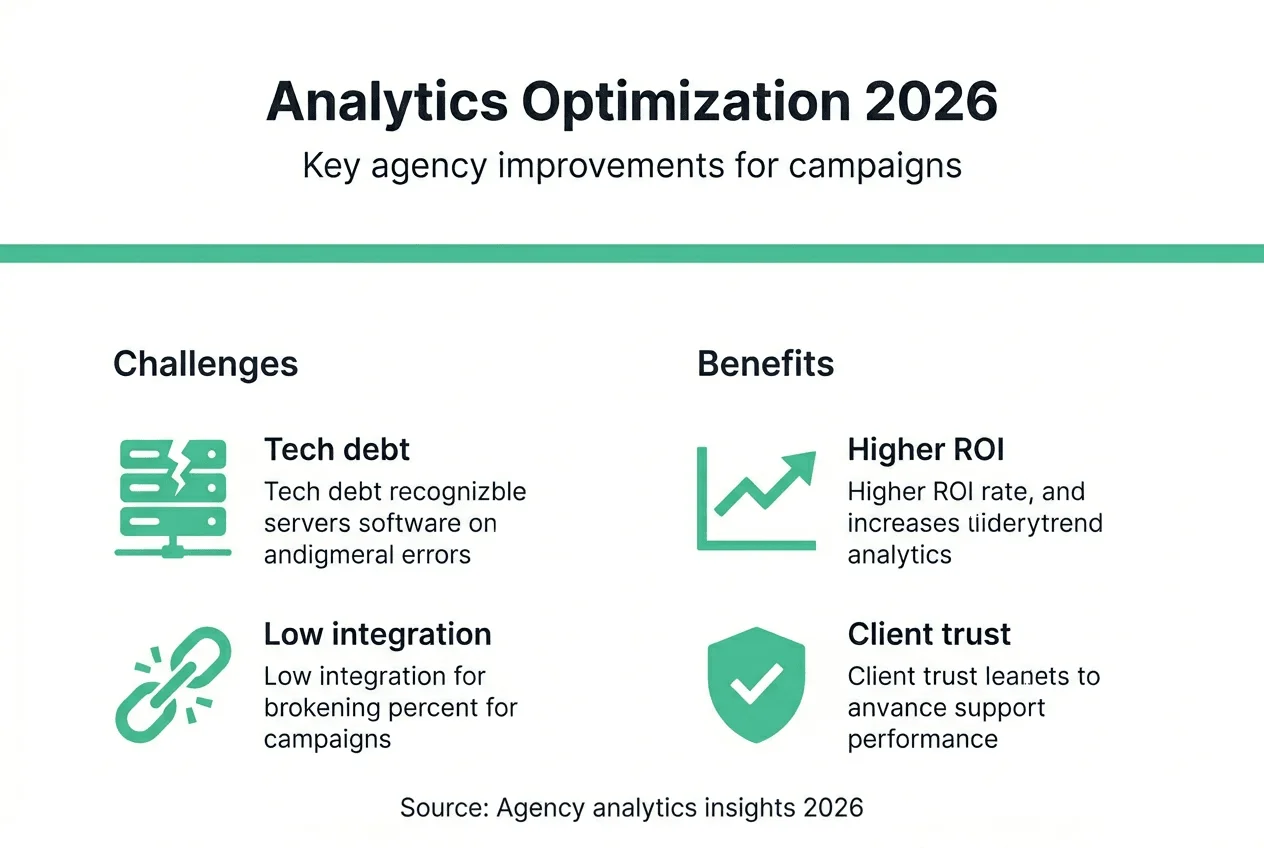
Integrated data solutions unify multi-channel tracking by connecting platforms through standardized schemas and centralized data warehouses. Rather than reconciling disparate reports manually, integrated systems automatically normalize data and attribute conversions correctly across channels.
Pro Tip: Reconcile cross-platform data weekly to improve attribution accuracy and client reporting quality. Regular reconciliation catches discrepancies early before they compound into larger issues.
Maintaining marketing analytics data integrity ensures the foundation remains solid as campaign complexity grows. Without data integrity, sophisticated attribution models produce misleading insights that damage rather than improve campaign performance.
Understanding the analytics role in decision making helps agencies move beyond reporting into strategic optimization. The multi-platform marketing automation guide provides additional frameworks for managing complexity across diverse client portfolios.
Enhance your agency’s analytics with Trackingplan
Managing analytics quality across multiple client campaigns requires automated monitoring and auditing tools. Trackingplan provides specialized solutions for agencies facing data integrity challenges and martech integration complexity.
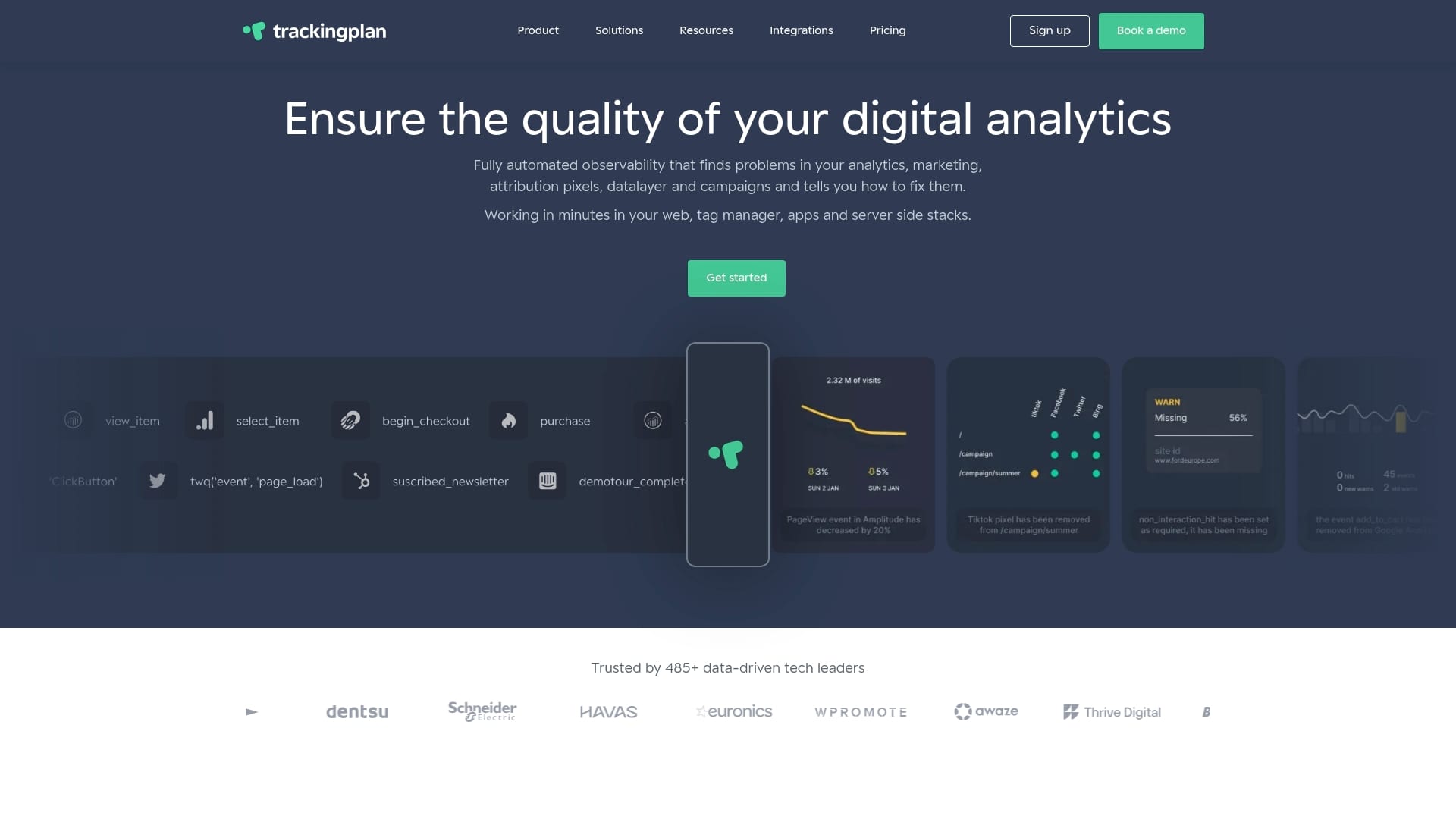
Trackingplan’s platform offers:
- Automated error detection catching tracking failures before they corrupt campaign data
- Seamless martech integration monitoring across websites, apps, and server-side implementations
- Scalable auditing designed specifically for agencies managing multiple client accounts
- Real-time alerts via email, Slack, or Teams when anomalies or errors occur
- Comprehensive dashboards providing ongoing insights into martech stack health
Pro Tip: Regularly audit your tracking setup using automated tools to avoid silent errors that mislead campaign decisions and damage client trust.
Explore digital analytics tools that integrate with your existing stack. Learn how web tracking monitoring maintains data quality across all client properties. Discover why automated error detection for agencies reduces manual QA workload while improving reliability.
What is the main role of analytics in digital marketing agencies?
What is the main role of analytics in digital marketing agencies?
Analytics helps agencies measure campaign performance, optimize strategies, and maximize ROI for clients. It provides the foundation for informed decision making about budget allocation, creative direction, and channel strategy based on actual performance data rather than assumptions.
How can agencies overcome martech underutilization and technical debt?
Prioritize system integrations and automation workflows to connect siloed platforms. Regularly audit tools to eliminate redundancy and improve utilization rates. Educate teams on proper tool usage and benefits through structured training programs. Understanding martech changes that defined 2025 helps agencies adapt proactively.
What is multi-touch attribution and why is it important for agencies?
Multi-touch attribution assigns conversion credit to all touchpoints influencing customer decisions rather than just first or last interactions. This approach provides more accurate ROI insights and budget allocation guidance. It helps optimize cross-channel campaign strategies by revealing which channels work together to drive conversions.
How do analytics improve client retention for marketing agencies?
Clear, transparent reporting improves client confidence in agency work and demonstrates tangible value. Transparent, insightful data builds trust and improves retention by making performance visible. Quick detection and fixes of tracking errors through silent tracking error detection maintain data reliability, which keeps clients engaged longer.
What systems enable agencies to scale analytics across multiple clients?
Standardized workflows, unified dashboards, and automated monitoring enable efficient scaling. Channel-specific playbooks document proven tactics. AI-assisted workflows automate routine analysis. These systems allow agencies to onboard clients without proportional headcount increases, driving profitable growth.
Recommended
- Mastering Analytics in Advertising to Maximize Your ROI | Trackingplan
- Analytics in growth: optimize 2026 marketing strategies | Trackingplan
- What is analytics automation? Boost accuracy in 2026 | Trackingplan
- The 10 Martech Changes That Defined 2025 | Trackingplan
- Role of automation in ad campaigns: boost efficiency 30%