
Data governance for analytics is the set of rules, processes, and responsibilities you put in place to make sure your data is accurate, consistent, and ready for decision-making. Think of it as the quality control system for your analytics. It’s what stops the "garbage in, garbage out" problem that leads to bad insights and wasted money, turning raw, messy data into a reliable asset.
Why Data Governance for Analytics Matters More Than Ever
Imagine trying to navigate a new city with a map full of errors and outdated street names. You’d get lost, make wrong turns, and probably never reach your destination. That’s exactly what happens when businesses try to make strategic decisions using untrustworthy analytics. Without a reliable map, every choice is just a gamble.
This is where data governance for analytics comes in. It’s not some tedious technical chore; it's the rulebook that makes your data map reliable. It provides the structure needed to ensure every piece of information is dependable.
The Professional Kitchen Analogy
Think of your data ecosystem as a professional kitchen. A top chef would never let low-quality, unlabeled, or unsafe ingredients into their dishes. The same goes for your data. Data governance sets the rigorous standards for your data "ingredients":
- Quality Control: Just as a chef inspects produce for freshness, governance makes sure data points are accurate and complete.
- Clear Labeling: A well-organized kitchen labels every container. Governance does the same by setting clear naming conventions so everyone knows what the data means.
- Safe Handling: Chefs follow strict food safety protocols. Governance implements rules to protect sensitive information and ensure compliance with regulations like GDPR.
Without these standards, you risk serving a disastrous meal—or in business terms, making a costly decision based on flawed insights.
Data governance is the process of ensuring that every 'ingredient' in your analytics recipe is high-quality, clearly defined, and safe to use. It’s the difference between a Michelin-star meal and a chaotic mess.
The Real-World Costs of Poor Governance
Ignoring data governance has real, tangible consequences. A marketing team might launch an expensive campaign based on skewed customer segments, only to watch it fail spectacularly. A product team could build features for a user persona drawn from incomplete behavioral data, leading to low adoption. You can explore more about what is data governance and why do you need it in our detailed guide.
In an era that leans heavily on AI and automation, the stakes are even higher. These systems amplify the quality of the data they’re fed—for better or worse. Having absolute trust in your analytics is no longer just an advantage; it's a fundamental requirement for survival and growth. Good governance ensures your data foundation is solid enough to build the future of your business on.
Building Your Analytics Governance Framework
A solid analytics governance program isn't just some abstract idea; it's a practical structure built on three core pillars: People, Processes, and Technology. Think of it like building a house. You need a skilled crew (people), a solid blueprint (processes), and the right tools (technology) to get the job done right. If you skimp on any one of these, the whole structure gets wobbly.
So, let's move past the theory and break down what these pillars actually look like in practice. A successful framework boils down to defining who is responsible for the data, what rules they need to follow, and which tools are going to help them do it.
This hierarchy shows how data governance acts as the critical layer between your raw data and your final analytics, ensuring that what you're analyzing is actually trustworthy.
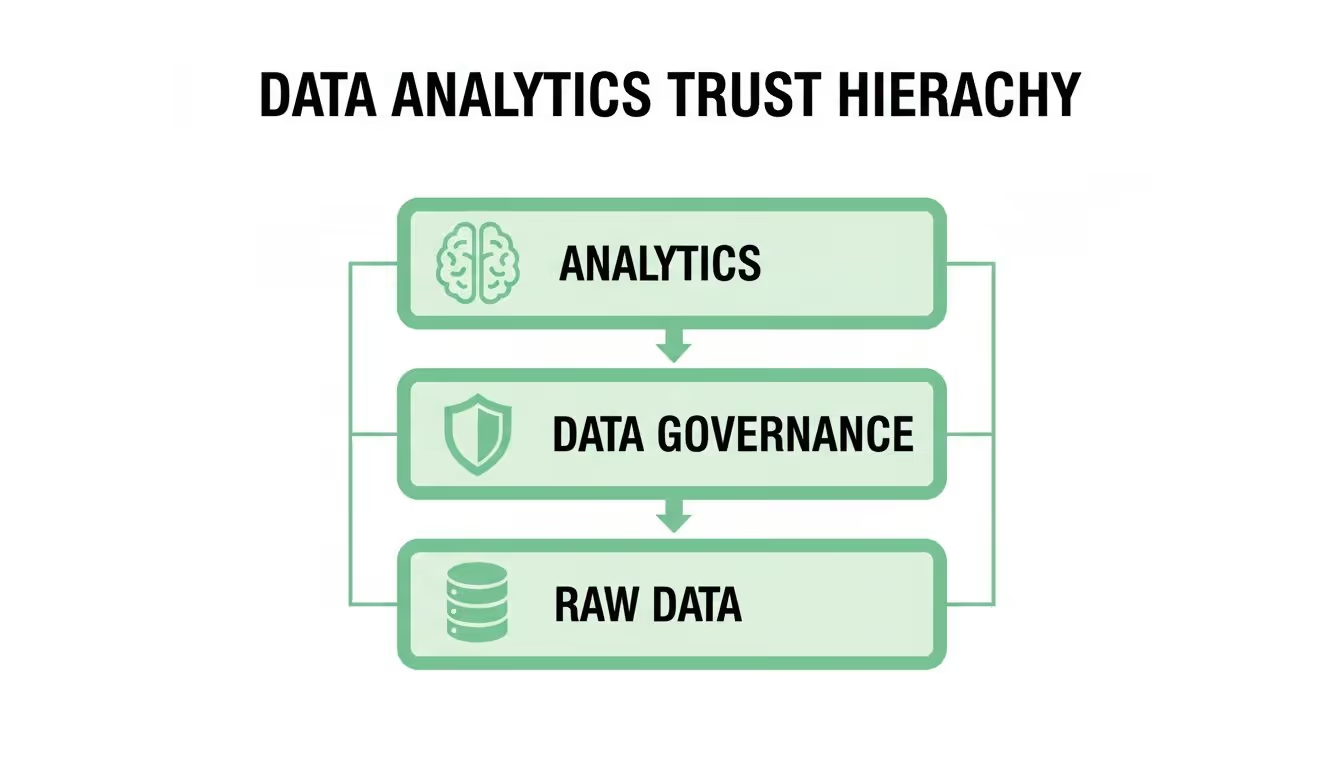
The key takeaway here is that trusted analytics is the end goal, but you can only get there if it's built on a foundation of clean, well-governed raw data.
The People Behind the Data
Let's be clear: technology can't fix data quality problems on its own. You need actual people with clear ownership and accountability. The two most critical roles here are the Data Owners and Data Stewards.
A Data Owner is usually a senior leader who is ultimately responsible for a specific data domain, like all customer data or all product data. They aren't in the weeds managing it day-to-day, but the buck stops with them when it comes to its quality, security, and ethical use.
Data Stewards are your hands-on heroes. These are the subject matter experts who handle the daily management of data—defining terms, monitoring quality, and making sure everything complies with company policies. They are the frontline defenders of data integrity.
The Processes That Guide Action
Processes are the blueprints your people follow. They bring consistency and clarity, making sure everyone is on the same page about how to create, manage, and use data. Without clear processes, even the best intentions for governance will quickly descend into chaos.
A well-defined process is what turns good intentions into repeatable, reliable outcomes. It’s the difference between hoping for data quality and systematically achieving it.
Some essential processes include:
- Creating a Data Dictionary: This is a central, living document that defines every key metric and data point. A shared vocabulary is non-negotiable; it eliminates confusion and ensures everyone is speaking the same data language.
- Enforcing Naming Conventions: Standardizing how you name things like events, properties, and campaigns (e.g., consistent UTM parameter usage) is a simple but powerful way to prevent data fragmentation and make analysis infinitely easier.
- Establishing Data Quality Rules: This means defining what "good" actually looks like for your critical data fields. For example, you might require a valid email format or set a rule that order values can never be negative.
The Technology That Enables Scale
In today's fast-moving environment, trying to manage data governance manually is a recipe for failure. Technology is the force multiplier that automates enforcement, monitoring, and quality assurance. It frees up your people to focus on high-value work instead of spending their days doing endless manual spot-checks.
Modern tools are quickly becoming essential for maintaining data integrity in real time. Automated observability and QA platforms can constantly monitor your analytics for issues like broken tracking, schema violations, or even accidental PII leaks. This shifts governance from a reactive, forensic exercise into a proactive, preventative strategy.
The market reflects this urgency. The global data governance market was valued at USD 3.1 billion and is projected to hit USD 14.45 billion by 2035. For analytics teams, this massive growth signals one thing: implementing robust technology to ensure reliable data is no longer a "nice-to-have."
This table brings the three pillars together, showing how they support each other to form a cohesive framework.
The Three Pillars of an Analytics Governance Framework
PillarKey ComponentsPrimary ResponsibilityPeopleData Owners, Data Stewards, Governance CouncilAssigning accountability and providing subject matter expertise to safeguard data quality.ProcessesData Dictionaries, Naming Conventions, Quality Rules, Access PoliciesCreating clear, repeatable standards that guide how data is managed and used.TechnologyAutomated QA Platforms, Data Catalogs, Consent Management ToolsAutomating monitoring, enforcement, and observability to ensure policies are followed at scale.
Ultimately, a winning data governance for analytics strategy depends on integrating all three pillars. To go a bit deeper, you can explore the key components of a robust data governance strategy and how they fit together. This balanced approach is what builds a framework that is both effective and built to last.
Essential Policies for Trustworthy Analytics
With a solid framework of people, processes, and technology in place, it's time to get specific. A framework is just a skeleton; policies are the muscles that make it move. These are the practical, enforceable rules of the road that transform your high-level governance principles into daily practice, acting as a quality filter for every piece of data you collect.
Think of it like running a professional kitchen. The framework tells you to maintain a clean and organized space, but the policies tell you exactly how to measure each ingredient, what temperature to cook at, and how to plate the final dish. Without them, you get inconsistency and chaos.
Defining Your Tracking Plan and Event Schemas
The single most important policy in data governance for analytics is the creation and enforcement of a tracking plan. This is your master blueprint, detailing every event, user property, and parameter you intend to collect across your digital products. It’s the definitive source of truth for what data should be tracked, where it should come from, and what it means.
But a tracking plan without a defined structure, or schema, is incomplete. A schema dictates the precise format for each event, specifying which properties are required and what data types they should be (e.g., string, integer, boolean).
This is what stops "rogue" data—unexpected or malformed information—from polluting your analytics tools.
For example, a product_viewed event schema might require:
product_id(string, required)product_name(string, required)price(number, required)on_sale(boolean, optional)
If a developer mistakenly sends the price as a string (e.g., "$19.99") instead of a number (e.g., 19.99), it violates the schema. This single error can break revenue calculations and skew your sales reports, rendering them useless.
Tracing the Flow with Data Lineage
Once you have rules for creating data, you need to know where it's going. Data lineage provides a complete, traceable map of your data’s journey, from its origin all the way to your dashboards. It answers critical questions like:
- Where did this metric in my sales dashboard originally come from?
- Which systems has this data passed through?
- What transformations were applied to it along the way?
Establishing clear data lineage is like having a GPS for your data. It allows you to quickly pinpoint the source of an error, understand the impact of changes, and build unshakable confidence in your reports.
Without lineage, troubleshooting a broken dashboard becomes a frustrating forensic investigation. With it, you can instantly trace the problem back to its source, whether it's a schema violation in the app or a faulty transformation in the data warehouse.
Protecting Privacy and Ensuring Compliance
Policies aren’t just about data quality; they are essential for legal and ethical data handling. Regulatory compliance and data privacy concerns are driving unprecedented demand for data governance solutions. With data breaches on the rise, these frameworks have become essential business infrastructure rather than optional measures. This is reflected in the market, where compliance management captures a significant share as organizations work to meet strict regulations like GDPR and CCPA.
Your policies must include strict controls to prevent the accidental collection of Personally Identifiable Information (PII) like names or email addresses in analytics events. Automated monitoring for potential PII leaks is no longer a luxury—it’s a necessity. This also includes managing user consent and ensuring your tracking practices respect privacy choices. These policies, documented in resources like a data dictionary, are crucial. You can learn about the purpose of a data dictionary in managing organizational data to better understand its role.
Beyond specific data governance policies, you may find value in reviewing general guidance on creating policy and procedure manuals. These tangible controls—tracking plans, schemas, lineage, and privacy rules—are what make governance real. They turn abstract goals into concrete actions that ensure only clean, compliant, and trustworthy data powers your decisions.
How to Implement Your Governance Program
Theory and frameworks are great, but execution is what separates a plan on a slide from real-world results. Kicking off a data governance for analytics program can feel like a massive undertaking, but the secret is you don’t have to solve every single problem on day one. A phased approach is your best friend here—it lets you build momentum and show value fast without trying to boil the ocean.
This journey doesn't start with tech; it starts with people. Your first, and most crucial, step is getting stakeholder buy-in. This means ditching the technical jargon and translating governance into benefits that leaders actually care about.
Forget talking about "schema violations." Instead, frame it as "preventing the $50,000 marketing campaign failure caused by bad data." That kind of reframing is how you get the resources and support you need to make it happen.
Conduct a Data Audit to Find Quick Wins
Before you can write new rules, you need to understand the current lay of the land. A thorough data audit will show you what data you're collecting, where it’s coming from, how it’s being used, and—most importantly—where the biggest headaches are.
This audit is your treasure map for finding "quick wins." These are small, high-impact fixes that you can implement fast to prove the value of governance. A perfect example is standardizing UTM conventions. Messy campaign tagging is an incredibly common problem that directly torpedoes your ability to measure marketing ROI.
A successful governance program is built on momentum. By focusing on quick wins first, you prove the concept, build trust, and turn skeptics into advocates, making it easier to tackle larger challenges down the road.
Fixing this one issue can clean up attribution reports in a few weeks, giving you a clear, measurable success story to build your case for bigger initiatives.
Define Your Initial Policies and Tools
With your quick wins identified, it's time to formalize your first set of policies. Start simple. You don’t need a 100-page document. Your initial policies might just include:
- Standardized Naming Conventions: A clear, consistent structure for events, properties, and campaigns.
- A Basic Tracking Plan: Document the most critical user events you need to track for one key user journey.
- Data Quality Thresholds: An initial benchmark for data accuracy that everyone can agree on.
This is also the right time to bring in the right technology. Let's be honest, manual enforcement just doesn't scale. Automation tools do the heavy lifting by constantly watching your data pipelines for any policy violations. A modern platform can automatically flag issues like schema mismatches, rogue events, or broken tracking in real time, freeing up your team from soul-crushing manual checks.
Roll Out the Program and Communicate Clearly
Now you're ready to introduce the program to the rest of the team. This step is all about communication and education. Don't just email a doc with new rules and call it a day. Host workshops and training sessions to explain the "why" behind it all. Show developers, marketers, and analysts how these new guardrails will actually make their jobs easier and their work more impactful.
You’ll probably hit some resistance. Some people will see governance as bureaucratic red tape designed to slow them down. Your job is to counter that by emphasizing how it removes guesswork, slashes errors, and ultimately leads to faster, more confident decisions. Those early successes from your quick-win projects? They're your most powerful tool for winning over the skeptics.
Finally, package your implementation plan into an easy-to-follow resource. A simple checklist can be a great takeaway that helps your team turn your governance plan into a daily habit. This structured rollout makes sure everyone knows their role and feels empowered to build a culture of data excellence.
Common Data Governance Pitfalls and How to Avoid Them
Kicking off a data governance for analytics program is a huge step forward, but even the best-laid plans can hit some serious turbulence. Knowing what to watch out for is half the battle, making sure your initiative delivers real value instead of fizzling out after a few months.
A classic mistake is treating governance like a finite project—something you set up, document, and promptly forget. This "one-and-done" thinking is a primary reason so many programs fail. Your data ecosystem isn't static; it's constantly changing with new products, features, and marketing campaigns.
Governance has to be a living, breathing process, not a dusty binder on a shelf. The second it’s viewed as a one-time cleanup, it starts to fall apart.
Failing to Secure Executive Sponsorship
Another common trap is the lack of visible, vocal support from the top. Without it, data governance gets dismissed as a low-priority, technical-only task. When push comes to shove, teams will always choose to ship features over sticking to governance rules if they don’t see a clear mandate from leadership.
Getting an executive sponsor who will champion the cause is non-negotiable. This leader’s job is to hammer home the business value of trusted data, clear organizational roadblocks, and ensure the program gets the resources it needs. Their backing turns governance from a "nice-to-have" into a strategic imperative.
A data governance program without an active executive sponsor is like a ship without a captain. It might float for a while, but it has no direction and is likely to sink in the first storm.
To nail this down, connect your governance goals directly to business outcomes. Frame the conversation around preventing costly mistakes, boosting marketing ROI, or building more reliable AI models.
Over-Engineering the Rules
In an attempt to be thorough, some teams create policies so complex and rigid that they bring analytics and development to a screeching halt. When governance becomes a bureaucratic nightmare, people will find workarounds, defeating the entire purpose. The goal isn't to create red tape; it's to enable confident, fast decisions.
A much better approach is to apply the 80/20 rule. Focus your initial efforts on governing the 20% of data assets that drive 80% of your most critical business decisions. Start with high-impact areas, like your main conversion funnel or key customer events. This practical strategy lets you show value quickly without bogging everyone down.
Relying on Manual Enforcement
Finally, trying to enforce everything with manual checks and human oversight is a recipe for failure at scale. No team has the bandwidth to manually validate every single data point flowing through the system. This approach is not only slow and inefficient but also incredibly prone to human error, letting major issues slip right through the cracks. The hidden costs of poor data governance are a stark reminder of why a more robust system is needed.
The only sustainable solution is to embrace automation. Here’s how you can sidestep these pitfalls for good:
- Embed Governance into Workflows: Ditch the separate review meetings. Instead, build data governance checks directly into your team's existing routines, like sprint planning and QA cycles.
- Prioritize Ruthlessly: Start small with a critical scope. Perfecting the governance for one key user journey is way more valuable than a half-baked attempt to govern everything at once.
- Automate Monitoring: Use tools that can automatically monitor your data pipelines in real time for schema violations, PII leaks, and other quality problems.
By anticipating these common mistakes, you can build a governance program that’s practical, resilient, and actually built to last.
The Future Is Automated Governance and QA
Looking ahead, one thing is becoming crystal clear: manual data governance just can't keep up anymore. The fundamental truth hasn't changed—trusted data is the bedrock of confident decision-making. What has to change are the methods we use to get there, especially with the sheer speed and scale of modern data.

Manual spot-checks and quarterly audits feel like relics from a different era. They're slow, riddled with potential for human error, and simply can't handle the millions of data points streaming in every second. The future of effective data governance for analytics depends on continuous, automated observability.
Shifting from Reactive to Proactive
This isn't just a small tweak; it's a fundamental shift in mindset. Traditional governance often plays out like a crime scene investigation. An analyst flags a broken dashboard, and a data steward has to painstakingly trace the problem back to its source—an issue that could be weeks or even months old. By that point, the damage is already done.
Automation flips this model completely. Instead of just cleaning up messes, modern platforms provide real-time monitoring and quality assurance to stop them from ever happening.
The goal of modern data governance is not just to fix errors faster but to create an environment where they are far less likely to occur. This proactive stance transforms governance from a cost center into a strategic enabler.
This shift empowers teams to catch issues the moment they arise, long before they can poison a critical business report or derail a multi-million dollar marketing campaign. It’s the difference between fighting a fire and having a smoke detector that alerts you at the first whiff of trouble.
The Power of Continuous Monitoring
So, what does this automated future actually look like? Imagine a system that constantly watches over your data ecosystem, validating every single event against your tracking plan and schema. It's about achieving data reliability at a scale that's flat-out impossible for a human to manage.
This automated layer of quality assurance delivers some major wins:
- Instant Alerts: Teams get immediate notifications through tools like Slack or email about rogue events, schema violations, or broken tracking.
- Reduced Manual Effort: It liberates your most valuable people—your analysts and developers—from the soul-crushing work of manual data validation, letting them focus on actual innovation.
- Maximized ROI: By ensuring the data feeding your analytics stack is consistently clean and reliable, automation maximizes the return on your entire analytics investment.
Ultimately, leaning into automation is the only way to ensure your data governance for analytics program can scale. It moves governance from a periodic project to an "always-on" part of your operations, securing the trusted data foundation you need for confident, data-driven growth.
Frequently Asked questions About Analytics Governance
Even with a solid plan, putting analytics governance into practice is going to bring up questions. Let's tackle some of the most common ones that pop up in the real world.
How Is Data Governance Different for Analytics Than for IT?
This is a big one. While both IT and analytics governance care about data quality and security, they come at it from completely different angles. IT data governance is typically focused on the systems themselves—things like compliance, secure storage, and database-level access for operational systems.
Data governance for analytics, however, is all about making sure the data is reliable, consistent, and well-understood for the sole purpose of making smart decisions.
Here's an analogy I like: IT governance makes sure the water pipes are secure and don’t leak. Analytics governance makes sure the water coming out of the tap is actually clean enough to drink. One is about the infrastructure; the other is about the quality of the output.
What’s the First Step If We Have Nothing in Place?
Starting from zero can feel like you're trying to boil the ocean. My advice? Don't. The best first move is always to conduct a data audit, but a very focused one.
Pick a single, high-impact business process. Your main customer conversion funnel is usually a great place to start. Look at the key analytics events and reports that your team relies on for that funnel and ask some simple questions:
- Do we actually trust this data?
- Do we know where it comes from?
- What are the most common complaints or "gotchas" with these reports?
This small-scale audit will quickly expose your biggest pain points. That gives you a manageable, high-visibility place to start your governance work.
The goal of a first-pass audit isn't perfection; it's momentum. Identifying and solving one painful, high-visibility problem is the fastest way to demonstrate the value of governance and get stakeholder buy-in for more.
How Do We Measure the ROI of Data Governance?
Proving the ROI of governance isn't always about a clean dollar figure. It’s more about measuring the reduction of bad outcomes and the boost in team efficiency. You can track this with metrics like:
- Time Saved: Tally up the hours your data team is no longer spending on manual data cleaning or digging into why a dashboard broke again. This time can now be spent on actual analysis.
- Faster Decision-Making: Document the "time-to-insight." How quickly can teams get trusted reports now compared to before? Shaving days or even weeks off this process is a huge win.
- Reduced Error Rates: Keep a log of data-related mistakes that led to wasted marketing spend, flawed product launches, or bad strategic calls. Show how that number drops over time.
These metrics give you tangible proof that good governance isn't just a "nice-to-have"—it makes the entire organization run better.
At Trackingplan, we believe automation is what makes effective data governance possible. Our platform gives you the continuous, automated quality assurance you need to stop bad data at the source and build unshakable trust in your analytics. See how it works at Trackingplan.