
Most marketing teams believe their tracking setups capture accurate data, but client-side tracking is vulnerable to data loss from ad blockers and privacy settings. This hidden gap causes underreporting, skewed attribution, and misguided budget decisions that waste thousands of dollars monthly. When 30 to 35% of internet users actively block tracking scripts, relying solely on browser-based methods leaves massive blind spots in your campaign performance data. Accurate tracking is crucial for measuring ROI, optimizing campaigns, and making informed marketing decisions. This guide explains why precision matters and how hybrid tracking solutions combining client-side and server-side methods deliver the complete picture you need to maximize marketing effectiveness in 2026.
Table of Contents
- Why Accurate Tracking Is Critical For Marketing Success
- The Limitations Of Client-Side Tracking And The Rise Of Server-Side Solutions
- Implementing A Hybrid Tracking Approach For Optimal Data Accuracy
- Leveraging First-Party Data And Privacy-First Solutions In 2026
- Optimize Your Tracking Accuracy With Trackingplan
- Frequently Asked Questions About Tracking Importance
Key takeaways
| Point | Details |
|---|---|
| Accurate tracking improves ROI | Reliable data enables precise measurement of campaign performance and justifies marketing investments. |
| Client-side tracking has vulnerabilities | Ad blockers and privacy tools cause 20-40% data loss in browser-based tracking setups. |
| Server-side tracking enhances control | Running tracking on your server bypasses blockers and improves data quality significantly. |
| Hybrid approaches deliver completeness | Combining both methods captures rich user context while maintaining data reliability. |
| First-party data supports compliance | Direct customer data collection simplifies privacy regulations and builds user trust. |
Why accurate tracking is critical for marketing success
Marketing decisions depend on reliable data to measure return on investment. Without precise tracking, you cannot determine which campaigns drive conversions, which channels waste budget, or where to allocate resources for maximum impact. Digital marketing teams heavily rely on data to allocate spend efficiently across search, social, email, and display campaigns. Every optimization decision, from bid adjustments to creative testing, requires trustworthy performance metrics.
Tracking inaccuracies lead to budget waste and missed optimization opportunities. When your analytics platform shows incomplete conversion data, you might pause profitable campaigns or scale underperforming ones based on false signals. Data quality affects all channels because attribution models connect touchpoints across the customer journey. If tracking fails to capture a critical interaction, your entire understanding of what drives revenue becomes distorted.
Common challenges include incomplete conversion data and erroneous attribution. A missing pixel fires might attribute a sale to the wrong source, crediting a brand search when a paid social ad actually drove the conversion. These errors compound over time, creating systematic biases in your reporting that mislead strategic planning. Without robust tracking, marketers cannot confidently justify investments or prove value to stakeholders who demand clear performance accountability.
Consider using a campaign tracking checklist to maintain consistency across all marketing initiatives. Regular audits catch configuration drift before it corrupts your data streams.
Pro Tip: Always validate your tracking setup regularly using a structured checklist to avoid costly blind spots that emerge when tags break, parameters change, or new campaigns launch without proper instrumentation.
The limitations of client-side tracking and the rise of server-side solutions
Client-side tracking depends on browser scripts vulnerable to ad blockers and cookie restrictions. When a user visits your site, JavaScript tags fire to send event data to analytics platforms. This approach worked well historically, but modern privacy tools actively prevent these scripts from executing or transmitting data. Browser extensions, built-in tracking prevention features, and strict cookie policies all interfere with data collection.
The scale of this problem surprises many marketers. Ad blockers are used by approximately one-third of internet users, causing significant blind spots in campaign measurement. This means nearly every third visitor generates zero tracking data, creating systematic underreporting that skews your understanding of traffic sources, user behavior, and conversion paths. The data loss compounds when privacy-conscious users also disable cookies, further limiting your ability to track journeys across sessions.
Server-side tracking runs on the server, bypassing blockers and improving data accuracy. Instead of relying on browser execution, your server collects event data directly and forwards it to analytics platforms. This architecture gives you complete control over what data gets sent, how it gets formatted, and when transmission occurs. Users cannot block server requests the same way they block client scripts.

The comparison reveals stark differences in reliability and control:
| Aspect | Client-Side Tracking | Server-Side Tracking |
|---|---|---|
| Data Loss Rate | 20-40% due to blockers | Under 5% with proper setup |
| Implementation | Simple tag deployment | Requires server infrastructure |
| User Context | Rich browser data available | Limited without client layer |
| Data Control | Platform-dependent | Full validation and filtering |
| Privacy Compliance | Cookie consent challenges | Easier first-party management |
Server-side tracking allows filtering and validation before data reaches analytics platforms. You can scrub personally identifiable information, enrich events with backend data, and ensure schema consistency across all properties. This preprocessing capability reduces downstream data quality issues and simplifies compliance with regulations like GDPR and CCPA.
Explore the technical details in this server side tracking guide to understand implementation requirements and architecture patterns.
Pro Tip: Combine server-side with client-side to retain user context while gaining data reliability, capturing behavioral signals browsers provide while ensuring core conversion data always reaches your analytics stack.
Implementing a hybrid tracking approach for optimal data accuracy
A hybrid approach combines the benefits of both client-side and server-side tracking. This strategy merges the rich user-level data from browser-based collection with the reliability of server-based transmission. You capture detailed interaction data like scroll depth, click patterns, and session recordings client-side, while sending critical conversion events through your server to guarantee delivery.
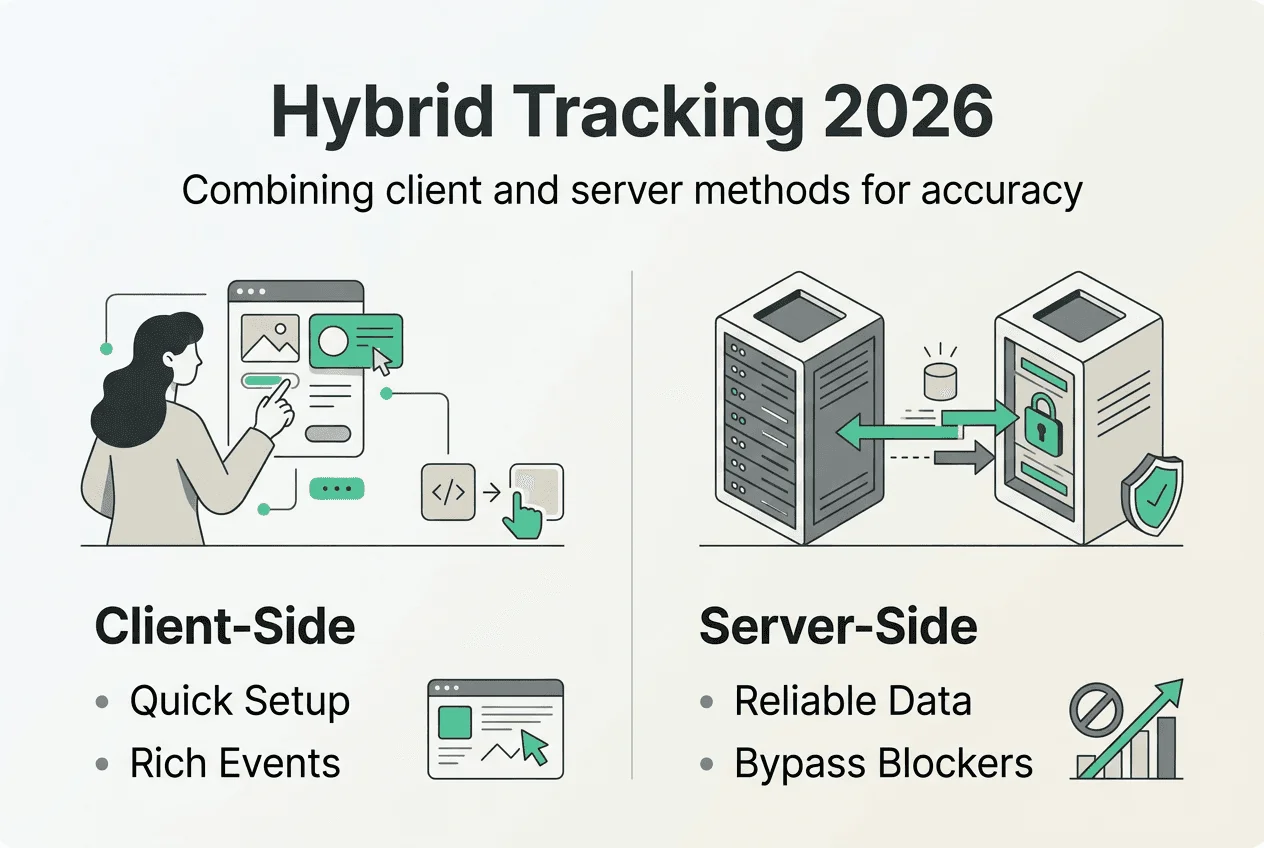
Implementing hybrid tracking requires careful coordination between layers. A hybrid approach involves using a shared event ID, sending events both client-side and server-side, and capturing conversions at the source. Start by generating unique identifiers for each user session that both tracking methods reference. This shared ID enables you to stitch client-side behavioral data with server-side conversion records during analysis.
Follow these steps to build a resilient hybrid setup:
- Deploy client-side tags to capture user interactions, page views, and engagement metrics that require browser context.
- Configure server-side endpoints to receive conversion events directly from your application backend when transactions complete.
- Implement shared event IDs that link client-side sessions with server-side conversion records for unified attribution.
- Set up dual event sending for critical conversions, transmitting the same event through both channels with deduplication logic.
- Monitor data quality continuously to identify discrepancies between tracking layers and resolve configuration drift.
Common pitfalls threaten hybrid implementations if you do not address them proactively:
| Challenge | Impact | Solution |
|---|---|---|
| Duplicate conversions | Inflated metrics from double-counting | Implement deduplication using event IDs and timestamps |
| Consent mismatches | Client allows but server blocks data | Synchronize consent status across both tracking layers |
| PII leakage | Sensitive data sent to platforms | Server-side filtering before transmission to analytics |
| Webhook timeouts | Lost server events during traffic spikes | Queue systems with retry logic for failed transmissions |
| Schema inconsistencies | Different event structures per layer | Centralized schema definitions enforced on both sides |
Benefits include improved data completeness, enhanced privacy compliance, and stronger attribution accuracy. When ad blockers prevent client-side tracking, your server-side layer ensures conversion data still flows. When users disable JavaScript, client-side tags fail gracefully while server-side tracking continues uninterrupted. This redundancy protects your data pipeline from single points of failure.
Review the digital analytics root cause guide to troubleshoot issues when tracking layers report conflicting data or conversions appear in one system but not another.
Pro Tip: Regularly monitor for webhook timeouts and maintain alignment on user consent status across tracking layers to prevent data errors that emerge when systems drift out of sync during infrastructure changes or platform updates.
Leveraging first-party data and privacy-first solutions in 2026
Marketers use first-party and zero-party data for more accurate, compliant marketing. First-party data comes directly from customers through interactions on your owned properties like websites, apps, and email systems. This direct relationship means you control collection, storage, and usage without intermediaries who might mishandle information or impose restrictions. Zero-party data, which customers intentionally share through preferences and profiles, adds even deeper insights.
First-party data delivers better results, is more accurate, enables easier compliance, and improved ROI. Because you collect this data directly, it reflects actual customer behavior on your properties rather than inferred interests from third-party brokers. The accuracy advantage translates to better segmentation, more relevant messaging, and higher conversion rates across all campaign types.
Privacy regulations demand transparent data use and user consent, complicating tracking. GDPR, CCPA, and similar frameworks require explicit permission before collecting personal information. Third-party cookies face deprecation across major browsers, forcing marketers to rebuild targeting and measurement strategies. These changes make first-party data strategies essential rather than optional.
Google’s consent mode translates user preferences into adjustable tracking parameters without tanking campaign performance. When users deny cookie consent, this framework switches to privacy-preserving measurement methods that provide aggregate insights while respecting individual choices. Conversion modeling fills gaps in data where tracking cannot occur, maintaining campaign optimization capabilities.
Data Clean Rooms enable secure, privacy-compliant data collaboration across partners. Data Clean Rooms are becoming essential infrastructure for organizations navigating complex partner ecosystems. These environments allow multiple parties to analyze combined datasets without exposing raw customer information, supporting collaborative attribution and audience insights while maintaining strict privacy controls.
Key benefits of first-party data strategies include:
- Accuracy improvements from direct customer relationships and verified interaction data
- Compliance simplification through transparent collection and clear user consent mechanisms
- ROI gains from better targeting precision and reduced reliance on expensive third-party segments
- Customer trust building when you demonstrate responsible data stewardship and respect privacy
- Data control that insulates your marketing from platform policy changes and third-party deprecations
Google’s consent mode adapts tracking based on user settings, preserving campaign effectiveness while honoring privacy choices through conversion modeling and aggregate measurement that maintains optimization signals.
Learn more about building a robust first-party data foundation in this guide on first-party data importance that covers collection strategies, storage architecture, and activation tactics.
Optimize your tracking accuracy with Trackingplan
Building a robust tracking framework requires ongoing monitoring to catch issues before they corrupt your data. Trackingplan automates detection of tracking issues to improve data accuracy, alerting you instantly when pixels break, schemas change, or campaigns launch with missing parameters. Instead of manual audits that consume hours weekly, automated systems continuously validate every event flowing through your analytics stack.
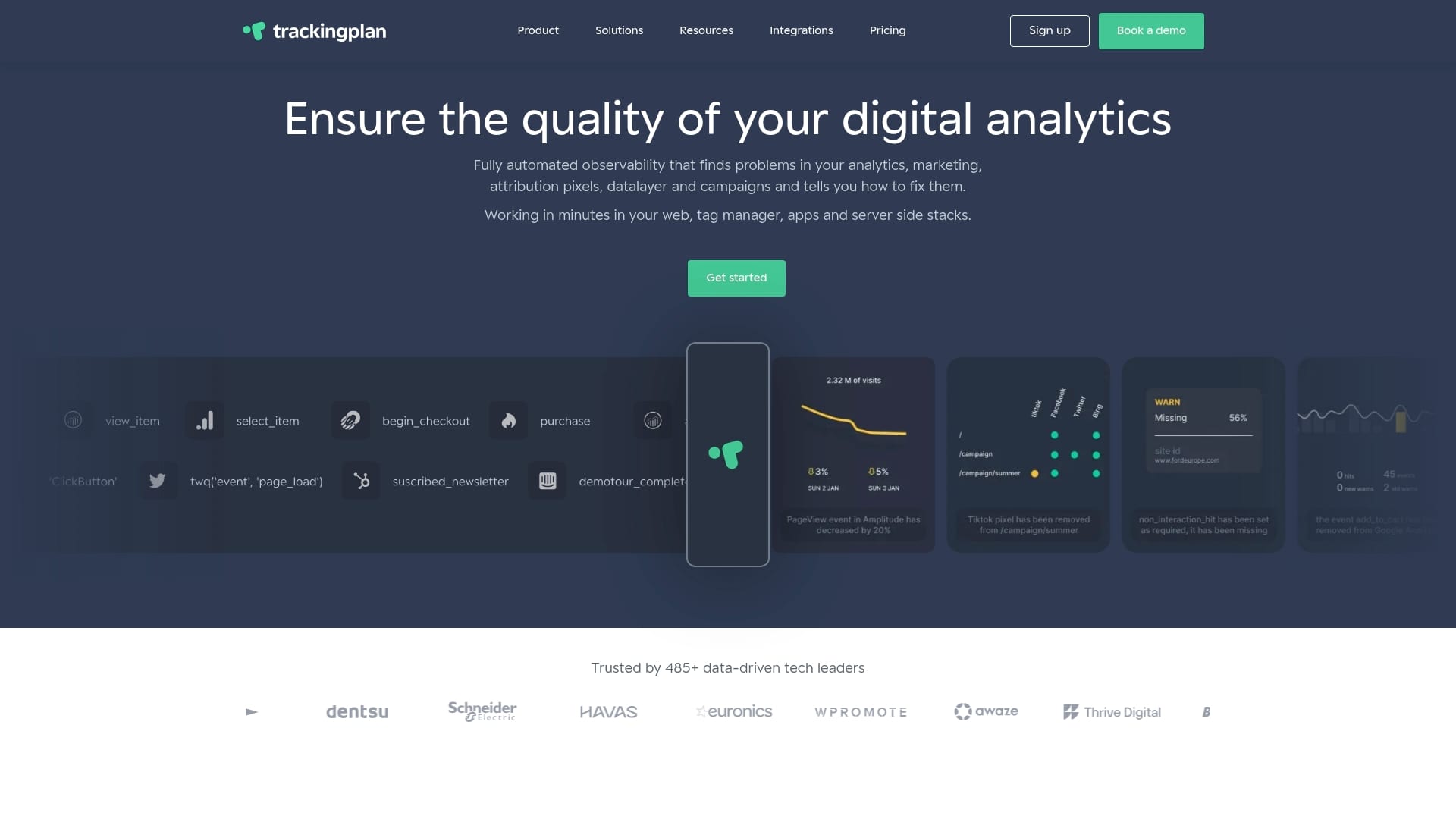
The platform supports hybrid tracking setups for resilient data collection, monitoring both client-side and server-side implementations simultaneously. When discrepancies emerge between tracking layers, you receive actionable alerts that pinpoint the exact source of data quality problems. This visibility accelerates troubleshooting and prevents small configuration errors from snowballing into systematic reporting failures.
Trackingplan integrates with popular digital analytics tools for seamless monitoring across your entire martech stack. Whether you use Google Analytics, Adobe Analytics, Segment, or custom data warehouses, unified dashboards show data quality metrics across all platforms. This consolidation eliminates the need to check multiple tools separately when investigating tracking anomalies.
Maintain continuous data quality using actionable campaign tracking checklist templates that ensure consistency across launches. Explore web tracking monitoring solutions that protect your marketing investments by guaranteeing the data driving decisions accurately reflects customer behavior.
Frequently asked questions about tracking importance
Why is tracking accuracy so important for marketing ROI?
Accurate tracking directly determines whether you can measure campaign performance, attribute conversions correctly, and optimize budget allocation. Without reliable data, you cannot distinguish profitable campaigns from wasteful ones, leading to systematic misallocation of resources. Every strategic decision depends on trustworthy metrics that reflect actual customer behavior.
How can I overcome data loss caused by ad blockers?
Implement server-side tracking to bypass browser-based blockers that prevent client-side scripts from executing. A hybrid approach captures rich behavioral data client-side while guaranteeing critical conversion events transmit through your server. This redundancy ensures you maintain visibility into campaign performance even when users employ aggressive privacy tools. Review methods to detect tracking issues before they impact reporting.
What are the biggest challenges in implementing server-side tracking?
Server-side implementations require technical infrastructure that client-side tags do not, including server capacity, endpoint development, and data pipeline management. Schema consistency across systems demands careful coordination, and maintaining user context without browser data requires creative solutions. However, these upfront investments pay dividends through dramatically improved data quality and reduced vulnerability to external blocking.
How does first-party data improve marketing outcomes?
First-party data provides higher accuracy because it comes directly from customer interactions on your properties rather than inferred third-party segments. This precision enables better targeting, more relevant personalization, and stronger customer relationships. Compliance becomes simpler when you control collection and usage, and you gain independence from platform policy changes that disrupt third-party strategies.
What steps ensure compliant user consent in tracking?
Implement clear consent mechanisms that explain data collection purposes before capturing information. Use consent management platforms that synchronize user choices across all tracking systems, ensuring client-side and server-side methods respect identical permissions. Explore server side tracking features that simplify consent enforcement through centralized control points where you can filter data based on user preferences before transmission to analytics platforms.