What is PII? Learn what personally identifiable information means, how to spot it, and the essential steps for protecting data and ensuring compliance.
Let's get right to it: PII, or Personally Identifiable Information, is essentially any piece of data that can be used to figure out who a specific person is. This could be something as obvious as a name or email address, or it could be a combination of different data points that, once connected, point directly to an individual.
Decoding Personally Identifiable Information
Think of PII as pieces of a digital puzzle. A single piece, like someone's city of residence, is pretty anonymous on its own. It doesn't tell you much. But start connecting that piece with others—say, a last name, a birth date, and a street address—and suddenly, a clear picture of a real person comes into view.
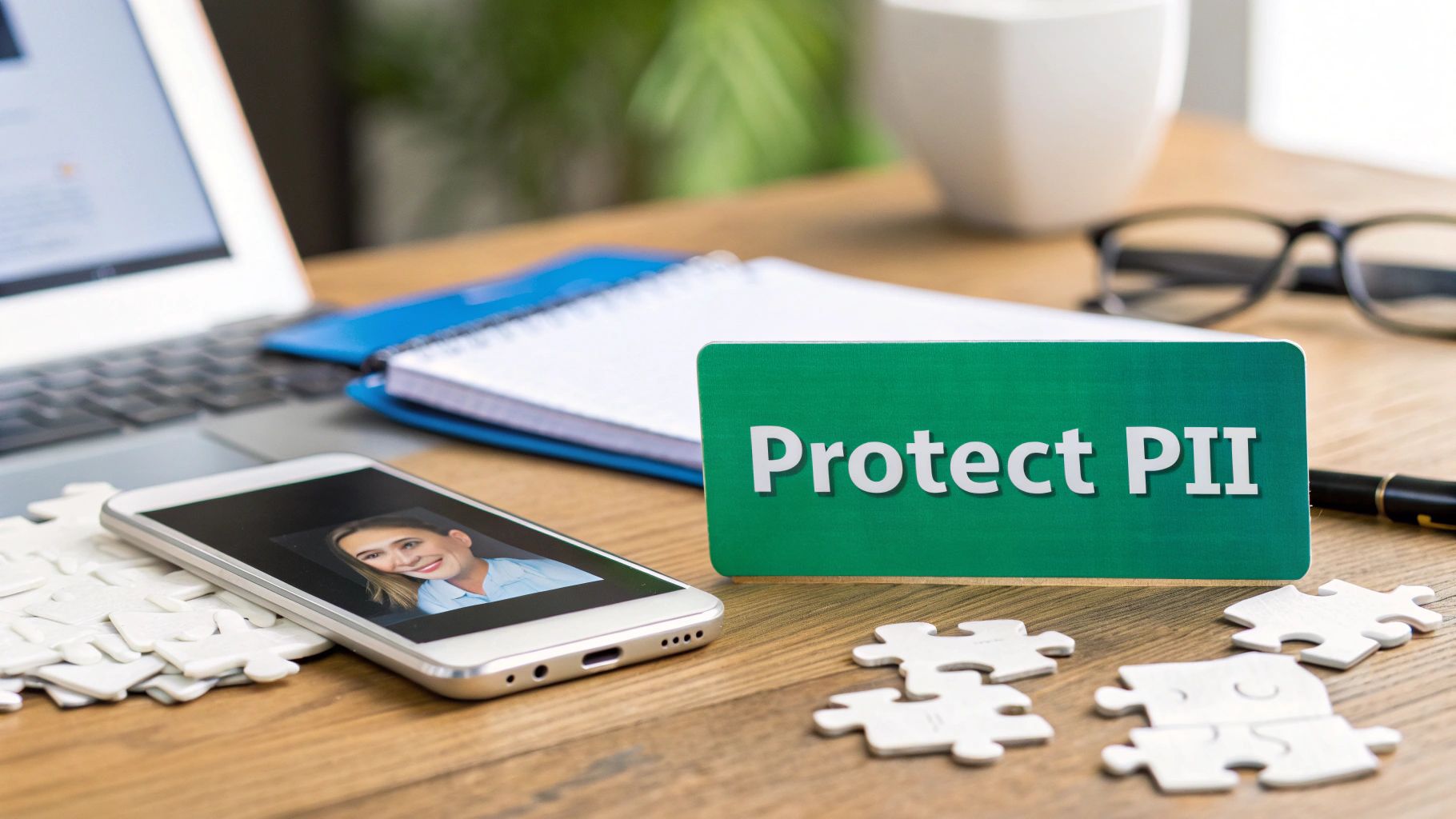
This ability to link data is what makes managing PII so critical. Companies today are swimming in data, and the real challenge is realizing that seemingly harmless information can become sensitive PII in the blink of an eye. If you aren't careful, you could be creating major privacy risks without even knowing it.
The Two Faces of PII
To really get a handle on what PII is, it’s helpful to split it into two main buckets: direct and indirect identifiers.
Direct Identifiers: This is the obvious stuff—data that points straight to one person. It’s the most sensitive type of PII and needs the tightest security. We're talking about things like a full name, Social Security number, or driver's license.
Indirect Identifiers: These are the trickier pieces of info. By themselves, they don't identify anyone, but they become incredibly powerful when you start combining them. Think about data points like gender, race, a partial birth date, or a place of birth. Separately, they’re generic; together, they can narrow down the field to a single individual.
Understanding this difference is absolutely fundamental for anyone handling data. A leak of direct identifiers is an immediate, full-blown crisis. A leak of indirect identifiers, on the other hand, starts a ticking clock while bad actors work to connect the dots.
To make this crystal clear, here’s a quick breakdown of PII categories and some real-world examples you're likely to encounter.
Quick Guide to PII Categories and Examples
This table should give you a solid framework for thinking about the different kinds of data you might be handling and the level of risk associated with each.
At its core, protecting PII is about protecting people. Every data point represents a real person who has placed their trust in your business to handle their information responsibly. Mishandling it doesn't just violate regulations; it breaks that fundamental trust.
This isn't just a local problem—it's a global headache. A staggering 71% of organizations now say that managing cross-border data transfers is their top regulatory challenge, as they try to keep up with different definitions of PII under laws like GDPR and CCPA. If you want to go deeper, exploring current data privacy statistics can reveal the full scale of the issue.
Ultimately, PII management is no longer a job just for IT or the legal department. It's a core business strategy. Getting it wrong can lead to massive fines, permanent brand damage, and a total loss of customer loyalty. In the sections ahead, we'll dive into the specific regulations that govern PII and show you how all of this impacts your day-to-day operations.
Navigating the Maze of PII Regulations
Knowing what PII is gets you to the starting line. Figuring out how to navigate the laws that govern it is where the real race begins. This isn't just about legal box-ticking—it's a core operational demand for any business that touches user data. With different rules in different regions, it's a tricky environment, especially for global companies.
These regulations all hinge on a few big ideas that completely change how you have to think about data. Concepts like data minimization, purpose limitation, and the right to consent are no longer fuzzy legal theories. They're direct orders with real-world consequences for your business.
Key Principles Driving Global Data Privacy
At the heart of every modern data privacy law, you'll find principles designed to put individuals back in control of their personal information. These aren't just suggestions; they are hard-and-fast rules that dictate how you collect, use, and store PII.
Here are the foundational concepts you’ll see pop up in most major regulations:
- Data Minimization: This one is simple but powerful—only collect the data you absolutely need for a specific, stated purpose. If you don't need a user's phone number to make your app work, you shouldn't be asking for it.
- Purpose Limitation: You have to be upfront about why you’re collecting data and then stick to that reason. You can't just collect an email for account notifications and then quietly add it to a marketing list without separate, explicit consent.
- Consent and User Rights: People have the right to know what data you have on them, fix it if it's wrong, and in many cases, tell you to delete it (often called the "right to be forgotten"). Getting clear, unambiguous consent before you process PII is a non-negotiable cornerstone of modern privacy.
These principles mean you have to actively manage and justify every single piece of PII that passes through your systems. The old days of grabbing as much data as possible "just in case" are long gone. To dig deeper into staying on the right side of these rules, check out our detailed guide on PII data compliance.
Major Regulations and Their Global Reach
While dozens of privacy laws are on the books, a few heavy hitters set the global standard. Their influence stretches far beyond their own borders, affecting any business that has users in those regions.
The big one is the General Data Protection Regulation (GDPR) in the European Union. It set a new, high bar for data protection worldwide with its tough consent rules and eye-watering fines. Over in the United States, the California Consumer Privacy Act (CCPA)—later expanded by the California Privacy Rights Act (CPRA)—gives consumers similar control over their data. Many other U.S. states and countries have since followed their lead, creating a dense network of regulations.
Here’s the crucial takeaway: the definition of PII isn't universal. What counts as personal data under GDPR might be slightly different from what CCPA considers PII. That means businesses have to adapt their compliance strategies depending on where their users live.
The penalties for getting this wrong are severe and can be financially crippling. GDPR violations have led to staggering fines across Europe, with a huge year-over-year jump driven by the improper handling of PII. These fines often stem from things like unauthorized data transfers or simply failing to minimize the personal data being collected.
To properly manage this complex regulatory environment, it's essential to understand the full scope of Data Protection Officer (DPO) responsibilities. A DPO is central to building a compliant data framework, turning dense legal text into practical, day-to-day business processes. Ignoring these regulations isn't an option—it's a direct threat to both your bottom line and your brand's reputation.
How PII Leaks Into Your Marketing and Analytics Stacks
When we talk about data leaks, our minds often jump to massive, headline-grabbing breaches by shadowy hackers. While those are definitely a threat, the far more common and sneaky risk for most businesses is the quiet, unintentional leakage of Personally Identifiable Information (PII) happening right inside their own marketing and analytics tools.
These leaks aren't the work of a criminal mastermind. They usually come from small, overlooked configuration mistakes, overly complex tracking setups, or just a simple lack of visibility into what data is actually being sent to third-party platforms. Even teams with the best intentions can accidentally create some serious compliance risks.
This flowchart below shows the direct line from core privacy principles to the very real consequences of getting it wrong.
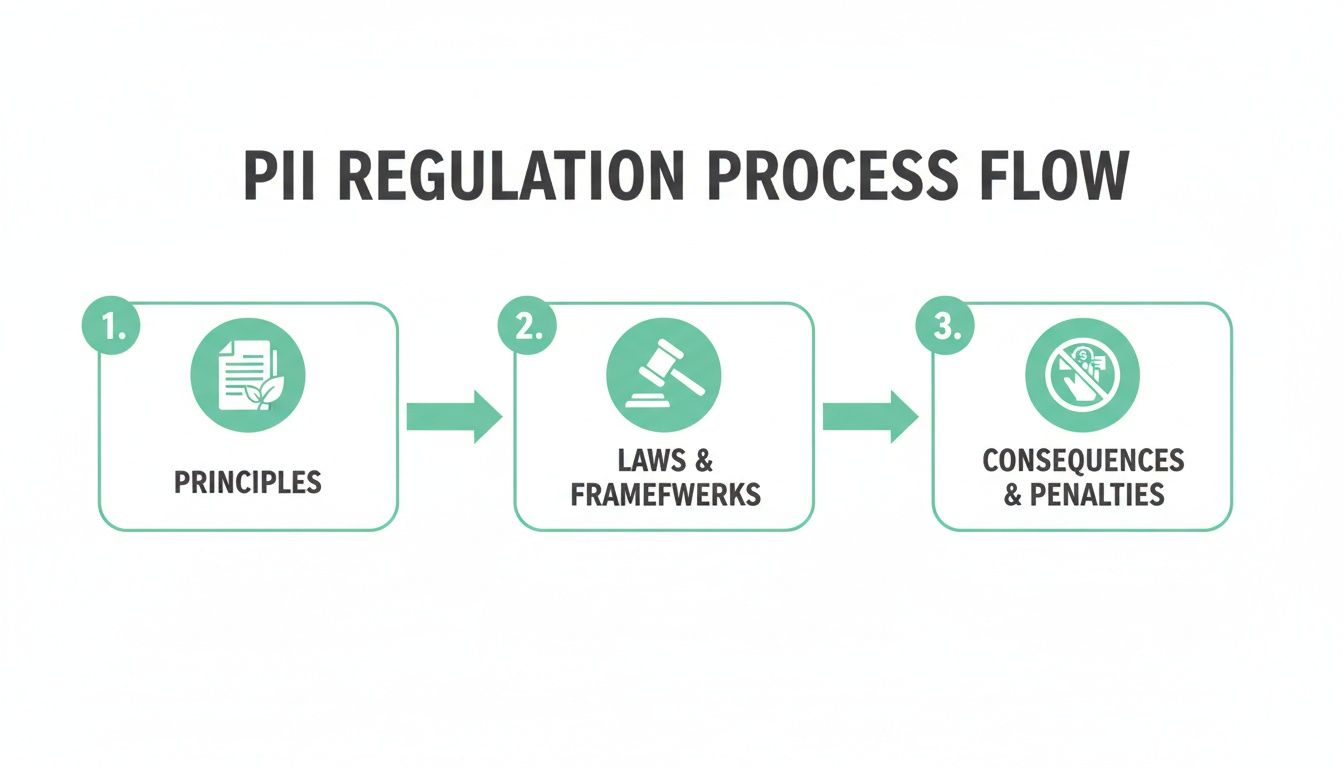
It’s a clear reminder of how foundational privacy concepts directly shape laws like GDPR, which then lead to tangible penalties when data is mishandled.
The Hidden Dangers in URLs
One of the most common ways PII escapes is through the URL query string. These are the parameters you see in a web address after the question mark (like ?utm_source=newsletter). They're great for tracking campaigns, but they can quickly turn into a liability.
Picture this: a user fills out a "contact us" form or resets their password. After they hit submit, your site might redirect them to a confirmation page. A poorly set up system could easily tack their email address right onto that URL, creating something like thankyou.html?email=user@example.com.
Just like that, sensitive PII is exposed. Every single analytics tool, ad pixel, or third-party script running on that confirmation page can now see and potentially log that email address. This is a classic data privacy violation and a huge blind spot for a lot of companies.
Misconfigured Tags and Rogue Events
A modern marketing stack is a tangled web of scripts and tags from dozens of vendors, all firing off based on what users do. In the world of digital analytics, where platforms are constantly listening for dataLayer events and marketing pixels, PII leaks can happen when misconfigured tags or "rogue" events start sending sensitive user data to ad platforms or analytics tools without proper consent. The latest data privacy compliance statistics show just how widespread these issues have become.
A perfect example is a custom event built to track new user registrations. A developer might configure it to capture user details for internal use, but accidentally include the user's full name or email in a property that gets funneled directly to Google Analytics or a Meta ad pixel.
This kind of leak is especially dangerous because it happens automatically and at scale. It’s not a single mistake; it’s a systemic flaw that can expose the PII of thousands or even millions of users before anyone notices.
This is what we call a "rogue event"—an event that sends data that was never supposed to leave your secure environment. Without constant monitoring, these events can fly under the radar for months.
Common Scenarios for PII Exposure
To make this crystal clear, let's look at a few everyday scenarios where PII can slip through the cracks of your tech stack. These examples show just how easy it is for data to get exposed during normal operations.
- Form Submissions: A user fills out a lead generation form, and their phone number is mistakenly passed as a custom dimension into your analytics tool.
- Third-Party Integrations: You connect a new marketing automation tool. During the initial sync, it pulls more user fields than it should, including sensitive data that lacks the proper consent flags.
- Developer Errors: While debugging a new feature, a developer accidentally logs a user's full address to the client-side console. An error-monitoring script then captures this and sends it to a third party.
- Autocomplete Fields: Browser autocomplete can sometimes populate hidden form fields with PII, which is then unknowingly captured and sent along with other analytics events.
Each of these situations highlights a critical truth: manual audits just can't keep up with the complexity of today's tracking implementations. The sheer volume of data and the dynamic nature of websites and apps mean that PII leaks can pop up at any time. This makes automated, continuous monitoring absolutely essential for staying compliant and protecting user trust.
Best Practices for Detecting and Preventing PII Leaks
Knowing how PII leaks happen is one thing, but actually preventing them requires a proactive, multi-layered strategy. Simply reacting to data breaches after the fact isn't a viable option anymore. You have to build a defense that anticipates and shuts down risks before they can do any damage, blending foundational data governance with modern, automated solutions.
The goal here is to shift your mindset from doing periodic, manual checks to maintaining continuous, automated vigilance. The digital ecosystems we all work in are just too dynamic for anything less.
Foundational Data Governance Practices
Before you even think about implementing fancy tools, you need to get the basics right. These foundational practices are the bedrock of any solid PII protection program. They create a framework that immediately reduces your overall risk surface.
Start with these non-negotiables:
- Data Mapping: You can't protect what you don't know you have. The first step is to create a complete map of your entire data ecosystem. This means identifying every single touchpoint where PII is collected, tracking how it's stored, seeing who can access it, and knowing where it gets sent.
- Data Minimization: Get serious about collecting only the data you absolutely need for a legitimate business reason. If a user's year of birth is enough for a transaction, don't ask for their full birth date. This one simple change can dramatically shrink the potential fallout from a leak.
- Anonymization and Pseudonymization: Whenever you can, strip direct identifiers from your datasets before they ever reach your analytics or testing environments. Techniques like anonymization (removing PII completely) or pseudonymization (swapping PII with fake identifiers) are incredibly powerful ways to get insights without putting sensitive information on the line.
Putting these into practice means taking a hard look at your data handling processes. To help guide that effort, you might find a Privacy Impact Assessment template useful for systematically evaluating privacy risks in any new project.
The Shift to Automated Monitoring
Manual audits used to be the gold standard for compliance checks, but they're completely outmatched by the speed and complexity of modern tech stacks. A manual check is just a snapshot in time. A brand-new PII leak can slip in with the very next code deployment or a minor tag manager update.
This is where automated solutions become essential. Continuous observability platforms act like a 24/7 security guard for your data streams, monitoring every single event as it happens. For digital agencies juggling multiple client sites, this constant vigilance is critical; a recent study showed that 40% of large enterprises faced audits over their data-sharing practices in the last 18 months alone.
The biggest weakness of manual auditing is that it's always reactive. By the time a human analyst stumbles upon a PII leak during a quarterly review, the data of thousands of users could have been exposed for months.
Automated platforms completely flip this script, offering a proactive defense that catches issues the moment they appear.
Building a Proactive Defense System
A truly modern, proactive defense against PII leaks uses technology to enforce your data governance rules automatically. This approach gives you a clear, reliable system for staying compliant and protecting the trust you've built with your users.
Here's what a good automated system should do:
- Continuous PII Scanning: The platform should automatically scan all incoming data streams—from web analytics to mobile app events—for patterns that look like common PII formats, such as email addresses, phone numbers, or credit card details.
- Consent Validation: It can cross-reference data collection with user consent settings, making sure you aren't accidentally tracking users who have opted out.
- Schema Enforcement: By comparing your live implementation against a pre-defined data schema or tracking plan, the system instantly flags any rogue events or unexpected properties that might be carrying PII.
This automated oversight provides an indispensable safety net. And while prevention is key, it's also smart to have a solid data breach response plan in place to minimize the impact if an incident ever does occur. By combining strong foundational governance with automated detection, you build a data infrastructure that's both resilient and trustworthy.
Automating PII Discovery with an Observability Platform
Knowing the best practices for PII protection is one thing, but actually putting them to work across a messy, always-changing tech stack is a whole different ball game. This is where the right tools can bridge that gap between theory and reality. A fully automated observability platform is like having a constant, vigilant safety net for your data, turning PII compliance from a stressful fire drill into a proactive, manageable process.
Think of the platform as your own automated security guard, endlessly scanning every single marketing and analytics tool in your arsenal. It’s not just glancing at the surface; it’s digging into the contents of every data packet being sent to third-party tools like Google Analytics, Amplitude, or your CRM.
This constant watchfulness is what truly separates modern data governance from old-school manual checks. It's surprising, but a whopping 44% of firms still lean on manual assessments, leaving their dashboards unreliable and putting their ROI at risk. This just goes to show that protecting PII isn't merely a compliance checkbox anymore; it's a matter of trust that directly fuels business success. You can dig deeper into how data privacy is reshaping business strategy by reviewing the latest compliance statistics.
From Detection to Instant Alerting
Let’s walk through what this looks like in the real world. The platform is humming along, scanning thousands of events every minute. All of a sudden, its PII detection algorithm flags a string in a custom event property that looks suspiciously like an email address—a classic PII leak.
Without this system, that sensitive data might sit exposed for weeks or even months until the next manual audit. But with automation, a completely different chain of events kicks off.
The second that PII is detected, an automated workflow springs into action. This shifts PII management from a slow, forensic investigation into an immediate, actionable response.
Within seconds, an alert fires off directly to your team’s Slack or Microsoft Teams channel. This isn’t some vague warning, either. It’s a precise, detailed report packed with everything your developers and analysts need to jump on the problem and fix it fast.
Pinpointing the Root Cause in Minutes
The true power of an automated observability platform lies in the immediate context it provides. The alert doesn't just scream, "We found PII!" It delivers a full root-cause analysis that answers the most critical questions right away.
The alert will typically spell out:
- The Exact PII: It shows the specific data that slipped through (e.g.,
user@example.com). - The Source: It pinpoints the exact event and property where the leak happened (e.g., event:
form_submission, property:user_identifier). - The Destination: It tells you which third-party tool received the PII (e.g., Meta Pixel, Google Analytics).
- The Trigger: It shows the user journey or specific page that caused the event to fire, giving developers a clear breadcrumb trail to reproduce and squash the bug.
This level of detail is a complete game-changer. What used to take days of tedious log-digging and cross-team meetings can now be identified and assigned for a fix in minutes. Automation strips away the guesswork and delays that make manual PII cleanup so painful, safeguarding not only your data quality and compliance but also the core trust your customers have in your business.
Building a Culture of Data Privacy and Trust
At the end of the day, even the most powerful tools and strictest processes can only take you so far. Real, lasting PII protection isn’t just a technical fix or a legal checkbox; it's a cultural foundation built on shared responsibility.
To get there, you need to break down the silos between marketing, analytics, legal, and development. When everyone understands their role in protecting customer data, the entire organization becomes a much stronger line of defense. This shift turns privacy from a departmental task into a collective mission, where safeguarding PII is an instinctive part of every decision, from designing a marketing campaign to deploying new code.
Fostering a Privacy-First Mindset
Building this kind of culture requires intentional effort and consistent reinforcement. It all starts with creating a single source of truth for data governance—a clear, accessible policy that everyone actually understands. This makes sure all teams are operating from the same playbook, which cuts down on confusion and the risk of accidental PII exposure.
Ongoing education is just as critical. You can't just have a one-and-done training session. Regular training tailored to different roles keeps privacy top-of-mind and helps team members spot potential PII risks in their day-to-day work.
Protecting customer PII is the bedrock of digital trust. In today's market, where users are more aware of their data rights than ever, that trust has become a company's most valuable asset and a powerful competitive advantage.
Clear documentation is what holds it all together. Documenting data flows, consent mechanisms, and incident response plans ensures both transparency and accountability. A great way to embed this thinking from the ground up is by learning more about Privacy by Design principles, which is all about building privacy into your systems from the very beginning, not bolting it on as an afterthought.
This proactive, team-wide approach ensures that protecting PII is a core value that guides your business forward. It's a commitment that pays dividends in customer loyalty and long-term brand reputation.
Frequently Asked Questions About PII
When you're dealing with Personally Identifiable Information, a lot of specific questions tend to pop up. This section cuts straight to the chase, giving you clear answers to the most common queries we hear. Think of it as a quick reference to solidify the concepts we've covered.
What Is the Difference Between PII and Sensitive PII?
Think of PII as any data that can point to a specific person, like their name or email address. It needs protection, but a single piece of it isn't always inherently dangerous on its own.
Sensitive PII (SPII) is a whole different ballgame. It’s a special category of personal data that, if it ever got out, could lead to serious harm, embarrassment, or discrimination. This is the really potent stuff:
- Financial data (bank accounts, credit card numbers)
- Medical records and health information
- Biometric data (fingerprints, facial scans)
- Government-issued identifiers like Social Security numbers
Because the stakes are so much higher, regulations like GDPR and CCPA have much tougher rules for protecting SPII. You have to treat this data with the highest possible level of security—no exceptions.
Is an IP Address Considered PII?
Ah, the classic question. The short answer is: it depends on the specific law, but you should absolutely treat it as PII.
Under Europe's GDPR, an IP address is officially classified as personal data. The logic is simple: while an IP address alone doesn't give you a name, it can easily be combined with other data (like browsing history or login times) to single out and identify a real person.
Other regulations might be slightly different, but the global trend is clear—definitions of PII are getting broader, not narrower. To stay compliant and keep risk low, the best practice is to handle IP addresses with the same care as any other personal identifier.
What Are the First Steps to Becoming PII Compliant?
Getting PII compliant is a marathon, not a sprint, but every journey starts somewhere. Kicking things off with these three foundational steps will build a strong framework for your data governance.
- Conduct a Data Audit: You can't protect what you don't know you have. The first move is to map out exactly where PII is collected, where it’s stored, and how it flows through your internal systems and third-party tools.
- Establish a Data Governance Policy: Next, create clear, written rules for how your company handles PII. This policy should cover data minimization, set strict access controls, and define retention schedules. It becomes your single source of truth.
- Implement Technical and Procedural Controls: Finally, bring your policy to life. This means deploying technical solutions like encryption and automated monitoring, but also procedural controls like mandatory, role-specific training for your team on data privacy.
Protecting PII requires constant vigilance, but manual audits just can’t keep pace with today's complex data stacks. Trackingplan offers a fully automated observability platform that acts as your 24/7 safety net. It continuously scans your analytics for PII leaks and consent issues before they turn into major problems. Discover how you can automate PII compliance with Trackingplan.