
Key Takeaways
Understand and conduct thorough privacy risk assessments
Every serious privacy compliance process starts before a single pixel fires. A risk assessment is not a box-checking exercise. It is the mechanism that forces your marketing and legal teams to document why you are collecting data, what data is involved, and how you will protect it before any processing starts.
What a proper risk assessment covers
A well-run assessment maps out five elements for every processing activity:
- Purpose: Why are you collecting or processing this personal information?
- Data involved: What specific categories are being collected, including any sensitive data?
- Benefits: What legitimate business or consumer benefit does this processing serve?
- Negative impacts: What could go wrong for the consumer if this data is misused, exposed, or incorrectly processed?
- Safeguards: What technical and organizational controls are in place to reduce those risks?
For marketing teams, this applies to more than CRM data. It applies to behavioral tracking, ad retargeting, lead scoring models, and anything using automation or AI to profile users.
When you are legally required to assess
California’s CPRA regulations require a risk assessment before certain data processing activities, including selling personal information and using automated technologies. This makes risk assessments mandatory for most programmatic advertising, any third-party data sharing, and any machine learning model that makes decisions about consumers.
That includes the marketing automation checklist items most teams implement without a second thought: lead nurturing sequences driven by behavioral triggers, dynamic content personalization, and predictive audience segmentation.
How to operationalize assessments across teams
- Assign a named owner for each processing activity in your martech stack.
- Create a shared assessment template that both marketing and compliance teams contribute to.
- Set a review calendar. Reassess whenever you add a new vendor, change data flows, or update an automation rule.
- Store assessments where they can be retrieved during an audit. A spreadsheet buried in a personal drive does not count as a documented process.
- Flag any activity involving sensitive categories (health, financial, biometric) for automatic escalation to legal review.
Pro Tip: Map your risk assessments to your data flow diagrams. When you can see exactly where data moves from your website to your CRM to your ad platforms, gaps in your privacy coverage become immediately obvious.
Implement granular, high-quality GDPR-consent mechanisms
Consent under GDPR is not a formality. It is a legal condition that, when done poorly, invalidates every data collection event that follows. Most marketing teams fall into one of two failure modes: consent banners that bundle all purposes under a single “accept” button, or consent records that are collected but never operationally respected downstream.

The four conditions that make consent valid
Under GDPR Article 7, consent must be freely given, specific, informed, and unambiguous, and withdrawal must be as easy as giving consent in the first place. Each of those four conditions is a separate requirement. You can fail one while passing the others, and your consent is still invalid.
Key practices that reflect these requirements:
- Present separate consent toggles for each processing purpose (analytics, personalization, advertising).
- Never pre-tick boxes or use double negatives (“Uncheck to opt out of…”).
- Provide a plain-language description of what each purpose involves and who the data is shared with.
- Make the “withdraw consent” option equally visible and accessible, not buried in account settings three clicks deep.
- Confirm withdrawal is operationally propagated to every downstream system within the timeframe your policy states.
Managing the consent lifecycle at scale
Consent is not a one-time event. It expires, it changes, and it creates obligations. The best consent management platforms handle the full lifecycle: collection, storage, version tracking, and propagation to connected tools.
What most teams miss is the propagation problem. A user withdraws consent on your website. Does your email platform know? Does your DMP know? Does your ad retargeting suppress that user? If the answer to any of those is “it depends,” you have a gap in your privacy compliance process.
Pro Tip: Test your consent withdrawal flow quarterly using a dedicated test user account. Trace whether the withdrawal signal reaches every tool in your stack within 24 hours. This is the fastest way to find propagation failures before regulators do.
Conduct regular cookie audits and manage tracking technologies compliantly
Cookies are the most visible part of your tracking stack and the most frequently audited by regulators. Under ICO PECR guidance, informing users about cookies, obtaining consent, and treating fingerprinting and similar technologies as requiring consent are all mandatory requirements. That last point catches many marketing teams off guard. Browser fingerprinting is not a cookie workaround. It is subject to the same consent rules.
Running a complete cookie audit
- Use a crawling tool to discover every cookie being set on your site, including third-party cookies loaded by your tag management system.
- For each cookie, document the name, domain, category, lifespan, and purpose.
- Classify each cookie as strictly necessary, functional, analytics, or advertising.
- Identify which cookies are set before consent is collected. This is usually where violations occur.
- Confirm your consent management platform blocks non-essential cookies until explicit consent is given.
- Rerun the audit after every significant site change or new vendor integration.
Cookie audit vs. lifecycle management: what each actually covers
Understanding how to prevent cookies firing before consent is the most immediate action item from most audits. And if you’re thinking ahead, it’s worth understanding how to combat the cookieless future while staying compliant today.
Pro Tip: Add a privacy compliance audit to your pre-launch checklist for every A/B test and new landing page. Tag managers can deploy cookies that bypass your CMP configuration, and test pages are frequently overlooked.
Honor opt-out signals and provide transparency on request status
California’s 2026 updates take opt-out from a passive right to an active operational obligation. It is no longer enough to offer an opt-out link and process requests manually in batches. You need to acknowledge signals, confirm status, and make that status visible to the consumer who requested it.
What operational opt-out compliance looks like
Businesses must provide a way for consumers to confirm the status of their opt-out requests, including those submitted through signals like the Global Privacy Control (GPC). GPC is a browser-level signal that communicates a user’s opt-out preference automatically to every site they visit. If your site does not detect and honor GPC, you are already non-compliant for California residents.
Key operational requirements:
- Detect GPC signals server-side so they cannot be bypassed by client-side tag loading sequences.
- Display a consumer-facing status message, such as “Opt-Out Request Honored,” visibly on your site after a signal is received.
- Provide a UI toggle that shows current opt-out status and allows the user to reverse their decision if they choose.
- Maintain an auditable log of every opt-out request received, the method used, and the timestamp of confirmation.
- Propagate opt-out status to every system that processes that consumer’s data, including ad platforms, analytics tools, and email systems.
Consumer-facing transparency is not just a regulatory checkbox. When users see confirmation that their preferences are being respected, trust in your brand increases measurably. Transparency is a competitive advantage that compliance teams are uniquely positioned to build.
For a deeper look at building this into your analytics workflow, the privacy compliance for analytics guide covers the full implementation picture.
Plan for scalable consumer data deletion and correction workflows
Data deletion is where privacy compliance intersects directly with data quality. If your deletion workflows are manual, slow, or incomplete, you are not just non-compliant. You are operating on corrupted data that contaminates your analytics, your attribution models, and your audience segments.
California’s DROP platform and what it demands
California’s DROP platform will process deletion requests every 45 days starting in late summer 2026, requiring businesses to orchestrate deletion and correction workflows that can match that cadence. Data brokers, advertisers, and any business that purchases or shares consumer data will need to receive deletion signals from the DROP platform and propagate them through their entire data ecosystem within that window.
This is not a theoretical future requirement. It is a specific operational timeline that requires systems to be in place now.
Building a deletion and correction workflow
- Designate a technical owner for DROP integration and request receipt.
- Map every system that holds consumer personal information: CRM, data warehouse, ad platforms, email lists, analytics tools.
- Build or purchase an orchestration layer that receives deletion signals and routes them to each connected system automatically.
- Create a correction record protocol that preserves the corrected version of data and prevents it from being overwritten by stale data imports.
- Set a 45-day compliance cycle with automated tracking of request status, completion, and exceptions.
- Log everything. Document when each request was received, when each downstream system confirmed deletion, and any exceptions with reasons.
Key workflow elements and their compliance impact
Key elements to include in your deletion and correction compliance checklist:
- Automated intake for DROP signals and consumer-submitted requests.
- Propagation confirmation from each connected system within the 45-day window.
- Correction versioning so that corrected records are flagged and protected from overwrite.
- A dashboard that shows open, completed, and overdue requests at any point in time.
- Regular reconciliation between your deletion log and your data systems to catch gaps.
Understanding how tracking accuracy shapes marketing success in 2026 makes clear why deletion workflows are not just a legal obligation. They are a data hygiene issue with direct consequences for every campaign measurement you rely on.
Our perspective: privacy compliance is a tracking quality problem in disguise
Here is something the compliance-only framing misses entirely: every privacy failure is also a tracking failure. When cookies fire before consent, you collect data you cannot legally use. When opt-out signals go unprocessed, those users contaminate your analytics segments. When deletion requests are not propagated, deleted users stay in your remarketing audiences and skew your conversion rates.
The typical framing separates these concerns. Legal handles compliance. Marketing handles tracking. That split is exactly why organizations keep finding the same problems in audits. The data that flows through your martech stack does not care which team owns it.
The most resilient organizations we see treat privacy compliance strategies as part of their data quality program. They run cookie audits the same way they run tracking audits. They monitor consent signal propagation the same way they monitor pixel firing. They measure deletion workflow completion rates the same way they measure data pipeline health.
This reframe changes who needs to be in the room. Compliance officers need to understand what a tag management system actually does and why a misconfigured CMP can silently bypass consent controls. Marketing engineers need to understand why a request submitted via GPC creates legal obligations, not just a UI preference. The privacy compliance checklist is not a legal document handed down from counsel. It is a shared operational standard that both teams own.
The organizations that figure this out early have a real advantage. Clean data, confident measurement, and regulatory risk that is genuinely managed rather than just documented.
How Trackingplan supports your privacy compliance process
Maintaining the data accuracy your marketing decisions depend on requires more than quarterly audits and manual checks. Trackingplan monitors your entire analytics implementation in real time, alerting you the moment a tracking error, consent bypass, or pixel misconfiguration appears.
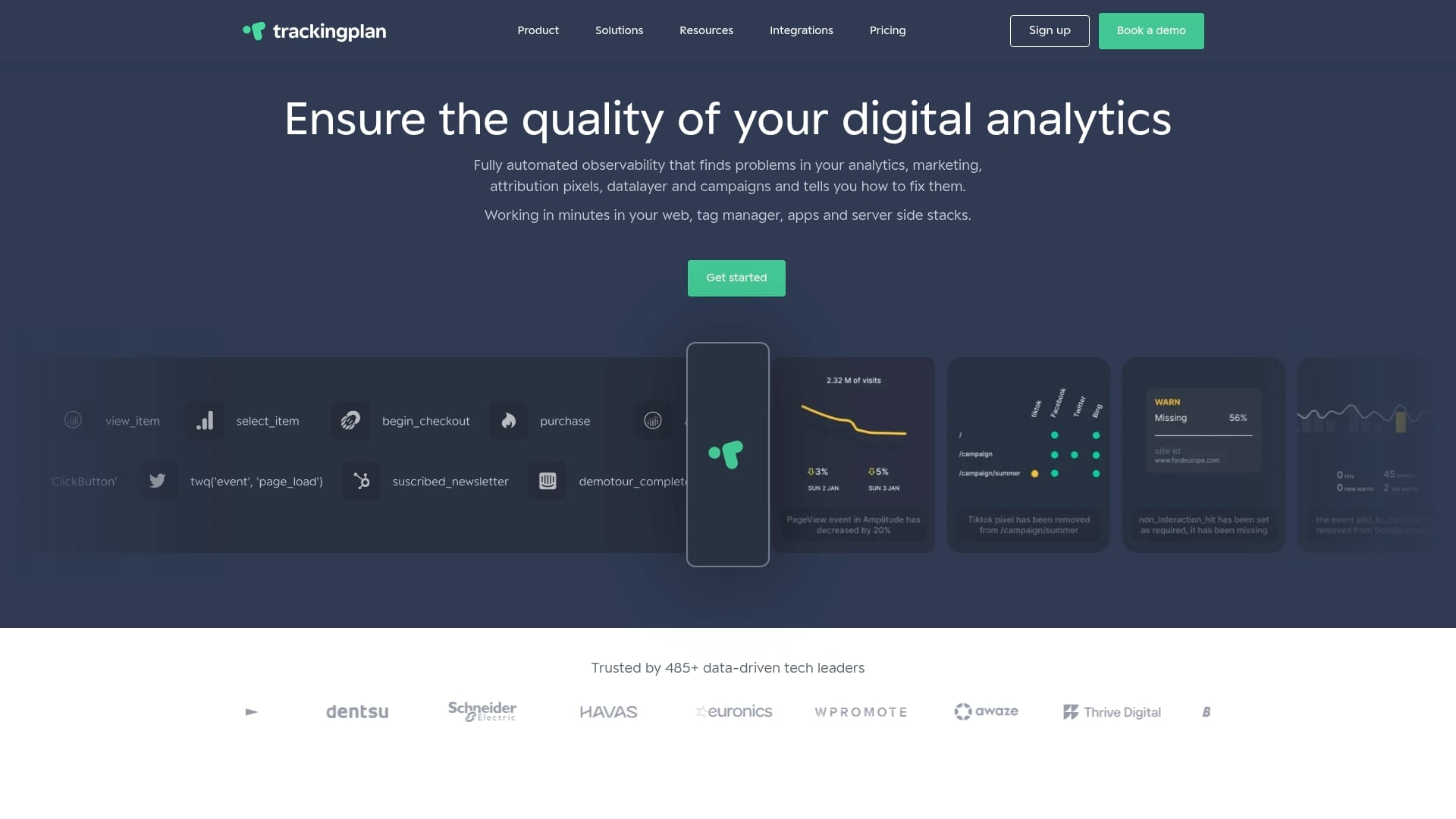
From automated cookie and pixel audits to real-time alerts for consent violations and schema mismatches, Trackingplan gives marketing teams and compliance officers a single view of their tracking stack’s health. Whether you’re preparing for a privacy compliance audit or trying to hold attribution accuracy through a regulatory transition, the platform catches issues before they reach your reports or your regulators. See how Trackingplan fits into your compliance workflow at trackingplan.com.
Frequently asked questions
What are the essential elements of a privacy risk assessment under California’s 2026 regulations?
A privacy risk assessment must identify the purpose, personal information involved, benefits, negative impacts, and safeguards before certain processing activities like selling data or using automated technologies. Missing any one element leaves the assessment incomplete and potentially invalid during a regulatory review.
How can marketers ensure their cookie consent mechanisms meet UK requirements?
Marketers must inform users about cookie purposes and obtain clear consent before storing non-essential cookies, with explicit control over third-party cookies as required by PECR and ICO guidance. Fingerprinting and similar tracking technologies fall under the same consent rules as cookies.
What does California’s 2026 privacy update require regarding opt-out request communication?
Businesses must provide a way for consumers to confirm their opt-out status, including via UI messages and toggles, even when the opt-out uses preference signals like Global Privacy Control. This applies to every California resident regardless of how they submitted the opt-out.
Why is regular cookie auditing important for marketing analytics compliance?
Regular audits identify all cookies present, clarify their purpose, classify their types, and ensure consent compliance, with ICO guidance framing audits as inventory-and-assessment exercises rather than one-time checks. Cookies that fire before consent invalidate the data collected, directly damaging analytics accuracy.
How should businesses prepare for consumer deletion requests under California’s DROP platform?
Businesses should build scalable workflows to receive, validate, and propagate consumer data deletion requests, with DROP processing every 45 days starting late summer 2026. Propagation to every downstream system, including ad platforms and analytics tools, must be confirmed and logged within that window.