Export your event specifications as a JSON Schema and import them into other plans. The same rules apply everywhere, so keeping many specifications across panels and destinations in line gets much easier.
Prefer to watch? This short video shows how to export and import your schemas in a few clicks. For more video tutorials, check out Trackingplan Academy.
Export JSON schema
To export your schemas as JSON:
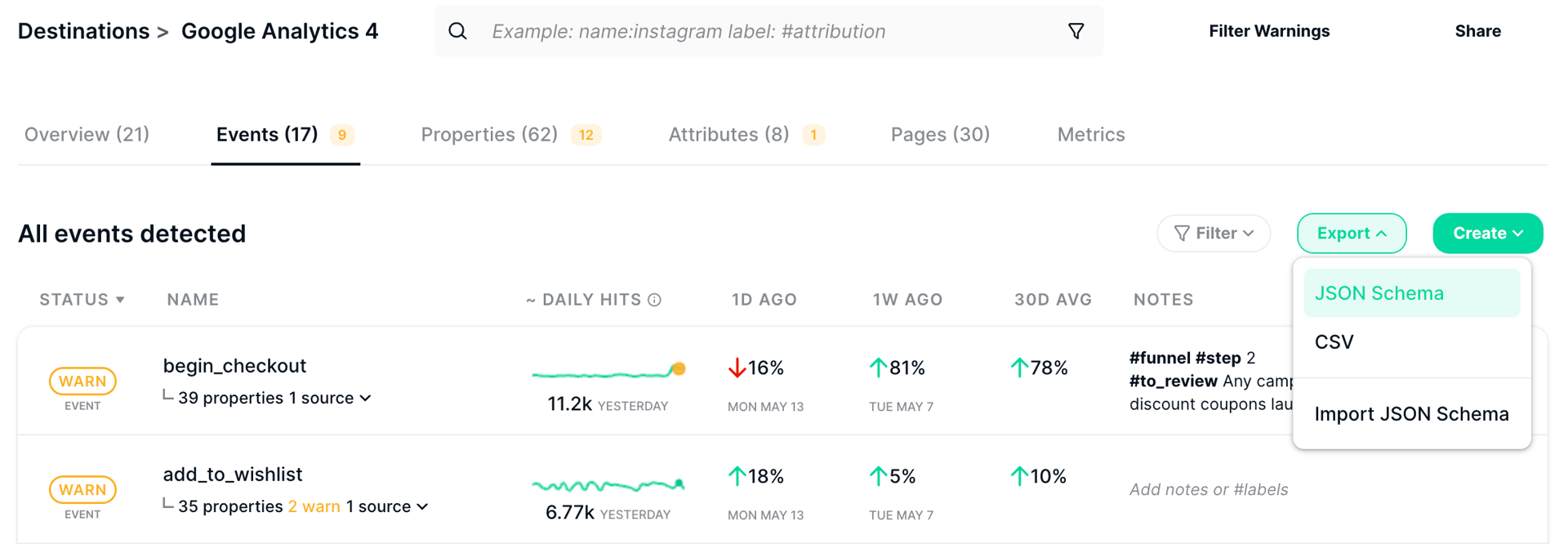
- Open the export menu at the top right of any destination. In this example, we export a Google Analytics 4 setup. Then click “JSON Schema”.
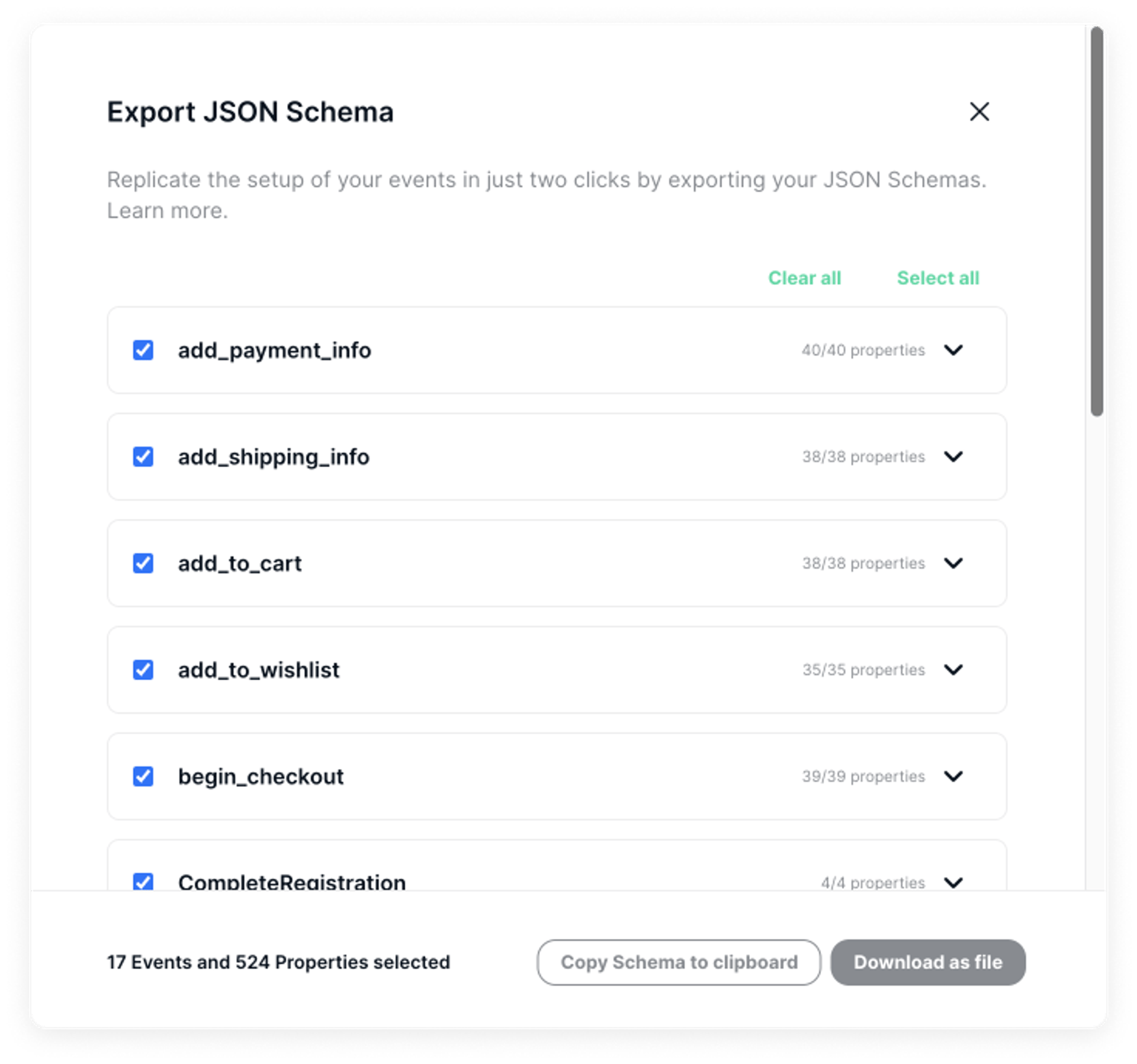
- Select the events and properties you want to export. Trackingplan selects them all by default, so uncheck the ones you don't need. Or click "clear all" to start from scratch and mark only the ones you want.
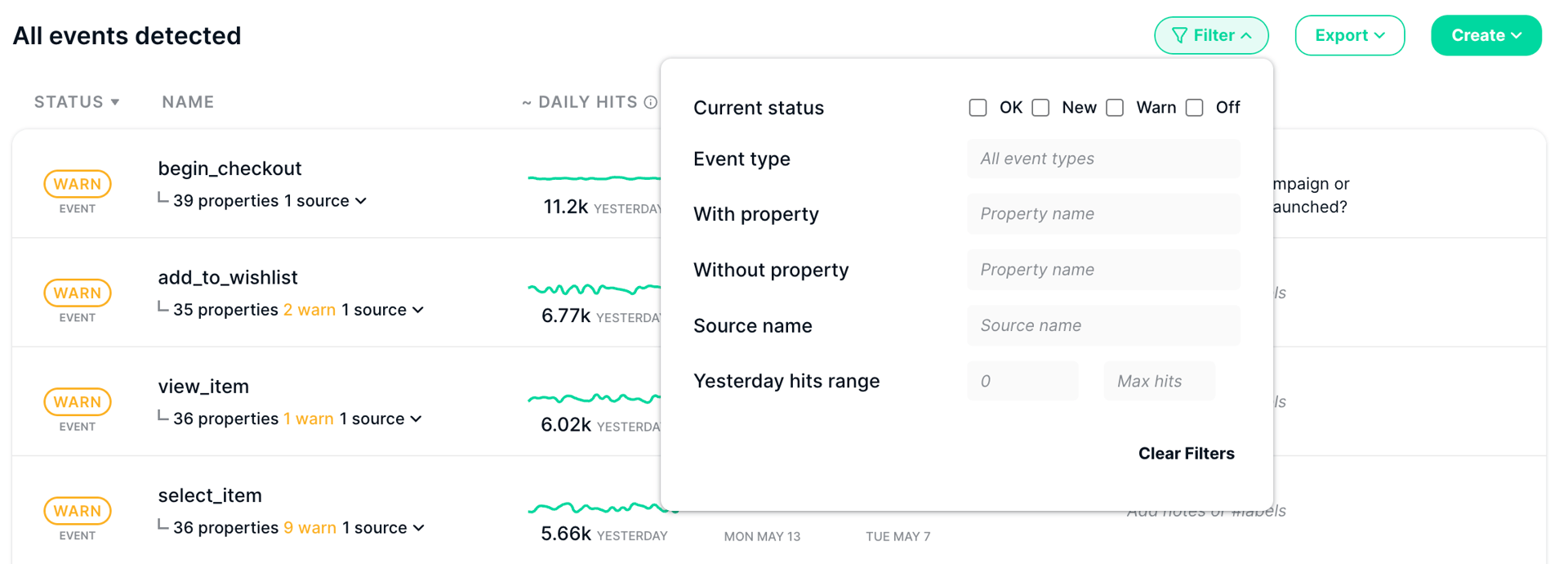
Pro tip: Narrow things down first with the filtering options before you click export. You start from just the events and properties you care about.
- When your selection is ready, copy the schema to the clipboard to paste it into a file, or download it as a file. Click the option you prefer and you're done. You now have the schemas of the providers and events you chose.

Import JSON schema
You can import your JSON schema into other plans (iOS, Android, web) or into other destinations in the same plan. Your events keep the same setup, rules and specifications across panels and providers. Here's how:
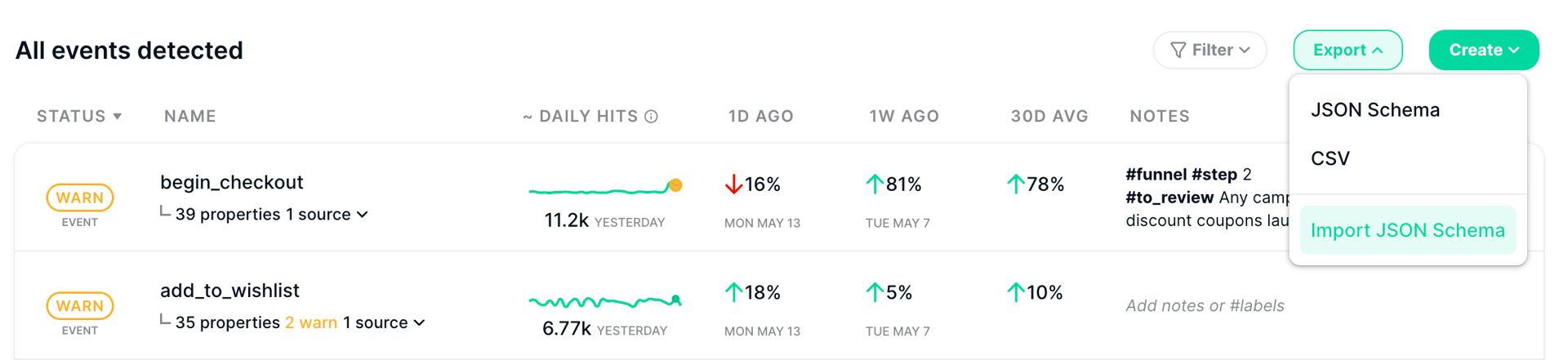
- Open the export menu and click “Import JSON Schema”.
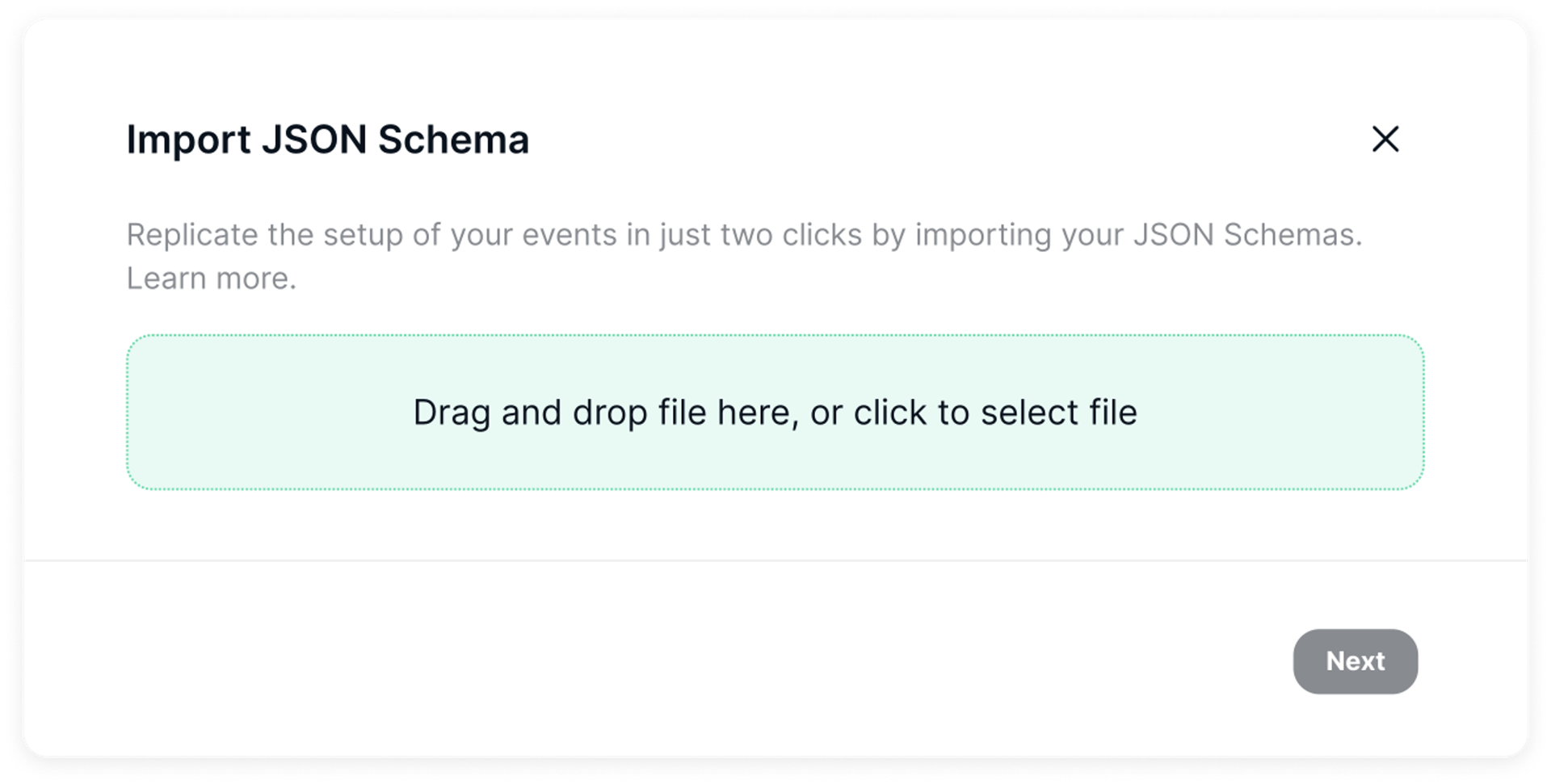
- Drag and drop the file with the schemas you exported, or click to pick it from your files. If the file is invalid or has an editing error, we tell you where and why, so you can fix it.
- Select the events and properties you want to import. To copy your whole setup, click “Select all”. Otherwise, click the events and properties you want, one by one.
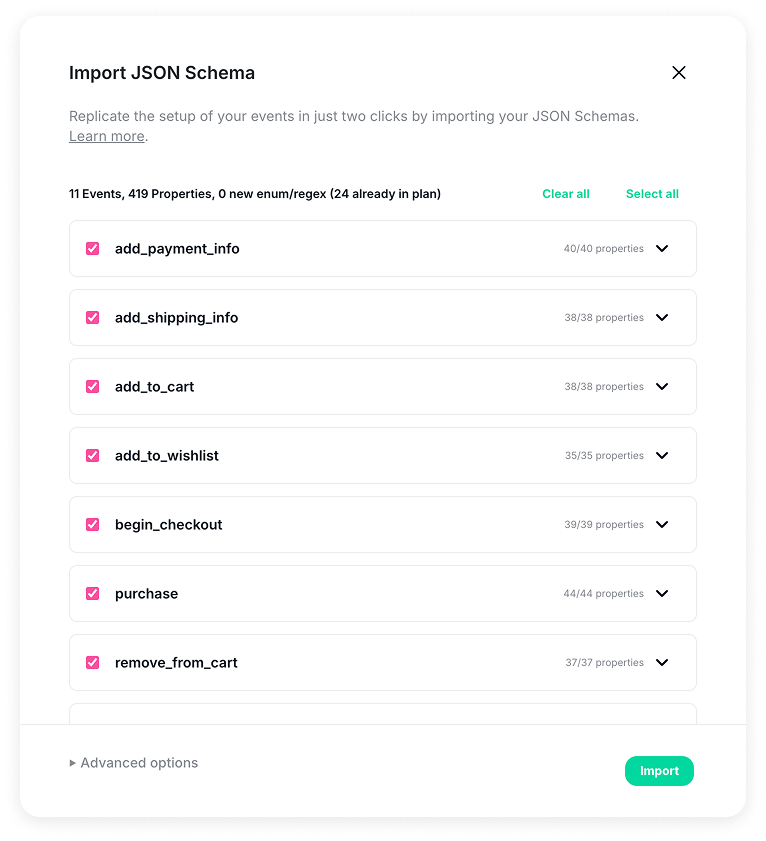
Advanced Settings
Before you import, take a moment to check the Advanced options. They control how your schema is applied and how it fits with what is already in your plan.
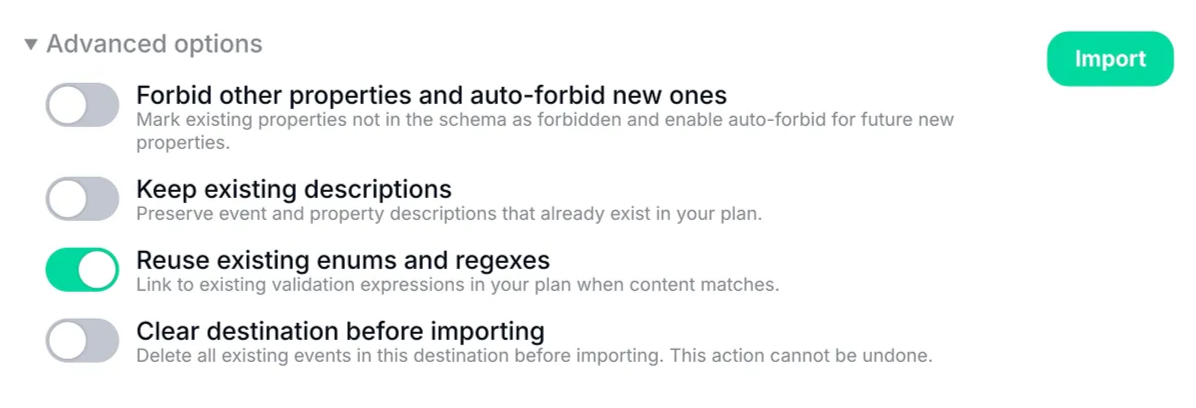
Here’s what each option does:
- Forbid other properties and auto-forbid new ones: Only the properties defined in your schema are allowed. Any existing or new property that doesn’t match it is marked as forbidden automatically.
Use case: When you want your schema followed strictly, with no unsupported properties tracked by accident.
- Keep existing descriptions: Keeps the descriptions of events and properties already in your plan.
Use case: When your plan already has detailed documentation or notes, and you don't want the import to overwrite them.
- Reuse existing enums and regexes: Links imported properties to any matching enums or regex rules already in your plan.
Use case: This reduces duplication and ensures consistency, so you don’t accidentally create multiple versions of the same validation rules.
- Clear the destination before importing: Deletes all existing events in the destination before applying the new schema.
Use case: This reduces duplication and ensures consistency, so you don’t accidentally create multiple versions of the same validation rules.
Important: This can't be undone. Use it only if you want a completely fresh start in that destination.
Once your advanced options are set, click Import to bring your schema in.