A warning tells you that something in your tracking changed or broke: a property that goes missing, a type that changes, a drop in traffic. To investigate one, open it, check the affected tracks and click Analyze: the agent finds the cause and tells you how to fix it.
Find the warning
Open a destination from Destinations in the menu. The Warnings table lists its warnings, each with its type, the elements it affects, a description, when it was last seen and for how long it has been active.
- The tabs filter by state: All, Ongoing, Muted and Resolved.
- Last Seen sorts by the last or the first time the warning occurred.
- Filter narrows the list by category, by type, or to warnings that affect a starred element.
- When the same warning hits more events, Expand shows them.
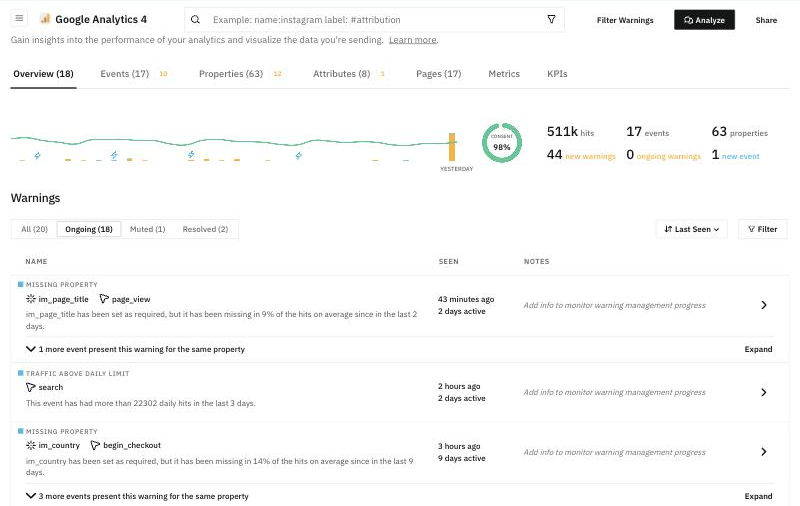
The most common warning types are missing property, type collision, missing event, traffic drop, traffic peak, traffic above or below the daily limit, Enum or Regex error and validation function error.
Read the warning
Click a warning to open it. The panel shows:
- The affected property and event, the destination and the warning type.
- What Trackingplan saw, in one line. For example, a property set as required that has been missing in 9% of the hits.
- A daily chart of the last weeks, with the days of the warning highlighted.
- Notes, to record how the fix is going.
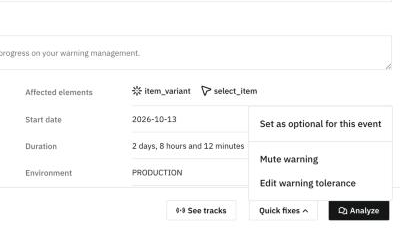
- More info: the affected elements, the start date, the duration, the environment and the releases involved.
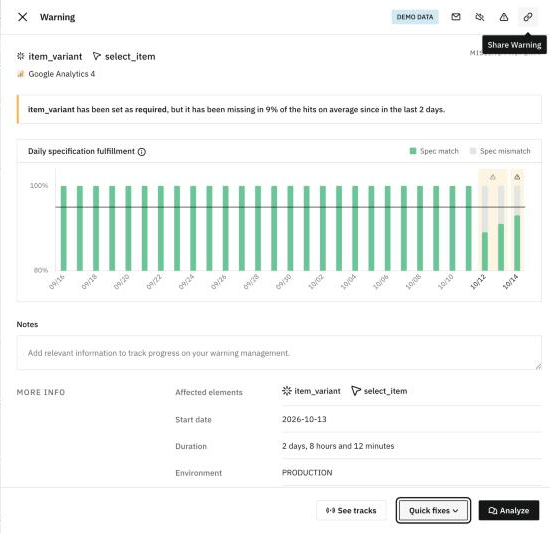
The icons in the header let you Mark as unread, Mute Warning, open Customize Warning and Share Warning.
See the affected tracks
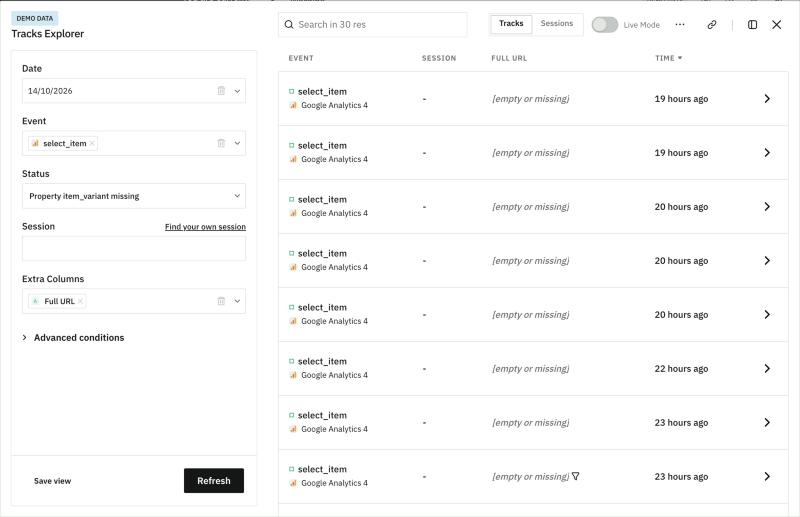
Click See tracks. Tracks Explorer opens already filtered by the event, the day and the warning, so you can see every hit that failed and open any of them. See Tracks Explorer.
Ask the agent why it fires
Click Analyze. A thread opens beside the warning with the question already written: why the warning fires and how to fix it. You don't have to write a thing. The agent checks the traffic, the data layer, the releases and the tag manager, and answers with:
- What is happening: where the problem is concentrated (pages, releases, destinations) and the evidence for it.
- How to fix it: the change to make, and who should make it.
- The number of queries it ran. Click it to see each one.
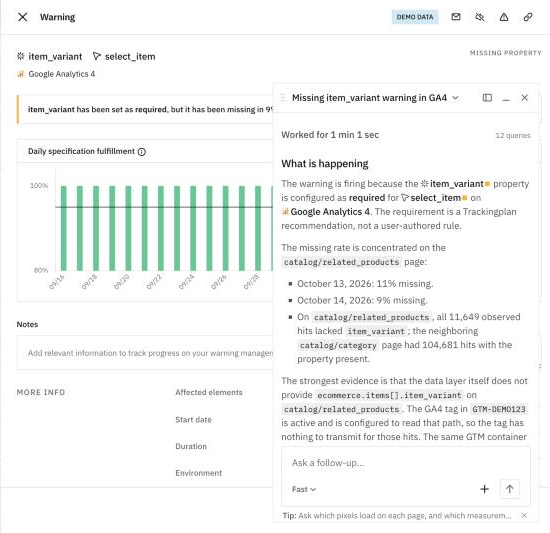
Want to dig deeper? The suggested follow-ups under the answer take the investigation further, for example checking it live on the affected page or comparing two releases. The agent opens a page of your site in a browser only with your approval.
The thread floats over the page. Its title switches between your threads, and its icons switch the layout, minimize it or close it. You find it later in Threads.
Fix it or adjust it
When the warning is not a real problem, Quick fixes lets you adjust it from the same panel. The options depend on the warning type: for a missing property, Set as optional for this event, Mute warning and Edit warning tolerance.
To change how warnings are detected for an event, use Customize Warning in the header. See Warnings & Updates.